• Live blogging

    Perhaps you’ve noticed that I’ve been quiet here for a bit. One reason is that I’ve been traveling almost constantly, and not always in the best position to blog (or even tweet). Another is that I’ve been liveblogging instead. So here, latest first, is a list of liveblog postings since my last post here:

    Most are lists of links: tabs I’m closing. Many contain bloggy additional notes. Some are more extensive, such as my liveblog notes on @janelgw‘s talk in New York on May 6.

    I’ll get back to more regular blogging here, while still liveblogging, after I get back in the States from Australia, where I am now. I fly tomorrow (Saturday in Oz, Friday in the Americas).


  • Mercy for the bereaved

    I didn’t know Dave Goldberg, but I can’t count all the friends and relatives who were close to him. By all their accounts, he was a brilliant and wonderful guy, much loved and respected by everybody who knew and worked with him.

    Along with the rest of the world, I await word on what happened. So far that word hasn’t come. But it hasn’t stopped speculation. For example, this post by Penelope Trunk, which imagines a worst-possible scenario — or a set of them — on the basis of no evidence other than knowing nothing. And why do we know nothing? Put yourself in Dave’s wife’s shoes for a minute.

    You’re a woman on vacation with your husband, to a place where nobody knows you. Then your husband, healthy and just 47 years old, dies suddenly for no apparent reason. What do you do, besides freak out? First you deal with the local authorities, which is rarely fun in the best of circumstances, and beyond awful in the worst. Then you give your family and friends the worst news they have ever heard. And you still don’t know why he died. What do you tell the world? In a word: nothing, until you know for sure. And even then it won’t be easy, because you want to retain a few shreds of privacy around the worst thing that ever happened to you — while doubled over with the pain of knowing that you and your kids now have holes in their hearts that will never go away.

    Yes, I am taking some liberties with what I don’t know there, but all those liberties are in the direction of mercy toward the bereaved. While no good is done by speculating publicly about what happened, there is at least a small measure of good in cutting the bereaved all the slack we can. For more on that, some Shakespeare:

    The quality of mercy is not strained.
    It droppeth as the gentle rain from heaven
    Upon the place beneath. It is twice blessed:
    It blesseth him that gives and him that takes.
    (from The Merchant of Venice)

    [Later…] @AdamLashinsky in @Fortune reports that Dave died while exercising. More from the New York Times. Calls to mind Douglas Adams, also beloved by many. He died at just 50, also after exercising. [Still later, same day…] More again from the Times. Leaning what happened makes it all even sadder.


  • Internet.org is a failed exercise in misdirection

    doc036d[Note added 4 August 2016: Since I wrote this, Internet.org has expanded into a service called Free Basics. All the criticisms below apply to that as well. — Doc]

    Like the universe, the Internet is one thing. It is a World of Ends, comprised of everything it connects.

    By nature it is as neutral as gravity. It favors nothing and is not partial to anything. Yes, there are exceptions to that rule, in the way Net access is provisioned, for example; but the basic nature of the Net — as a free, open and neutral shared space — is by now obvious to pretty much everybody who doesn’t have an interest in making it less.

    Internet.org calls itself “a Facebook-led initiative bringing together technology leaders, non-profits and local communities to connect the two thirds of the world that doesn’t have Internet access.” But what it offers is not the Internet, but a sphinctered fraction of it: Facebook plus a few chosen others.

    This is pure misdirection: a private part masked as a public whole. And it’s not fooling anybody. Especially India. See here, here, here, here, here, here — and every other place you’ll find piles of stories about it. (Start with the Critique section of the Wikipedia article on Internet.org, and a search for India+Facebook+Internet.org.)

    India is rejecting Internet.org for one simple reason: They know sphincternet ≠ Internet, and that the sphinctered Net is not Neutral, meaning not the real thing.

    Naturally, Mark Zuckerberg disagrees, and explains how in this post on the matter, which went up yesterday, and I’ll respond to, piece by piece:

    Over the past week in India, there has been a lot written about Internet.org and net neutrality. I’d like to share my position on these topics here for everyone to see.

    First, I’ll share a quick story. Last year I visited Chandauli, a small village in northern India that had just been connected to the internet.

    In a classroom in the village, I had the chance to talk to a group of students who were learning to use the internet. It was an incredible experience to think that right there in that room might be a student with a big idea that could change the world — and now they could actually make that happen through the internet.

    Those students should know the whole Net. Not just a subset of it.

    The internet is one of the most powerful tools for economic and social progress. It gives people access to jobs, knowledge and opportunities. It gives voice to the voiceless in our society, and it connects people with vital resources for health and education.

    I believe everyone in the world deserves access to these opportunities.

    Fine. Then either give them the whole thing, or call what you give them something else that’s clearly less: Facebook+, perhaps.

    In many countries, however, there are big social and economic obstacles to connectivity. The internet isn’t affordable to everyone, and in many places awareness of its value remains low. Women and the poor are most likely to be excluded and further disempowered by lack of connectivity.

    The Internet itself has no cost: on purpose. At its base is a protocol that nobody owns, everybody can use, and anybody can improve. (Not that anybody has yet — or ever will.) That’s one of the features of its inherent neutrality.

    Yes, there are first-time and maintenance costs for the wires and waves that carry its bits. But, as Steve Kamman explains, “Bandwidth is dirt cheap. And bog-standard… This isn’t like electricity. There’s no power plant on the other end burning fuel to deliver those bits. Bits are nearly weightless and cost accordingly.”

    Steve’s case is for where the Net ends up, everywhere: the effect implicit in its cause. Think about how to make that happen. Trust me: it’ll be good for Facebook too.

    This is why we created Internet.org, our effort to connect the whole world. By partnering with mobile operators and governments in different countries, Internet.org offers free access in local languages to basic internet services in areas like jobs, health, education and messaging. Internet.org lowers the cost of accessing the internet and raises the awareness of the internet’s value. It helps include everyone in the world’s opportunities.

    But it’s not the whole Internet. It’s what you and your partners, in an exclusive and non-neutral way, have decided to provide.

    We’ve made some great progress, and already more than 800 million people in 9 countries can now access free basic services through Internet.org. In India, we’ve already rolled out free basic services on the Reliance network to millions of people in Tamil Nadu, Maharashtra, Andhra Pradesh, Gujarat, Kerala and Telangana. And we just launched in Indonesia on the Indosat network today.

    We’re proud of this progress. But some people have criticized the concept of zero-rating that allows Internet.org to deliver free basic internet services, saying that offering some services for free goes against the spirit of net neutrality. I strongly disagree with this.

    Zero-rating, or “toll-free data,” means not charging for some stuff on the Net, while charging the same fees for the rest. Simply put, it’s a form of price discrimination. Here’s what Wikipedia says about its reception and impact :

    Zero-rating certain services, fast lanes and sponsored data clearly have their benefits for users of the subsidized services, but have also been criticised as anti-competitive and limiting open markets.[4] As many new internet and content services are launched targeting primarily mobile usage, and further adoption of internet connectivity globally (including broadband in rural areas of developed countries) relies heavily on mobile, zero-rating has also been regarded as a threat to the open internet, which is typically available via fixed line networks with unlimited usage tariffs or flat rates.[9] The Wikimedia Foundation and Facebook have been specifically criticized for their zero-rating programs, to further strengthen incumbent mobile network operators and limit consumer rights to an open internet.[10] (That’s as of today.)

    Whatever else it is, it’s not neutral.

    We fully support net neutrality. We want to keep the internet open. Net neutrality ensures network operators don’t discriminate by limiting access to services you want to use. It’s an essential part of the open internet, and we are fully committed to it.

    But net neutrality is not in conflict with working to get more people connected. These two principles — universal connectivity and net neutrality — can and must coexist.

    To give more people access to the internet, it is useful to offer some service for free. If someone can’t afford to pay for connectivity, it is always better to have some access than none at all.

    Useful, yes. Neutral, no.

    Non-neutrality is like Potter Stewart’s definition of porn: “I know it when I see it.” Which India does.

    Internet.org doesn’t block or throttle any other services or create fast lanes — and it never will.

    It just doesn’t carry them. It says “My way or no highway.”

    We’re open for all mobile operators and we’re not stopping anyone from joining.

    The Internet is not what just mobile operators carry.

    We want as many internet providers to join so as many people as possible can be connected.

    That’s fine. But what they provide won’t be the Internet if they don’t carry the whole thing. It will be a sampler box of rocks rather than all of geology.

    Arguments about net neutrality shouldn’t be used to prevent the most disadvantaged people in society from gaining access or to deprive people of opportunity. Eliminating programs that bring more people online won’t increase social inclusion or close the digital divide. It will only deprive all of us of the ideas and contributions of the two thirds of the world who are not connected.

    There wouldn’t be an argument if you didn’t call this thing “Internet.org,” and if you didn’t represent a few Internet services as the whole thing. But you do, and that’s why you’re having trouble.

    Every person in the world deserves access to the opportunities the internet provides. And we can all benefit from the perspectives, creativity and talent of the people not yet connected.

    We have a historic opportunity to connect billions of more people worldwide for the first time. We should work together to make that happen now.

    Fine. But make clear that what you’re offering isn’t the Internet, but a bunch of free services also found on the real thing.

    Below that post are a zillion comments, some of which Mark answers. Here is the first Q&A:

    Ritesh Pandya: We really appreciate your initiative on making the internet accessible to most remote part of the world, but the only question is why access only to selective websites and not all on internet.org??

    Mark Zuckerberg: It’s too expensive to make the whole internet free. Mobile operators spend tens of billions of dollars to support all of internet traffic. If it was all free they’d go out of business. But by offering some basic services, it’s still affordable for them and it’s valuable and free for everyone to use.

    But it’s not the Net. It’s just a set of services that also happen to be on the Net.

    The Internet is free. That’s its nature. So stop confusing access with the Net itself, and a few services with the whole thing. Nobody’s buying it.

    Bonus links: New Clues, SaveTheInternt.in.

    [Later, May 4…] Wired says Zuckerberg has “expanded” Internet.org to include more stuff. In other words, he’s dilated the sphincter.

    Save

    Save

  • This is why you want a window seat

    Screen Shot 2015-04-15 at 12.22.17 AM

    I’ve seen auroras on red-eyes between the U.S. and Europe before. This one over Lake Superior, for example, on a July night in 2007. And this one over Greenland in September 2012. But both of those were fairly dim. Sunday night’s red-eye was different. This one was a real show. And I almost missed it.

    First, my window seat had no window. It was 33A on a United 777: an exit row, with lots of legroom, but a wall where other seats have a window. But I got a corner of the window behind me if I leaned back. The girl sitting there shut the window to block out the sun earlier in the flight, but now it was dark, so I opened the window and saw this: a green curtain of light over the wing. So I got my camera, and wedged it into the narrow space at the top right corner of the window, where I could get a clean shot. And then I shot away.

    All the times on the shots are Pacific US time, but the local time here — looking north across Hudson Bay, from northern Quebec — were Eastern, or flanking midnight.

    None of the shots in the set have been processed in any way. Later, when I have time, I’ll add a few more, and edit them to bring out what the naked eye saw: the best reason to have a window seat on the polar side of a red-eye flight.


  • Newsstands are à la carte. How about online as well?

    I travel a lot, and buy newspapers wherever I happen to be. That would be true online as well, if I could do it. But I can’t, because that’s not an option.

    For example, my butt is in California right now, but my nose is in Boston, where I’m reading the Globe. I don’t want a subscription to the Globe, but I would like to pay for today’s paper, or for at least the right to read a few stories from it.

    Not easy. Or even possible, after the first one or two. Because, soon enough this paywall thingie comes up:

    Screen Shot 2015-04-09 at 7.13.36 AM

    It’ a subscription come-on, modeled after the one the New York Times has been using for years, and I wrote about back in 2012, here. (The switch after the above bait: “$.99*… *That’s less than $1 for 4 full weeks! Then pay the regular low rate of $3.99 per week.”)

    I had some advice for the Times at that last link, and I’ve got some for all papers today: create an à la carte option. I know there are lots of reasons not to, all of which arise from system-based considerations on the sell side of the relationship with newspaper buyers.

    What I’m saying is that the newsstand option has worked fine for more than a century in the physical world, and should be an option in the networked one as well.

    At least think about it. Constructively, as in Let’s see… how can we do that? Not “It’s too hard.” Or “People only want free stuff.” Those are all echoes inside the old box. I want us to think and work outside of that box.

    People are willing to pay value for value if it’s easy. So let’s make it easy. The ideas I vetted three years ago are still good, but don’t cover the à la carte option. Let’s just focus on that one, and consider what’s possible.


  • The best 3-point shooter you never saw

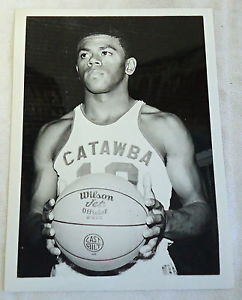
    dwight-duranteI remember the first time I saw Dwight Durante* shoot. It was in the old Guilford College gym. Catawba College was the visiting team. Guilford in those days was a small college basketball powerhouse, ranked among the top NAIA schools. Our coach was future hall-of-famer Jerry Steele. We had three players who would be drafted by the pros (Ed Fellers, Pat Moriarty and Bob Kauffman, who went on to become an NBA all-star, coach and general manager). Catawba was good but not quite great, and sure to lose.

    Not far past the half court line on Catawba’s first possession, Dwight Durante fired up what would have been a desperation shot for an ordinary player. But for Durante it was like a layup. Swish. The whole crowd’s jaw dropped. For the rest of the game, Durante perforated the Guilford defense with artful moves, but kept blowing everybody’s mind with these extremely long shots. I forget the final score, but I remember that Guilford lost. And Dwight had 50-some points.

    All those long shots were worth just two points each. Two more decades would pass before the 3-point shot arrived. From a 2007 story by Mike London in the Salisbury (NC) Post:

    Eighty amateur basketball stars gathered in New Mexico in the spring of 1968 for the Olympic Trials.  Only 12 would be chosen for the USA team that would compete for a gold medal in Mexico City.  Pete Maravich, Charlie Scott, Rick Mount and JoJo White were there.  So was the nation’s most famous little man, 5-foot-9 All-American Calvin Murphy, who could dunk two balls at a time.  But the sensation of those trials was a 5-8 junior from Catawba who scored 44 points, tied Murphy in knots and led the NAIA all-stars to three straight victories.

    His name was Dwight Durante, and while the selection committee wasn’t going to put a 5-8 NAIA kid on the team, Durante proved he could play with the best.  “I had a great tournament,” Durante said at Catawba’s basketball reunion.  “I almost made it.”

    Durante’s name is still whispered on the Catawba campus four decades after his heyday.  He was a lefty scoring machine with lightning in his legs.  He shot often, connected often.

    The Catawba record book remains his personal property: most career points (2,913), most points in a game (58), highest scoring average for a season (32.1).  He averaged 29.4 points per game for his career.  He scored 777 more points than Bill Bailey, Catawba’s No. 2 all-time scorer.

    Durante did what he did despite an unfortunate suspension that cost him nearly half his sophomore year and an injury that hobbled him for a month his senior year.  And he did it without benefit of the 3-point shot.

    “I figure 60 percent of his field goals would have been 3-pointers,” said Sam Moir,  Durante’s coach at Catawba.  “His teammates have told me, ‘No, Coach, it would have to be 70 percent.’  Dwight had great legs — he wore ankle braces in practice — and he could elevate and shoot accurately from 25, 26 feet.”

    …”He was Allen Iverson, but he was Iverson with range,” said James Brown, a Catawba Hall of Famer who used to sneak into gyms as a youngster to watch Durante’s magic act.  “If Dwight was coming out of college now, he’d get a multi-million dollar contract.”

    Yes, he was that good — and decades ahead of his time. Catawba has more famous alumni, but none better at any sport than Dwight Durante. That’s why I just added him to the Catawba’s notable alumni list in Wikipedia, with three citations (you’re welcome). One of those, a list of all Globetrotters players, has Dwight listed at 5’6″. I think that’s closer to correct, but I dunno.

    Other small-college players I was lucky to see back then: Gene Littles of High Point College, Henry Logan of Western Carolina University, and Earl Monroe and William English of Winston Salem State University. All were great. (Earl was my fave, and the finest ball-handler of the day.) But none could shoot like Dwight Durante. I’m not sure anybody ever will. Even, dare I say, Steph Curry. (Sadly, that’s a debate we’ll never have.)

    [Later…] I just found this 1996 item in the Sports Illustrated vault:

    Dwight Durante, a 5-foot-8 freshman guard at Catawba College, Salisbury, N.C., tallied 58 points against Western Carolina to set a new single-game scoring record in the Carolinas Conference. Durante is the league’s leading scorer with a 30.1 average.

    I remember that little piece because of what Jerry Steele said after Carl Sheer, Guilford’s play-by-play announcer, brought it up after a victory over Catawba. “Well,” said Jerry, in his slow Carolina drawl, “Dwight Durante might have his picture in Sports Illustrated. But I’ve got Bob Kauffman’s picture in my bedroom.” (Bob was the third player picked in the 1968 NBA draft, behind Elvin Hayes and Wes Unseld. Bob became a three-time all-star with the Buffalo Braves (now the Los Angeles Clippers. Still, my point is that the NAIA in those days had some outstanding players.)


    *Pronounded “Durant,” as in Kevin. Not Durant-e, as in Jimmy.

  • On @Cluetrain, @advertising @social and #NewClues

    In There Is No More Social Media — Just Advertising, Mike Proulx (@McProulx) begins,

    CluetrainFifteen years ago, the provocative musings of Levine, Locke, Searls and Weinberger set the stage for a grand era of social media marketing with the publication of “The Cluetrain Manifesto” and their vigorous declaration of “the end of business as usual.”

    For a while, it really felt like brands were beginning to embrace online communities as a way to directly connect with people as human beings. But over the years, that idealistic vision of genuine two-way exchange eroded. Brands got lazy by posting irrelevant content and social networks needed to make money.

    Let’s call it what it is: Social media marketing is now advertising. It’s largely a media planning and buying exercise — emphasizing viewed impressions. Brands must pay if they really want their message to be seen. It’s the opposite of connecting or listening — it’s once again broadcasting.

    Twitter’s Dick Costello recently said that ads will “make up about one in 20 tweets.” It’s also no secret that Facebook’s organic reach is on life support, at best. And when Snapchat launched Discover, it was quick to point out that “This is not social media.”

    The idealistic end to business as usual, as “The Cluetrain Manifesto” envisioned, never happened. We didn’t reach the finish line. We didn’t even come close. After a promising start — a glimmer of hope — we’re back to business as usual. Sure, there have been powerful advances in ad tech. Media is more automated, targeted, instant, shareable and optimized than ever before. But is there anything really social about it? Not below its superficial layer.

    First, a big thanks to Mike and @AdAge for such a gracious hat tip toward @Cluetrain. It’s amazing and gratifying to see the old meme still going strong, sixteen years after the original manifesto went up on the Web. (And it’s still there, pretty much unchanged — since 24 March 1999.) If it weren’t for marketing and advertising’s embrace of #Cluetrain, it might have been forgotten by now. So a hat tip to those disciplines as well.

    An irony is that Cluetrain wasn’t meant for marketing or advertising. It was meant for everybody, including marketing, advertising and the rest of business. (That’s why @DWeinberger and I recently appended dillo3#NewClues to the original.) Another irony is that Cluetrain gets some degree of credit for helping social media come along. Even if that were true, it wasn’t what we intended. What we were looking for was more independence and agency on the personal side — and for business to adapt.

    When that didn’t happen fast enough to satisfy me, I started ProjectVRM in 2006, to help the future along. We are now many people and many development projects strong. (VRM stands for Vendor Relationship Management: the customer-side counterpart of Customer Relationship Management — a $20+ billion business on the sellers’ side.)

    Business is starting to notice. To see how well, check out the @Capgemini videos I unpack here. Also see how some companies (e.g. @Mozilla) are hiring VRM folks to help customers and companies shake hands in more respectful and effective ways online.

    Monday, at VRM Day (openings still available), Customer Commons (ProjectVRM’s nonprofit spinoff) will be vetting a VRM maturity framework that will help businesses and their advisors (e.g. @Gartner, @Forrester, @idc, @KuppingerCole and @Ctrl-Shift) tune in to the APIs (and other forms of signaling) of customers expressing their intentions through tools and services from VRM developers. (BTW, big thanks to KuppingerCole and Ctrl-Shift for their early and continuing support for VRM and allied work toward customer empowerment.)

    The main purpose of VRM Day is prep toward discussions and coding that will follow over the next three days at the XXth Internet Identity Workshop, better known as IIW, organized by @Windley, @IdentityWoman and myself. IIW is an unconference: no panels, no keynotes, no show floor. It’s all breakouts, demos and productive conversation and hackery, with topics chosen by participants. There are tickets left for IIW too. Click here. Both VRM Day and IIW are at the amazing and wonderful Computer History Museum in downtown Silicon Valley.

    Mike closes his piece by offering five smart things marketers can do to “make the most of this era of #NotReally social media marketing.” All good advice.

    Here’s one more that leverages the competencies of agencies like Mike’s own (@HillHolliday): Double down on old-fashioned Madison Avenue-type brand advertising. It’s the kind of advertising that carries the strongest brand signal. It’s also the most creative, and the least corrupted by tracking and other jive that creeps people out. (That stuff doesn’t come from Madison Avenue, by the way. Its direct ancestor is direct marketing, better known as junk mail. I explain the difference here.) For more on why that’s good, dig what Don Marti has been saying.

    (BTW & FWIW, I was also with an ad agency business, as a founder and partner in Hodskins Simone & Searls, which did kick-ass work from 1978 to 1998. More about that here.)

    Bottom line: business as usual will end. Just not on any schedule.


  • Captivity rules

    210px-Jail_Bars_Icon.svgIn one corner sit me, Don Marti, Phil Windley, Dave Winer, Eben Moglen, John Perry Barlow, Cory DoctorowAral Balkan, Adriana Lukas, Keith Hopper, Walt Whitman, William Ernest Henley, the Indie Web people, the VRM development community, authors of the Declaration of Independence, and the freedom-loving world in general. We hold as self-evident that personal agency and independence matter utterly, that free customers are more valuable than captive ones, that personal data belongs more to persons themselves than to those gathering it, that conscious signaling of intent by individuals is more valuable than the inferential kind that can only be guessed at, that spying on people when they don’t know about it or like it is wrong, and so on.*

    In the other corner sits the rest of the world, or what seems like it. Contented with captivity.

    The last two posts here — Because Freedom Matters and On taking personalized ads personally — are part of the dialog that mostly flows under this post of mine on Facebook.

    Many points of view are expressed, but two sobering comments stand out for me: one by Frank Paynter and one by Karel Baloun. Frank writes,

    I just don’t feel the need to see ads on Facebook. I have no personal or professional interest, and AdBlock/AdBlock+ has filtered out most for me. Oddly, since commenting on your post, I have seen 3 ads in the side bar. One was for “a small orange” and scored a direct hit! I recently read something by Chris Kovacs (Stavros the Wonder Chicken) praising the small orange hosting service so I was primed. Now, with this targeted ad coinciding with some expirations at BlueHost, GoDaddy and Dreamhost, I’m taking the plunge and consolidating accounts. Score one for Facebook targeted ads! The ads for a CreativeLive “Commercial Beauty Retouching” class and for Gartner Tableau didn’t cut it for me today, but — eh? who knows? On any given Thursday I might click through. But I really need to clean up that sidebar again. Three ads is too many.

    In response to Don’s Targeted Advertising Considered Harmful, Karel writes,

    I don’t understand views like the one in this semi-endorsed article. Targeted advertising is aiming at the commercial fulfillment of “intention”. These are the agents that will understand what people want.

    I do understand the walled garden problem, and the monopoly risk of only one company having all of this intent information. Yet, they are required to protect privacy, and all their credibility rests on that trust.

    And that’s not all.

    Earlier today I heard back from an old friend who wanted me to comment on his company’s approach to programmatic marketing. I invited Don in to help, and we produced a long and thoughtful set of replies to my friend’s questions (or assumptions) about programmatic (as it’s called, the adjective serving as a noun). I’ll compress and paraphrase my friend’s reply:

    • Automated matching is here to stay. We need to work with it rather than against it.

    • Facebook cares about privacy. Mark Zuckerberg even mentioned privacy in his keynote at the F8 Developer’s Conference in San Francisco.

    • Facebook has always been cautious about intrusive advertising.

    • While many don’t like surveillance and personal targeting, most programmatic marketing is in fact non-personal — it doesn’t use without personally identifiable information (PII). This is actually good for privacy.

    • In Europe, at least, there are laws regarding personally identifiable information and all the ways it cannot be used.

    So maybe we freedom-lovers have to take their points. At least for now.

    The flywheels of programmatic are huge. While survey after survey says most people have some discomfort with it, those people aren’t leaving Facebook in droves. On the contrary, they continue to flock there, regardless of Facebook’s threat (or promise) to absorb more of everybody’s life online.

    In Fast Company, Mark Wilson (@ctrlzee) unpacks Facebook’s 10-Year Plan to Become The Matrix. (His tweeted pointer says “Facebook’s 10-year plan to trap you in The Matrix.”) I think he’s right. After reading that, and doing his usual deep and future-oriented thinking, Dave recorded this 12-minute podcast on empathy, because we’re all going to need it. And yet I am sure Dave’s ‘cast, my posts, and others like it, will leave most people, especially those in the online advertising business, unpersuaded. Life is too cushy on the inside. Never mind that privacy is absent there.

    “If the golden rule applied to online advertising, none of it would be based on surveillance,” somebody said. But the ad biz obeys the gelden rule, not the golden one. They believe robotic agents can “understand what people want” better than people can communicate it themselves. And they’re making great money at it. Hey, can’t argue with excess.

    And hell, when even Frank Paynter (one of us freedom-loving types) kinda digs Facebook scoring an advertising bulls-eye on his ass, maybe the uncanny valley is just uncanny, period. Which is what Facebook wants. More surveillance, more shots, more scores. Rock on.

    So let’s face it: captivity rules — until we can prove that freedom beats it.

    If you want to work toward freedom, IIW is a good place to start (or, for veterans, to keep it up). Week after next. See you there.

    If not, join the crowd.

    [Later…] Frank has a helpful comment below, and Karel has responded with this long piece, which I’ll read ASAP after I get off the road, probably tomorrow (Monday) night, though it might be later. [Still later…] I’ve read it, and it’s very helpful. I’ll respond at more length when I get enough time later this week.

    Meanwhile, thanks to both guys, and to everybody on the Facebook thread, for weighing in and taking this thing deeper. Much appreciated.

    *[Later again…] Read what Don Marti writes here in response to my opening paragraph above. Excellent, as usual.

  • On taking personalized ads personally

    Inpersonalization the pile of comments under the post on Facebook I wrote about here yesterday, Christopher Brock writes a long and thoughtful response that pretty much represents the thinking of the adtech business today. Since it’s hard to respond point-by-point in Facebook’s commenting UI, I’ll do it here:

    It is not really fair to say Facebook identifies you as x,y and z.

    Yes it is, because Facebook is in the business of delivering personalized ads. True, they also deliver non-personalized ads (ones targeted, say, to a demographic). But since there is no flag on an ad that says it’s one or the other, and because Facebook can get more personal, with more people, than any other advertising platform in the world, it is legit to at least suspect that their ad-placing machine thinks you are x, y or z.

    What the ads reflect are the audience demographics approved by businesses willing to purchase impressions against a profile to which you fit in hopes of turning a ROI.

    Or because you’re being targeted personally. For example…

    Retargeting ads are based on your browsing habits, which can be telling of your historical intent based searches.

    Yes, that and a lot of other data, some gleaned by surveillance, some bought from Acxiom and other brokers, all crunched in a thing that IBM calls The Big Datastillery.

    See those beakers at the bottom? That’s you and me.

    How is it possible for a company as smart as IBM to insult human beings so obviously? The short and simple answer is, because consumers aren’t human. The term “consumer” presumes that’s all we do: consume. (Jerry Michalski calls consumers “gullets with wallets and eyeballs.”) In the same way that “when all you have is a hammer, everything looks like a nail,” “when all you have is plumbing, every consumer looks like a beaker.”

    As for all the plumbing above the beakers, does anybody outside the adtech world know the difference between programmatic (including direct and forwards), predictive, real time bidding (RTB), AB and MV testing, supply side platforms, demand side platforms, marketing and interaction optimization, and all the other valves in the piping that blurps placements of ads through Facebook, other commercial websites and mobile apps? I suppose from the plumbing side it doesn’t matter. But it does to the humans being treated like empty vessels on a conveyor belt. We don’t know what the hell is going on, but we do know that it’s big, creepy and trying to be personal in a robotic way.

    By contrast, the provenance of ads in the old advertising world was obvious to everybody. (And if they needed reminding, they got it with Mad Men.) Every ad you read in a newspaper or magazine, heard on the radio, saw on TV or a billboard was placed there either directly by the advertiser or through an agency. And here the key thing: it was never personal. It was aimed at a population. Everybody knew that.

    Direct marketing, better known as junk mail, was a very different animal. It was addressed to you personally, and wanted a direct response. Adtech is what we got after direct marketing body-snatched advertising. An ad you see on Facebook might be addressed to populations the old fashioned way, or it might be personal. You can’t tell the difference — unless an ad is obviously personal, in which case it risks falling into the uncanny valley where you might creeped out. At the extreme, perfectly personalized advertising (based on knowing everything about you) is perfectly creepy.

    Eith a new market we are served non-relevant ad content, however over time more businesses will move to paid digital ad marketing and the ads we see will become more contextually and intentionally relevant.

    And creepy.

    I know the best adtech people go out of their way to avoid the uncanny valley. There are also special cases, which also happen to be the two biggest: Facebook and Google.

    Facebook is in a position to know people to a high degree of detail. The company is careful not to show that fact (and fall into the uncanny valley), but knowing how personal Facebook can get does make a difference. That’s why I said “If I were actually the person Facebook advertised to…”

    Google is less privileged in that respect, but the nature of the help it provides (in search results, in guessing at locations we search for in Maps, and so on) makes their search results and ad placements less of a valley when they get uncanny.

    But in general the body-snatched nature of digital advertising leaves us in the dark, nearly all the time, about what’s personal and what’s not.

    There is a lot of profit potential for marketers who can accurately design marketing funnels for products/services based on demographic profiling and intentional modeling using a demand side platform like Facebook.

    Is that what it is? Man, that is so damn confusing to us beakers. I was in the advertising business (the old Mad Men kind) one way or another, for much of my adult life, and for me — as well as for the rest of the world — the demand side of the marketplace is the whole human population. The supply side is the one selling goods and services to that population.

    A few weeks ago I spent an afternoon with an RTB company talking about all this stuff, and my spinal cord kinked as my brain spun around, trying to grok how demand in that business is on the side that produces the ads, rather than the side that consumes them. (Which we mostly don’t, by the way. We ignore 99.x% of them. But we’re still consumers to the ad producers.) As Wikipedia currently puts it,

    A demand-side platform (DSP) is a system that allows buyers of digital advertising inventory to manage multiple ad exchange and data exchange accounts through one interface. Real-time bidding for displaying online ads takes place within the ad exchanges, and by utilizing a DSP, marketers can manage their bids for the banners and the pricing for the data that they are layering on to target their audiences. Much like Paid Search, using DSPs allows users to optimize based on set Key Performance Indicators such as effective Cost per Click (eCPC), and effective Cost per Action (eCPA).

    Whatever. (And saying that I speak for all people not laboring in the adtech bubble.)

    Since marketing data science is relatively new as is social, local and mobile tech, not all businesses buy digital ads.

    True. In fact the Internet we know today is only about 20 years old. It showed up when commercial activity could operate there (technically, when NSFnet shut down), in 1995. The cookie was invented around that time as well. (But not for tracking. It was meant originally just to help websites recall and assist prior visitors.)

    The Net we made then, and still have, is Eden. We arrived naked there, and we still are. The adtech business loves that, but the rest of us don’t. That’s why privacy is a huge issue online (sources: TRUSTe, Pew, Customer Commons) and a non-issue offline.

    In the physical world we’ve had clothing, shelter and other privacy technologies for many thousands of years — and manners for how we treat each others’ private spaces. In the online world, rudeness rules. A merchant who would be appalled at the thought of placing a tracking beacon on a visiting customer, just so that customer can later be “delivered” a better “advertising experience,” doesn’t think twice about doing the same online.

    This will change. It’s already happening through regulation, and through ad and tracking blocking rates that steadily increase. But those are stone tools. Eventually we’ll get real clothing and shelter. When that happens, the adtech business will be in trouble, unless it changes, which I’m sure it will.

    @docsearle maybe you should be a web marketer

    No thanks.

    you obviously have identified an area of opportunity.

    The area I’ve identified is the one where customers will signal their intentions far better than any marketer can guess at the same.

    If you want more and better thinking about all this, I highly recommend what Don Marti has been writing. He, Bob Hoffman and I are voices in the wilderness today. But that will change. The wilderness is already burning.

    Image from Personalizing with Purpose, by Paul Dunay in imedia connection.

  • Because freedom matters

    After one of myaxiom reluctant visits to Facebook yesterday, I posted this there:

    If I were actually the person Facebook advertised to, I would be an impotent, elderly, diabetic, hairy (or hairless) philandering cancer patient, heart attack risk, snoring victim, wannabe business person, gambling and cruise boat addict, and possible IBM Cloud customer in need of business and credit cards I already have.

    Sixty-eight likes and dozens of comments followed. Most were from people I know, most of whom were well-known bloggers a decade ago, when blogging was still hot shit. Some were funny (“You’re not?”). Some offered advice (“You should like more interesting stuff”). Some explained how to get along with it (“I’ve always figured the purpose of Internet ads was to remind me what I just bought from Amazon”). One stung: “So much for The Intention Economy.”

    So I replied with this:

    Great to see ya’ll here. Glad you took the bait. Now for something less fun.

    I was told last week by an advertising dude about a company that has increased its revenues by 49% using surveillance-based personalized advertising.The ratio of respondents was 1 in a 1000. The number of times that 1 was exposed to the same personalized ad before clicking on it was 70.

    He had read, appreciated and agreed with The Intention Economy, and he told me I would hate to hear that advertising success story. He was correct. I did.

    I also hate that nearly all the readers all of us ever had on our own blogs are now here. Howdy.

    Relatively speaking, writing on my own blog, which averages zero comments from dozens of readers (there used to be many thousands), seems a waste. Wanna write short? Do it in Facebook or Twitter. Wanna write long? Do it in Medium. Wanna write on your own DIY publication? Knock yourself out.

    And, because the bloggers among us have already done that, we’re here.

    So let’s face it: the leverage of DIY is going down. Want readers, listeners or viewers? Hey, it’s a free market. Choose your captor.

    I’ve been working all my adult life toward making people independent, and proving that personal independence is good for business as well as for hacking and other sources of pleasure and productivity. But I wonder whether or not most people, including all of us here, would rather operate in captivity. Hey, it’s where everybody else is. Why not?

    Here’s why. It’s the good ship Axiom: http://pixar.wikia.com/Axiom . Think about it.

    Earth is the Net. It’s still ours: http://cluetrain.com/newclues. See you back home.

    That’s where we are now.


  • The most important event, ever

    IIW XX, IIW_XX_logothe 20th Internet Identity Workshop, comes at a critical inflection point in the history of VRM: Vendor Relationship Management, the only business movement working toward giving you both

    1. independence from the silos and walled gardens of the world; and
    2. better means for engaging with every business in the world — your way, rather than theirs.

    If you’re looking for a point of leverage on the future of customer liberation, independence and empowerment, IIW is it.

    Wall Street-sized companies around the world are beginning to grok what Main Street ones have always known: customers aren’t just “targets” to be “acquired,” “managed,” “controlled” and “locked in.” In other words, Cluetrain was right when it said this, in 1999:

    if you only have time for one clue this year, this is the one to get…

    Now it is finally becoming clear that free customers are more valuable than captive ones: to themselves, to the companies they deal with, and to the marketplace.

    But how, exactly? That’s what we’ll be working on at IIW, which runs from April 7 to 9 at the Computer History Museum, in the heart of Silicon Valley: the best venue ever created for a get-stuff-done unconference.

    Focusing our work is a VRM maturity framework that gives every company, analyst and journalist a list of VRM competencies, and every VRM developer a context in which to show which of those competencies they provide, and how far along they are along the maturity path. This will start paving the paths along which individuals, tool and service providers and corporate systems (e.g. CRM) can finally begin to fit their pieces together. It will also help legitimize VRM as a category. If you have a VRM or related company, now is the time to jump in and participate in the conversation. Literally. Here are some of the VRM topics and technology categories that we’ll be talking about, and placing in context in the VRM maturity framework:

    Note: Another version of this post appeared first on the ProjectVRM blog. I’m doing a rare cross-posting here because it that important.

  • A blast from the independent past

    I just ran across a post (below) on my old blog from Tuesday, July 12, 2005: a few months less than ten years ago. It was at the tail end of what Tantek Çelik calls the Independent Web. He gives the time frame for that as roughly 2001-2005, peaking in 2003 or so. “We took it as an assumption that if you were creating, you were putting yourself on the Web, on your own site… We all assumed that it was sort of our inevitable destiny that the Web was open, the Net was open, everyone had their own identity — to the point where everyone knew each other not by our names but by our URLs, our domain names, because everyone owned their domain and had control over it.”

    What happened, he adds, was silos. Twitter popularized simplicity. Then Facebook built a big new ecosystem “that has nothing to do with the open Web.” They also made lots of stuff, such as identity, highly convenient. Log in anywhere with Facebook Connect (and don’t look at what’s happening behind the curtain).

    And now most of our experiences on the Web are inside and between giant silos that add up to a system Bruce Schneier calls feudal. It’s got some nice stuff in it, but it’s not ours. It’s theirs.

    So, while we wait for emancipation, it’s interesting to look back on what life was like on the Web when it was still ours.

    Note that what I wrote on the old blog was outlines. Every new post was a top level item, and subordinate ones came under it. Today Dave Winer gives us a similar tool with Liveblog.

    Anyway, here ya go:::

    +

    I’ve always wanted MORE back. This looks really promising.

    Virtualities

    I’m at this meeting, through Phil Windley‘s laptop’s audio.

    Anals of Customer Service, Part 235, 673,458,31 

    John Paczkowski: The Cluetrain don’t stop in Round Rock no more. It starts with this fine fodder:

    Begin by turning off all the LEDs on your keyboard. 

    My keyboard doesn’t have any LEDs.

    You must turn off the LEDs on your keyboard.

    My keyboard doesn’t have any LEDs.

    I can’t help you if you don’t turn off the LEDs.

    — Excerpt from a Dell customer service call

    Essentials

    Mitch responds to the “connections” item below with,

    I’m a little surprised that Doc’s take on the information is that people have “jumped to conclusions based on what one guy said,” since that is the very essence of blogging: A single correspondent reported something that would have otherwise been ignored. A lot of people are very interested in how Technorati might make money and, more to the point, help them make money.

    It’s one thing to point to something one person said, and another to jump to conclusions based on it. To me the latter is not “the essence of blogging.” In fact, it’s what too many big-J journalists do, and what too many of those journalists also accuse bloggers of doing.

    I like Mitch’s other points about Technorati’s business model(s). I think when this is over we’ll see a lot more transparency from everybody whose business lives in the blogosphere.

    Jeremy Wright busts Technorati for its performance:

    Technorati¹s index is slow. If it¹s taking Technorati 5-20 hours to bring a post in (if it does at all), that is 4-19 hours slower than Bloglines. It¹s inaccurate. It¹s lucky if it shows 10% of the results that PubSub, Bloglines and Blogpulse show. It¹s also a SLOW site. Response times of 1 minute aren¹t uncommon, and even then results sometimes simply aren¹t shown.

    I stuck up for Technorati for quite a while (and they¹re featured prominently in the book, which I now regretŠ hopefully I won¹t by the time the book comes out). But, Technorati has had 2 years to fix it¹s problems. Doc wants us to cut them some more slack, but I¹ve just about run out of slack. There are other services that are faster, more detailed, more comprehensive and actually listen to bloggers¹ concerns instead of making excuses.

    Andy Lark adds,

    Good on Jeremy. Frankly, Technorati is a joke in terms of indexing speed and accuracy. I can tag posts and not see them, well, ever. The fact you get listed at all is a miracle. He is right. As a user, they have let the blogosphere down. Doc Searls has a longer post on this. Doc, it’s great you are all chums but for us mere minions it just ain’t working and what doesn’t work, doesn’t get used. Simple as that.

    For what it’s worth, I have a pile of Technorati and PubSub subscriptions. And for a long time, PubSub kicked ass. (And I often let Technorati’s techies know about it.) Lately Technorati seems to be doing better. But hey, your mileage may vary. For what it’s worth, I found both Jeremy’s and Andy’s posts in a Technorati search.

    That said, Technorati’s failings have done a lot to cost some users faith in the service. There are still outages and breakdowns. There are on any service that’s scaling at the same rate. How often have you seen Flickr down for a “massage”?

    What matters is that they keep working on it and improving it. Looks to me like they’re doing that.

    Okay, more stuff…

    Stowe Boyd weighs in:

    I suspect that one of the issues here is the lack of cluefulness of Technorati, however, who have seemed to surprise everyone with their intention to make money — and lots of it — from its activities and services. Here’ is a great opportunity for Dave Sifry and company to leverage what they know about blog dynamics to head off a potential big stink. Remember the “Founding Fathers” flap from the Always On/Technorati Open Media 100 announcement?…

    Technorati will inevitably — to the degree that it is successful — influence the behavior of those who would like to benefit from the power thet comes from a high Technorati ranking, just like the lengths that people will go to in order to get a high Google ranking. As a result, Technorati will need to have very scrupulous business practices in its dealings with those to whom it sells its services.

    This is likely to flare up into a big imbloglio, with many perspectives swirling around, and a lot of hand waving and finger pointing. But I think it is a tempest in a teapot. The implicit social connections that blog linking imply are public: they are there for anyone to see, and the individuals involved actively create those links with that in mind. This is not some sort of surreptitious surveillance, like video cameras on street lights, or someone tapping our phone calls. And more importantly, as Doc suggests, the world is a better place if big corporations begin to take advantage of this information to figure out what people think is important, whose thoughts and observations matter, and how to better understand what is going on in the world. What is the alternative? We — the Blogosphere — are going to a lot of trouble to read and link to one others’ writing out here; do we want the rest of the world to ignore it? We are trying hard to make sense of the world; it’s stupid to think we would be better off if the world doesn’t pay attention, and adapt to the feedback system we have become. The value of that feedback is enormous, and people should be free to make money from turning it into bite-sized chunks for companies that want to do better: build better products, provide better service, and innovate more quickly.

    The Blogosphere is not some private club for those most actively engaged it in: its a global asset, a new means of understanding the world, and perhaps the best hope we have for making a better world.

    Rex Hammock has a brief post.

    Jason Dowdell writes,

    I personally know Tom Foremski and would not have based my piece on his story if I didn’t know him as an actual journalist. Tom would not put up data if it weren’t true, no matter how exciting it might be. Regardless, Technorati has issues it needs to deal with or it’s going to face continued scrutiny on it’s performance issues and lack of completeness. David Sifry and team have made a ton of progress in recent months regarding the user interface and features and have squashed a ton of bugs on the way… but if the performance doesn’t get fixed then it’s going to be a major issue.

    He says a lot more. Worth reading.

    Steve Gillmor goes up a level:

    Certainly the tone has shifted in the blogosphere. Finding and maintaining friendships will be sorely tested in the coming weeks and months. Great care must be taken to avoid misunderstandings, and sometimes, understanding all too well. It’s a time for leadership, not brinkmanship.

    It’s always nice when we can fly under the radar, avoidng the messy details of who gets the money and how. I’ve been doing this with attention, building coalitions, evangelizing the obvious, wheeling and dealing. Recently I’ve stopped all that, partly because others have picked up the banner and mostly because I’m sick and tired of it. I’ve tried to explain why I’m no evangelist, only to come off sounding like I’m evangelizing the idea.

    And Alan8373 says Conversation are Markets.

    Eye on the ‘sphere

    National Journal has launched Blogometer, “a daily report from The Hotline taking the temperature of the political blogosphere.”

    The war on war

    Britt Blaser…we Americans admire the terrorism problem too much as mass entertainment…

    A small part of a big piece. Read the whole thing.

    Department of Connections

    It’s interesting to see the ripple effect of The selling of the Blogosphere—Technorati’s big push into monetizing its treasure trove of data collected about millions of blogs, by Tom Foremski at SiliconValleyWatcher. The item is still the top story on his site. There it’s titled “The Selling of the Blogosphere.” The subtext:

    How Technorati hopes to market its treasure trove of data it collects on millions of blogs to corporations, exposing the relaxed intimacy of online conversations. It’s all part of a growing ecosystem of companies hoping to profit handsomely from the work of bloggers [Read].

    Right now, according to Technorati, the item has been blogged about sixteen times. The top response (in reverse chronological order, from the search), posted twenty minutes ago by DeepLinking, says,

    I gotta know how much Technorati is charging for the blog-clipping service SiliconValleyWatcher is talking about [via Jason Calacanis]. However, SVW’s shocked tone about the whole thing is silly and naive. If you’re not aware that the corporate world is freaked out about blogs and very much interested in understanding their impact, you need to hang out in the corporate world a little more.

    Jason Calcanis is concerned about “repurposed content,” then adds,

    I highly doubt that this service — if it even exists — would repurpose blog content. Technorati has been very good about taking only a snip of people¹s content. I don¹t see Dave taking liberties with people¹s content… Dave’s a good man.

    A number of bloggers, including Mike SandersDave WinerJeremy Zawodnyand Disruptive Media Technologies, quoted this line from Tom Foremski’s piece:

    What surprised me was how aggressively Mr Hirshberg was pitching Technorati’s expensive blog tracking services to this audience of agency and corporate communications professionals. Mr Whitmore barely mentioned his company, and I didn’t pitch anything, maybe I should have 🙂

    Of those four, only Mike had something positive to say:

    Of course legally and ethically there is nothing wrong with a company using public information to make millions. And I am pretty sure that Technorati advisors and Cluetrain authors Doc Searls and David Weinberger have thought about how this benefits the little guy, furthers the emergence of voice, and is additional proof that markets are conversations.

    Jeremy Wright quoted the same section, and more, adding,

    Not only is Technorati lagging behind in blog tracking, which is sad enough, but they¹re trying to sell their blog tracking services to corporations!

    According to SiliconValley Watcher, they even made arses of themselves at a recent panel by “pitching” during the panel (a huge no-no)

    Technorati tells me Jeremy posted that item 9 hours ago. Let’s see, it’s 10:45pm Pacific Time. Jeremy’s blog says he posted it at 4:45pm. Not sure what time zone he’s in. Still, I gotta say, what lag?

    This piece was kinda snarky too.

    Going down through the list here…

    Naill Kennedy (who works for Technorati) was next.

    Then comes Geek News Central, wondering out loud about how the service works.

    Marc Canter writes,

    $$$$$$Billions and billions$$$$$$ of dollars are spent every year on bullshit. On pure crap that is shoveled down our throats, trying to make us believe what they want us to buy.

    But what happens when one, two, five ad agencies figure out how to REALLY track what people are thinking about?

    What happens when some brand finds a way to put a warm and fuzzy spot in our hearts? Almost as if my magic.

    All this is happening because someone named Peter Hirshberg decided to move back to SF. Peter is one of those Silicon Valley guys who’s watched our industry become one of the leading industry’s throughout the world today. All culture, commerce and emotions lead through our industry.

    What is known as entertainment, marketing, influence and psychology is driven by technology today. Everything that we know – is ‘swatched’ in the veneer of technology. We wouldn’t be sitting here today, reading this post – if it wasn’t for technology. Almost nothing ‘happens’ without technology. That’s how big we are.

    And at the forefront of technology is blogging and social software.

    It’s about us, people, and once we get our hands on the wheel of our own destiny – look out world!

    Our own realization of what our own power is – is what it’s all about.

    Mitch Ratcliffe says,

    Along with MarcDave and others, I’m increasingly confused by the messages coming out of Technorati. They are grasping in so many directions — as a consumer service and species of publisher with Technorati.com, as an enabling technology provider with tags and attention.xml, as a business intelligence service. Dave Sifry is a great entrepreneur, but it is impossible to do everything well.

    He adds,

    The concern raised by SiliconValleyWatcher, that Technorati is monetizing bloggers’ creativity without sharing the wealth is misplaced, I think. Technorati has avoided pirating bloggers’ work by making it important to clickthrough to read full postings. It makes it easier to find the source data of the conversation. Were it to start taking full feeds of data and republishing them for corporate customers, it would be violating the rights of authors who have non-commercial share-and-share-alike Creative Commons licenses, but the folks at Technorati are too smart to make that mistake.

    Unfortunately, they don’t seem to realize that the “algorithms” of participation and influence — the market metrics for the conversational market — can’t be delivered by an enabler of the conversation that simultaneously shapes the conversation with a proprietary tagging scheme.

    Mitch, whose company is Persuadio, goes on,

    Persuadio analysis consistently finds that Technorati tags are changing the flow of data, meaning that any attempt to measure Technorati’s influence has to be conducted by a third party in order to be fair and unbiased.

    Technorati, at least according to my old friend Peter Hirshberg’s comments, is talking like it is building Persuadio’s services, but they are not.

    The list goes on.

    Okay, a few questions.

    First, How many witnesses reported on what Peter said on that panel? Answer: One. Another panelist, by the way. How many bloggers jumped to conclusions based on what one guy said?

    Next: Are marketers clueless or cluefull about blogging?

    If the answer is “clueless,” then don’t we want them to get the clues? Especially if all the raw data is nothing more than what’s been published on the free and open Web, and what’s sold is data about data rather than “repurposed content”?

    Next: Do we think they can get all the clues they need from search engines and feeds of blogs and searches about blogs and other stuff that’s already out there?

    If the answer is no, then what is wrong with selling those clues to people willing to pay for them?

    Some perspective.

    Technorati was born as a cool hack David Sifry came up with while he and I were writing this piece for Linux Journal. Later, after Dave made Technorati a company, I became a member of its advisory board.

    David and I are friends. Peter is a friend too. I’m one of the advisors who urged David to hire Peter, who’s a brilliant and funny guy.

    I’ve watched David and his crew work 24/7/365 scaling a search service that finds everything on the live and syndicated Web — that’s hugely complementary to the engines that search the static Web. They’ve rebuilt their infrastructure more times than I can remember. The whole thing has creaked and fallen a number of times, and kept going, kept improving.

    They haven’t always followed my advice (not by a long shot), but they’ve always listened to what bloggers are saying.

    Such as now, when I’m on the phone with David and Peter, going over each of these posts, seeing what can be learned from the company’s first experience talking about one of the ways it hopes to serve customers and make their business work for everybody.

    Will they make mistakes? Sure. Who won’t?

    And really: Was a mistake even made here? How can we be sure?

    Will they learn from the public conversation that their own service is exposing to them? From what I’m hearing (and saying) on the phone, I’d say the answer is yes.

    Hey, we’re all in new territory here. The big challenge isn’t to bust each other for mistakes. Or to play the Gotcha Game, which is one of the oldest and shittiest traditions in mass market journalism. It’s to help.

    From the beginning, that’s what Technorati has been trying to do.

    Right now, the helping is going back the other way. Which is a good thing.

    [A few minutes later…] I just checked, and this post is already showing up in a Technorati search for “Peter Hirshberg”.

    Blog(himand)her

    Chris Nolan on Blogher (the not-really all-woman blogging conference):

    This gives me a wonderful chance to state the obvious about this conference: IT IS NOT FOR WOMEN ONLY. Not only are men welcome — a statement that it seems absurd to have to make – but some are planning to attend.

    She adds,

    This gives me the chance to make another observation: If you are a man who like code and software and things that plug in, and is perhaps having trouble finding a girl who likes Java (and knows it’s not just a coffee) and undersands your inner Geek, this might be the PERFECT place for you to spend a summer afternoon.

    The ratio at most tech conferences is hugely biased toward men. That will assuredly not be the case here.

    The bull’s eye of her entreaties is Kevin Drum (read Chris’s links for the whole story); but all men (and women) are invited.

    Blogher is Saturday, July 30, in Santa Clara, CA: the heart of Silicon Valley. Follow that last link for more info and to register.

    I’d love to be there, but I have other commitments. Still, I recommend it highly.

    Back to the present.

    Nice to see that many of the people I volleyed with there are still around. And that some things persist. (For example, Blogher.) But it’s also sad to see how much is gone. Especially Technorati, which drew a huge amount of discussion then. It still exists as a company, but it ain’t what it was. But it’s good that it mattered.

  • Sports as a propaganda laboratory

    TBasketballhe other day a friend shared this quote from Michael Choukas‘ Propaganda Comes of Age (Public Affairs Press, 1965):

    This is not the propagandist’s aim. For him the validity of an image must be measured not by the degree of its fidelity, but by the response it may evoke. If it will induce the action he wishes, its fidelity is high; if not, low. … The standard that he uses in choosing the images to be disseminated — his “truths” — would be a scale based on the range of possible human responses to an image. His criterion thus is established on the basis of overt action.

    At first this made me think about journalism, and how it might fit Choukas’ definition of propaganda. Then it made me think about how we might confine the study of propaganda to a harmless subset of human story-telling. That’s when sports jumped to mind.

    Sports are almost entirely narrative. They also have, as social phenomena go, less importance outside themselves than such highly fraught concerns as politics, religion and business. To the cynic, sports are Kurt Vonnegut‘s foma: “harmless untruths, intended to comfort simple souls…Live by the foma that make you brave and kind and healthy and happy.”

    Yes, sports are more than that, but my soul at its simplest is a fan of the Mets. (And, less simply, a fan of the Red Sox.) Likewise, some of my least productive time is spent listening to sports talk radio — unless I count as valuable the communing of my simplest self with the souls of others who share the same mostly-harmless affections. (Hi, @MichaelSHolley.)

    But how much more productive is the time I spend listening to NPR, or reading The New York Times? Some, I would say. So, I am sure, would sports fans who favor getting their news from Fox and The Wall Street Journal.

    To see where I’m going here, lets unpack “harmless untruths” into a 2×2:

    harmless-untruth2x2

    Foma are in the lower right corner. Whether the subject is sports or something else, that seems like a good corner in which to study propaganda.

    Sports journalism, like all breeds of the discipline, escapes the foma classification by being about Truth, or at least about facts. But that’s beside my point, which is that interests, talk and reporting about sports all moves toward effects, which happen to be harmless but interesting.

    Great minds discuss ideas; average minds discuss events; small minds discuss people,” Eleanor Roosevelt is said to have said. But great minds discuss all three. So, even though events and people are the main subjects of sports (and of most) stories, many great sports journalists also traffic in ideas. Jim MurrayRoger Angell and Frank Deford some first to mind; but so do Howard Cosell and Heywood Hale Broun, whose personalities (or wordrobes, in Broun’s case) often upstaged the events and people they covered. Then I think about David Foster Wallace, Bill LittlefieldJohn McPhee, Andrea Kremer, Keith OlbermannMichael Lewis, Howard BryantTony Kornheiser, Charlie Pierce, John Updike, Norman MailerGeorge Plimpton, Gay Talese, David Halberstam and other greats who work at deeper levels than the the usual bait for eyeballs and clicks.

    So, speaking of bait, consider the three words uttered constantly by assignment editors everywhere: What’s the story? 

    Stories, I was taught, are the main format of human interest; and all of them have just three elements:

    1. A protagonist, or character. This might be a person, a team, a cause or some other entity the reader, listener or viewer cares about. This character need only be interesting. Likability is a secondary matter. (Example: I hate Christian Laettner, an ESPN film.)
    2. A problem or challenge, This needs to be a situation that keeps the reader interested: tuned in or turning pages. (Classic edtorial instruction: “No story starts with ‘happily ever after.’”) In fact, it helps if the situation gets worse, so long as we have…
    3. Movement toward a resolution. If the war is over, or the home team is up or down by forty points with three minutes left, the challenge vanishes. If you’re at the game, your problem is beating traffic out of the parking lot.

    If you’re missing one of those elements, you don’t have a story.

    Case in point: Cambodia’s killing fields. The first I heard about them was in a story read by Hughes Rudd on a CBS newscast in the mid-1970s. He said that perhaps half a million people were already dead. On hearing this, I was appalled, because it came, in an “Oh by the way” manner, after stories about the Super Bowl and Patty Hearst (whose developing story sucked huge amounts of oxygen out of nearly every newsroom at the time).

    The slaughter happening in Cambodia mattered far more than either the Super Bowl or Patty Hearst; but it wasn’t a story, because it was missing all three of those elements. There was no protagonist, other than a population with a statistic. The problem, while immense, was not ours, and also not moving toward resolution. In fact years would pass before the killing stopped.

    For us here in the U.S., the killing fields story didn’t get real until The New York Times ran “The Death and Life of Dith Pran,” by Sydney Shanberg, in the Sunday Magazine. That gave us a character, and made Cambodia’s plight real and compelling. (The story also grew, naturally, into a movie.)

    Sports is always focused on those three elements. Is that because sports is always about propaganda? Or is it the case that all stories are, by their narrative nature, propaganda of a sort?

    Stories are at least tendentious in the sense that the author needs a point of view — even if that point is what Jay Rosen calls the view from nowhere. (That’s pretty much where CBS stood when it first reported on Cambodia’s many dead.)

    Look at the photos that accompany a sports story. If a team wins, the star player is shown making a great kick, throw, shot or whatever. Or maybe just smiling. If the same team loses, the picture shows the same player messing up or frowning. Never mind that the game was close, or that the photo is of one moment among zillions of others. The entire meaning of the photo is narrative. Its entire purpose is effect, which is both to serve and drive the interests of the reader, the viewer, the listener. What’s that say about journalism as a whole?

    Has anybody studied sports or journalism as propaganda? At least one inquiring mind wants to know.

    Bonus links:


  • Finally, maybe, getting a podcast rolling

    Hi, Liveblog fans. This post continues (or plays jazz with) this liveblog post, following my podcast learnings, live.

    As an old radio guy and an inveterate talker, I think I should be good at podcasting. Or at least that it’s worth trying. Which I have, many times.

    The results, so far, appear at here, at the WordPress-based podcasts.searls.com. My first and only podcast, so far, is there. It’s one I did with Britt Blaser, more than two years ago. My second through Nth are sitting in a folder called “podcasts,” on my hard drive.

    Today, with help from my son Jeffrey, who is smarter than me about many things, we put together a short second podcast. It combines two tries at podcasting that he and I did in June and July of 2005, when he was nine years old. We also recorded ourselves listening to those, putting them end-to-end using Audacity, and adding the intro and outro music, and other stuff.

    The last steps were: 1) heating up podcast blog page, 2) updating WordPress and adding Akismet (to kill the 3,000 spam comments there), and 3) adding the .mp3 file of the podcast itself. I did that by putting it in the same directory at Searls.com as the last podcast already sat.

    But I can’t figure out how to point to that directory in the blog post, or to replicate the process by which I made the podcast file appear in the first post. If anyone wants to help with that, lemme know. Otherwise I’m stuck for now, or at least as long as it takes to do some errands.

    To be clear, what I need help with right now (or when I get back from the errands) is making the podcast file appear as a link in the latest post at http://podcast.searls.com.

    Next is figuring how to get Apple and other re-publishers to list the podcast, so people can subscribe there.

    It won’t happen instantly, but it will happen.

    Thanks!


  • My Firefox phucked by phishing?

    So I wanted to give GIMP a try on my MacBook Air. I’ve used it on Linux boxen, but not in awhile. These days I edit my photos with Photoshop and Lightroom on the Mac because there are so many things only those tools do well. But I’m tired of being in silos.

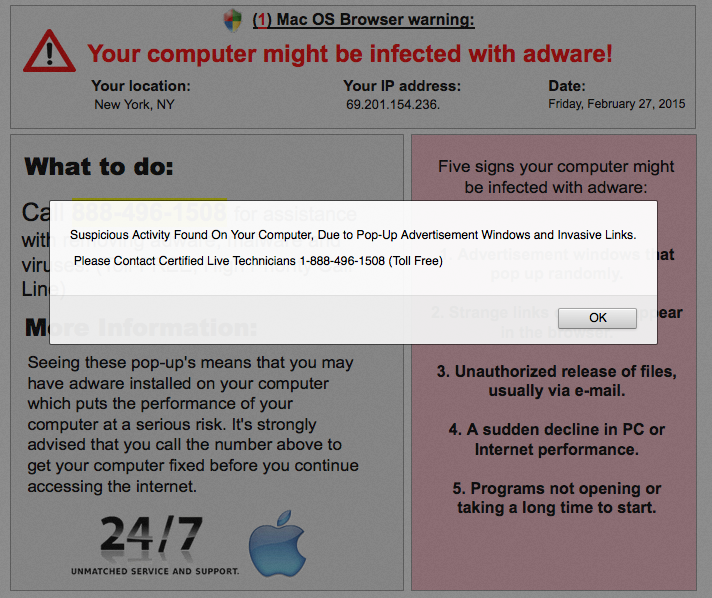
    Alas, when I did a (defaulted) Yahoo search on my Firefox browser, I made the dumb mistake of clicking on the top result, which was an ad (I think for gimp.us.com, but I’m not sure). I then clicked on the download link, unpacked the .dmg file, did the install — which failed — and have regretted it since. Nearly every link I click goes somewhere Netcraft’s toolbar add-on tells me has a huge risk, or gives me a “Phishing Site Blocked” message.

    Down some link paths I get a Firefox cross-site script warning (or something like that — can’t find it now), or this:

    Screen Shot 2015-02-27 at 9.40.29 PM

    It also talks.

    What to do? No idea. Suggestions welcome.

  • Figuring @Flickr

    Here’s a hunk of what one set (aka Album) in my Flickr stream looks like:

    Screen Shot 2015-02-27 at 7.57.58 PM

    And here are what my stats on Flickr looked like earlier today (or yesterday, since Flickr is on GMT and it’s tomorrow there):

    Screen Shot 2015-02-27 at 1.02.09 PM

    I ended up with 32,954 views, with no one of my 49,000+ photos getting more than 56 views. More than 95% of those views arrived via Flickr itself. The stats there are spread across 87 pages of results. Pages 1 to 63 go from 395 views (#1) down to 2. From page 64 to 87, all the results are for 1 view.

    I just pulled the searches alone, and got this:

    1

    Searched for: bay area aerial

    395

    2

    Searched for: doc searls

    307

    3

    Searched for: los angeles aerial view

    206

    41

    Searched for: sunrise

    164

    48

    Searched for: aerial view of mountains

    143

    49

    Searched for: aerial sand dune

    139

    51

    Searched for: “toronto” “aerial”

    138

    56

    Searched for: ewr

    134

    57

    Searched for: aerial farmland

    134

    75

    Searched for: wyoming coal

    113

    79

    Searched for: nasa gov

    108

    87

    A contact’s home page

    100

    88

    Searched for: nuclear bomb

    100

    92

    2013_12_30 Montserrat Mountain in Catalonia 

    /photos/docsearls/sets/72157639251295255/w…

    95

    95

    Searched for: diablo canyon nuclear

    93

    96

    Searched for: aerial island

    93

    102

    Searched for: arctic circle

    90

    107

    Searched for: united airlines

    86

    110

    Searched for: aerial view farmland

    83

    111

    Searched for: aerial

    82

    130

    Searched for: toronto aerial

    70

    131

    Searched for: containers transport

    69

    139

    Searched for: maple leaves

    63

    144

    Searched for: airplane sunset

    61

    153

    Searched for: aerial santa cruz

    58

    154

    Searched for: aerial ocean

    57

    165

    Searched for: road aerial desert

    54

    166

    Searched for: fly

    54

    167

    Searched for: magician

    53

    169

    Searched for: chicago skyline

    53

    171

    Searched for: airlines

    51

    173

    Searched for: las vegas aerial

    51

    174

    Searched for: “toronto” “aerial” “night”

    50

    178

    Searched for: desert aerial

    50

    179

    Searched for: siltstone

    50

    184

    Searched for: lax -sport -sports -lacrosse

    49

    189

    Searched for: landslides

    47

    203

    Searched for: lithium             

    41

    Searched for: internet connections

    39

    211

    Searched for: bayonne

    39

    212

    Searched for: diablo nuclear

    39

    216

    Searched for: “salt lake city” aerial

    38

    220

    Searched for: save the internet

    37

    221

    Searched for: river delta aerial

    37

    225

    Searched for: cargill

    37

    229

    Searched for: wyoming coal mine

    36

    235

    Searched for: army aviation desert

    34

    239

    Searched for: mt. wilson

    33

    244

    Searched for: sandcastle

    32

    249

    Searched for: ice circle

    31

    251

    Searched for: carole lombard

    31

    252

    Searched for: atomic tests

    31

    262

    Searched for: governor brown

    29

    264

    Searched for: carpinteria sunset

    29

    265

    Searched for: graveyard airlines

    29

    269

    Searched for: sunset carpinteria

    28

    272

    Searched for: /search/?tags=cambrian

    28

    273

    Searched for: hassle

    28

    274

    Searched for: city aerial view

    28

    275

    Searched for: glover park

    27

    276

    Searched for: diablo canyon nuclear plant

    27

    284

    Searched for: nyc pulaski skyline

    26

    287

    Searched for: network branches

    26

    300

    Searched for: roads aerial desert

    24

    The numbers on the left are where they fall in the order of popularity. I think the last one means there were 24 searches for roads aerial desert, which was the #300 search.

    When I go to the bottom of the pile where all are tied with just one view, I get this stuff:

    Searched for: lunch in the city

    1

    Searched for: ice shore

    1

    Searched for: snake

    1

    Searched for: street, walk

    1

    Searched for: father and his two kids

    1

    Searched for: misty winter

    1

    Searched for: valley roads

    1

    Searched for: child large picture shy

    1

    Searched for: recycling symbol

    1

    Searched for: boston old subway

    1

    Searched for: coffee

    1

    Searched for: mountain road

    1

    Searched for: open road

    1

    Searched for: san mateo county infrastructure

    1

    Searched for: pointy rocks

    1

    Searched for: new york by night

    1

    Searched for: alcoa

    1

    Searched for: parliament canberra

    1

    Searched for: afternoon sky

    1

    Searched for: summer sun park

    1

    Searched for: france versailles night

    1

    Searched for: dog scratching

    1

    Searched for: cloud painting

    1

    Searched for: pregnant 1946

    1

    Searched for: big leaf maple

    1

    Searched for: grasp

    1

    Most of the results are not searches, but photos, or photos that are “with” another shot. For example: https://www.flickr.com/photos/docsearls/with/9382370440/. Somehow all those are “with” this shot: https://www.flickr.com/photos/docsearls/9382370440/.

    I think that means somebody searches, finds a shot, and looks for other shots like it. Not sure, though.

    What I am sure about is that my photos get more action than my writing. I never meant it that way, but there it is.

  • Thoughts on tracking-based advertising

    Screen Shot 2015-02-18 at 11.07.22 PMYesterday  and I were guests on screen at a  session in Manchester, hosted by Julian Tait (@Julianlstar) and Ian Forrester (@cubicgarden). We talked for a long time about a lot of stuff (here’s a #cmngrnd search featuring some of it); but what seems to have struck the Chord of Controversy was something I blabbed: “Tracking-based advertising is creepy and wrong… and needs to be wiped out.” Martin Bryant (@MartinSFP) tweeted a video clip and a series of other tweets followed. Here’s a copy/paste, which loses a little between Twitter and WordPress):

    1.  and  favorited a Tweet you were mentioned in Feb 17 People dont realise how much worse our experiences with ads would be if they werent personalised
    2.  favorited a Tweet you were mentioned in

      Feb 17 I prefer personalised advertising, and working for a media startu, it’s better for us. But still, many find it creepy

    3.  Feb 17  targeted ads allow new players to enter the market. W/o it, it’s cost-prohibitive and incumbents can only play.
    4.  favorited a Tweet you were mentioned in

      Feb 17 People dont realise how much worse our experiences with ads would be if they werent personalised

    5.   Feb 17  People dont realise how much worse our experiences with ads would be if they werent personalised
    6.  retweeted some Tweets you were mentioned in

      Feb 17: Tracking-based advertising is “creepy and wrong… and needs to be wiped out,” says

    7.  retweeted a Tweet you were mentioned in

      Feb 17: Tracking-based advertising is “creepy and wrong… and needs to be wiped out,” says

    8.  Feb 17 Manchester, England  I prefer personalised advertising, and working for a media startu, it’s better for us. But still, many find it creepy
    9.  Feb 17  I’d like to debate on this topic. I’ll take the side of the advertiser.
    10.  and  favorited a Tweet you were mentioned in Feb 17: Tracking-based advertising is “creepy and wrong… and needs to be wiped out,” says   
    11.  and 5 others retweeted a photo you were tagged in

      Feb 17: Let’s talk the Cluetrain Manifesto… Here’s and .

       Feb 17Manchester, England Tracking-based advertising is “creepy and wrong… and needs to be wiped out,” says

      1.  favorited a Tweet you were mentioned in
        Feb 17 I’d like to debate on this topic. I’ll take the side of the advertiser.
      2.  favorited your Tweet
        22h Wow, that was quick. Thanks! Meanwhile, and will also help.
      3. ha, I’m happy to being proven wrong! That means I’ve learned something. Will follow up…

      4. will to learn about your perspective before we debate 😉

        Embedded image permalink
      5.  favorited your Tweet
        23h:   Read my book first and see if you still want to argue.

    So, while Cyrus awaits his copy of the book, I thought I’d share a few links on the topic, before I hit the sack, jet-lagged, here in London.

    First, a search for my name and advertising. Among those the one that might say the most (in the fewest words) is this post at Wharton’s Future of Advertising site.

    Second, dig pretty much everything that Don Marti has been writing about business, starting with Targeted Advertising Considered Harmful. My case — the one people who like personalized advertising might want to argue with — is Don’s. He became my thought leader on the subject back when he was helping me with research for The Intention Economy, and he’s been adding value to his own insights steadily in the years since. (BTW, I’m not a stranger to the business, having been a founder and creative director for Hodskins Simone & Searls, one of Silicon Valley’s leading ad agencies back in the last millennium.)

    When I get a chance I’ll write more on the topic, but for now I need some sleep.,

  • How will WMAL-AM survive losing its transmitter?

    This is about AM radio stations being worth less than the ground they stand on. Case in point: WMAL-AM in Washington, DC. You can see the problem with this Google Map:

    wmal-from-space

    The heart-shaped patch of green between the legs of I-495 and the I-270 spur is populated by four towers radiating the signal of WMAL, a landmark on Washington’s radio dial (at 630am) since 1925. The station’s 75-acre transmitter site is nearly as big as the nearby Bethesda Country Club golf course and the Westfield Montgomery Mall. It also sits deep in the suburbs, surrounded by trees and highways, most of which appeared long after WMAL erected the towers on cheap open land, far from the bustling Capitol, many decades ago. That land is worth a lot more now.

    So it’s no surprise to read news (via The Sentinel) that Cumulus Media, which owns WMAL-AM & FM, has put the land up for sale. Says the report, “Local real estate experts estimate the property could be worth hundreds of millions.” I don’t know what WMAL-AM is worth, but I’m guessing it would be a few million, tops. So it makes financial sense to sell off the land. 

    But what about the signal? Many AM stations have already “gone dark” (as they say in the business). Will WMAL do the same? In the first comment below, Jon Elbaz, who wrote the Sentinel piece, says Cumulus intends to keep WMAL-AM on the air somehow. But a question is raised: how long can any AM station on desirable land stay on the air? And by what means?

    Back in radio’s golden age — when AM ruled the waves — the stations battling for the top of Washington, DC’s ratings heap were WTOP and WMAL. WTOP peaked when it went all-news in the 1960s, and has stayed at the top ever since. It did that by doing great work, and by wisely moving to FM a few years back, taking over the channel (103.5) long occupied by classical WGMS-FM, whose owners by then had unloaded its original 570am signal, which is still on the air as WSPZ. (More about that below.) WMAL also has an FM signal, on 105.9. That one is #9 in Nielsen’s latest figures, while WTOP is #1. WMAL-AM doesn’t show at all.

    So I have to wonder about Cumulus’ commitment to keeping the signal on the air. Finding a new transmitter site is not a cheap undertaking. To explain, I’ll need to get technical.

    To transmit, AM radio stations require a substantial sum of real estate. AM waves are hundreds of feet long, and require long radiating antennas. These take the form of towers. If a station has a directional signal, more than one tower is required to create the signal’s pattern. WMAL has two different asymmetrical patterns for use in the day and night. Here is how the four towers are arranged, and the patterns they produce:

    towerimage

    Each tower is a quarter wavelength high, which at 630am makes them about 400 feet tall. Surrounding them is also a “ground system” of buried conductors running hundreds of feet in all directions from the towers. This is why WMAL needs those 75 acres. To stay on the air, WMAL will need to find replacement acreage, somewhere that allows the signals you see above (or slightly modified versions of them) to cross as much of the Metro area as possible, meaning it will have to be northwest of town. For that Cumulus will need to either buy land out that way, or co-site with some other station already operating there.

    The only two stations with transmitters out there are WTEM (“ESPN 980”) and WSPZ, both sports stations (on 980 and 570 respectively) and owned by Red Zebra Broadcasting (in which the main stakeholders are also those of the Washington Redskins). (Here are aerial views, via Bing, of the WTEM and WSPZ sites.)

    Of those, WSPZ’s site looks like it has more room. It’s in Germantown, about 22 miles from downtown Washington, more than twice the distance from downtown Washington as WMAL’s current site. I suspect the signal patterns will be “tightened” to concentrate energy toward Washington, though, and that might help. But ground conductivity — which matters hugely for AM signals — is poor in Maryland and Virginia, which is one reason AM stations there tend to suck in the ratings. (For evidence of how much ground conductivity matters, compare three AM stations, all 5,000 watts, and all on 570am: WSPZ in Washington, WNAX in Yankton, South Dakota and KLIF in Dallas. The latter two cover enormous territories, while WSPZ basically covers the District and bits of adjacent Maryland and Virginia. Ground conductivity in the middle of the country is about 15x better than the area served by WSPZ.)

    In fact WSPZ is way out of town today because its owners a few years back did exactly what Cumulus is doing with WMAL today: they sold the land out from under the towers. This topo map shows where the WSPZ towers used to be, when it was still WGMS: a site in Potomac, across the Beltway about three miles from WMAL’s site. Believe me, the old signal from the old site covered the metro a helluva lot better than the new signal from the new site. Expect the same results if WMAL moves there.

    So again, why keep WMAL-AM on the air at all?

    One argument is that the WMAL-FM signal isn’t a great one. While it’s licensed for 28000 watts, it only hits that max to the northwest and southwest of its transmitter in Merrifield, outside the Beltway on the southwest side of town. Toward the district (northeast of the site) its signal has a huge dent, down to around 1/4 of what it puts out in the other directions:

    wmalfm

    So getting a bit of help on the AM side might still be worth the trouble.

    Still, one wonders… How much time will pass before the land under WSPZ becomes far more valuable than the station — or even WSPZ and WMAL put together?

    This kind of question sits in front of many AM station owners’ minds right now. I expect what we’ll have in the long run are AM stations standing on land with little or no market value. The rest will disappear along with their real estate.

    [Later…] I also wonder about Cumulus’ commitment to saving the signal. In 2011 it acquired (by merger) KAAY/1090am in Little Rock, Arkansas — a 50,000 watt giant with rich history and a night signal that stretches from Cuba to Canada. Or used to. Wikipedia:

    Unfortunately, owners of KAAY in later years allowed the stations famed transmission facilities in Wrightsville, AR to fall into disrepair. Copper thieves stole a large amount of transmission line, degrading the stations signal significantly. Roof damage allowed water to enter the 50,000 watt transmitter – knocking it off the air. Currently, KAAY has reestablished 50000 watt service during the day, but has yet to rebuild the 3 tower directional array, so nighttime service remains under an STA at 1250 watts non directional.

    KAAY is the biggest AM station in Arkansas. If Cumulus cared, it would restore the station to full capacity. But the format is “brokered/Christian,” which is tends to be low-cost dial-filler. Only one AM station makes the published ratings for Little Rock, and it’s Cumulus’ KARN/920 “The Sports Animal.” Not KAAY. KARN is also at the bottom of the heap. Higher rated are four other Cumulus stations, all FMs.

    So the Company isn’t suffering there. Its portfolio of stations does fine, and that’s what matters, right? If the market won’t miss WMAL-AM, why bother keeping it?

    [Later again…] This story features an offer sheet on the property, and says offers need to be in by March 12. I also found this older story, about Cumulus’ plan to sell the land under KABC’s transmitter. I can find no evidence that the land has been sold, or is still on the market. KABC also has no construction permits to move to a new location.

    [Later again…] Well, apparently they do think it’s worth the bother. Jonathan O’Connell reported this in a February 13 story in The Washington Post:

    When the towers are torn down, it will not affect WMAL, said Cumulus spokesman Collin Jones. Jones said the company would lease transmission facilities elsewhere after the sale closed.

    “Listeners will literally have no idea that it happened,” Jones said.

    Well, some listeners. Others will. There is no way WMAL can move to another site without compromising the signal in some directions.

    [May 5…] A buyer for the land has been found, stories in Bethesda Magazine and Radio World report. In a search on FCCInfo.com, however, I see no applications or construction permits at a new site, but perhaps Cumulus is still in negotiations for leasing space at other locations.

    [August 2016…] WMAL is indeed moving to the WSPZ site, with 10kw by day and 2.7kw by night. The patterns will be very similar to WSPZ’s. So expect similar coverage.

    Bonus link.

    [June 26, 2018 follow-up] WMAL is now sharing the WSPZ site, and the old towers may already be gone.

    Here’s the new tower layout and signal pattern (it’s identical day and night):

    Source: FCCinfo.com.

    [3 November 2020…] Five years later, the towers will be demolished. See Demolition of Bethesda radio towers will take a piece of history, rare open space, in the November 3 Washington Post.

  • Local jazz radio coming to Kansas City

    mutualmusiciansSo I just learned that a Kansas City Jazz station is headed toward existence. If you love any of these musicians, this should be very good news.

    The story begins,

    By this time next year, Kansas City-style jazz might be bebopping out of a new radio station near you.

    The Mutual Musicians Foundation in the 18th and Vine jazz district announced this week it’s been granted a construction permit for a noncommercial, low-power FM radio station. The foundation is hoping the KC jazz station, at 104.7 FM, will be on the air by next January.

    It will be called KOJH-LP. LP stands for low power, or what the FCC calls LPFM. Here’s the application for what’s now a granted CP, or Construction Permit.

    In fact there is a jazz station called KOJH already — a streaming one in Oklahoma. Though it’s not a licensed radio station, it may have inherited those call letters from one. (I’ve looked, but haven’t been able to tell. Maybe the lazyweb knows.)

    Here’s the station’s mission, filed with the FCC.

    KOJH will broadcast from the Arts Asylum at Harrison and E. 9th Street. A new tower will go on the building. From there they will radiate a whopping 22 watts at 207 feet above the average terrain, at 104.7fm. It’s a tiny signal that will won’t reach far out of downtown.

    Worse, most of Kansas City’s big FM stations have effective radiated powers (what’s concentrated toward the horizon, or populations) of 100,000 watts, and transmit from a collection of towers over 1000 feet tall, just a short distance east of downtown. One of those is KBEQ on 104.3, just two notches down the dial from KOJH. This means you will need a good radio to keep KBEQ from blasting KOJH sideways. Today’s car radios are good enough to keep that from happening. (And will likely get KOJH up to a dozen or more miles away.) Recent-vintage portable and home radios will have a hard time, unless they’re very close to the KOJH transmitter.

    (Many manufacturers quit caring decades ago. And now Radio Shack has filed for bankruptcy. Even CEO Can’t Figure Out How RadioShack Still In Business, which ran in The Onion in 2007, has proven prophetic.)

    So it is good to know KOJH plans to stream online, because that’s the future of radio.

    But there are other stepping stones.

    For example, something the Mutual Musicians Foundation might consider doing, while they get underway with KOJH, is buying an AM station that’s dropped out of the ratings. Some possibles, going up the dial:

      • KCCV/760. 6000 watts day, 200 watts night.
      • WHB/810. 50000 watts day, 5000 watts night.
      • KBMZ/980. 5000 watts day and night.
      • KCWJ/1030. 5000 watts day, 500 watts night.
      • KCTO/1160. 5000 watts day, 230 watts night.
      • KYYS/1250. 25000 watts day, 3700 watts night.
      • KDTD/1340. 1000 watts, day and night.
      • KCNW/1380. 2500 watts day, 300 watts night.
      • KKLO/1410. 5000 watts day, 500 watts night.
      • KCZZ/1480. 1000 watts day, 500 watts night.
      • KWOD/1660. 10000 watts day, 1000 watts night.

    (Note that wattage is just one variable. Location of the transmitter, efficiency of the towers, directionality of the signal, ground conductivity and frequency all matter too. For example, the lower the station’s frequency, the longer the wavelength, and the better its signal travels along the ground.)

    Only three AM stations show up in Kansas City’s latest ratings: KCSP, a sports station at 610am, KCMO, a right-wing talk station at 710am, and KPRT, a gospel music station at 1590am. (With 1000 watts by day and just 50 watts at night, I’m amazed KPRT makes the ratings at all.)

    All the un-rated stations listed above put signals across all of KOJH’s coverage area, and then some. Some, such as WHB (a legendary station and signal), may never be for sale. But I’ll bet some others are on the market today, and will only get cheaper.

    Music sounds awful on AM, unless the station radiates HD radio encoding. Most engineers I know in broadcasting dislike HD radio and consider it a gimmick. But it does sound quite good on both AM and FM. The difference it makes on AM is amazing.

    Loyal listeners of a format will do the work required to get a signal. I’m sure that’s the case with KPRT’s gospel listeners, for example. Now, after stumbling for years, HD radio is picking up with manufacturers. There is a nice list on the HD Radio site. Meanwhile, the market value of AM radio stations, especially ones with no ratings, is crashing to the point where the cost of operating them exceeds their income. (An AM station sucks about twice the wattage off the grid as it radiates from its transmitter.) In coming years many of them will sell for a song.

    So those changes — the rise of HD Rado and the decline of also-ran AM station prices — are factors the KOJH folks might want to keep in mind as they fire up their LP signal on FM. Think local, but think big too.

    Bonus link.

  • Shooting my escape to Paradise

    Here is how New York looked through my front window yesterday at 3:51am, when I was packing to fly and drive from JFK to LAX to Santa Barbara:

    Screen Shot 2015-02-03 at 7.37.38 AM

    I shoveled a path to the street four times: the first three through light and fluffy snow, and the fourth through rain, slush and a ridge of myucch scraped in front of the driveway by a plow. By the time we got to JFK, all the pretty snow was thick gray slush. It was a good time to get the hell out. Fortunately, @United got us onto the first flight of the day to LAX . (We had been booked on a later flight. To see the crunch we missed, run the FlightAware MiseryMap for JFK, and watch 2 February.)

    The flight to LAX was quick for a westbound one (which flies against the wind): a little over five hours. For half the country, the scene below was mostly white. This one…

    Screen Shot 2015-02-03 at 8.14.24 AM

    … of the ridge country between Beaver Dam Lake and Columbus, Wisconsin, said far more about snow than the white alone suggested. Those corrugated hills are grooves scraped onto the the landscape by the Wisconsin Glacial Episode, during which a local lobe of the Laurentide ice sheet crept steadily northeast to southwest, finally melting into lakes and rivers only about ten thousand years ago — a mere blink in geologic time.

    A few minutes later came the snow-covered Mississippi, skirting Prairie du Chein, on the Wisconsin-Iowa border:

    Screen Shot 2015-02-03 at 8.14.39 AM

    Then, a couple hours later, we flew straight across the Grand Canyon, which has a horizontal immensity one tends to miss when gawking at the canyon’s scenic climaxes from the ground. One of my favorite features there is the Uinkaret Volcanic Field, which poured a syrup of lava over the Canyon’s layer cake of 290-1700-year old rock. That happened about 70,000 years ago, and still looks fresh:

    Screen Shot 2015-02-03 at 8.13.47 AM

    (BTW, two of the three pictures at that last link, in Wikipedia, are ones I shot on earlier trips. The third is by NASA.)

    Gliding into LAX, we got a nice view of downtown…

    Screen Shot 2015-02-03 at 8.13.30 AM

    … where the temperature was 76°.

    When we got home to Santa Barbara it was about 70° and looked like this, out my home office door:

    Screen Shot 2015-02-03 at 7.40.01 AM

    It wasn’t the prettiest sunset we’ve had here (this one I shot on 22 January was spectacular), but I’ve rarely seen a more welcome scenic bookend for a cross-country trip.