• Home
  • About
  • MyTerms
  • News Commons
  • People vs. Adtech
  • Personal AI

Doc Searls Weblog

Just trying to make stuff happen


  • January 27, 2015

    Blogging the #BlizzardOf2015 in #NYC that wasn’t

    The blizzard hit coastal New England, not New York City. In fact, it’s still hitting. Wish I was there, because I love snow. Here in New York City we got pffft: about eight inches in Central Park: an average winter snowstorm. No big deal.

    I was set up with my GoPro to time-lapse accumulations on the balcony outside our front window. I had two other cameras ready to go, and multiple devices tuned in to streams of news stories, tweets and posts. Instead the story I got was an old and familiar one of misplaced sensationalism. Nothing happening, non-stop. At least here.

    The real news was happening in Boston, Providence, Worcester, Montauk, Scituate, the Cape and Islands. But I didn’t have anything useful to add to what thousands of others were showing, posting, tweeting and blogging. Back during Sandy, I had a lot to blog because important stuff wasn’t being said on media major and minor. For example I predicted, correctly, that many radio and TV stations would be knocked off the air by flooding. I also thought, correctly, that New York was under-prepared for the storm.
    Not so this time, for any of the places the storm has hit.

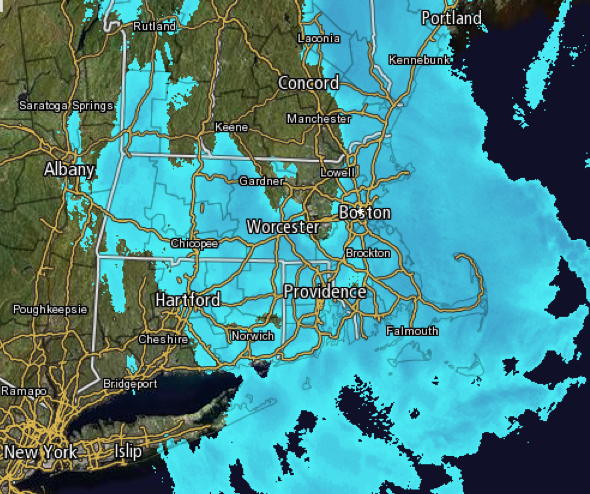
    With the snow still falling over New England…

    Screen Shot 2015-01-27 at 8.17.02 PM… there’s a good chance that it will break old records (and probably already has in some places). But the cable news system is a still a broken record: endless pronouncements by undersecretaries of the overstate.

    As more cords get cut, and more of us inform each other directly, new and better forms of aggregation and intermediation will emerge. To some extent the major media are already adapting, showing videos, tweets and posts from the Long Tail. But I suspect that the next major shift will be to something different than anything we have now.

    I suspect the biggest innovations will be around discovery — of each other. Who has the information I want, now? Who or what is being fully useful, rather than just noisy or repetitive? Search from Google and Bing, while good in many ways, seems hidebound and stale to me. Its personalization is mostly about guesswork that’s hard to figure or control, and is jiggered for advertising as well.

    For example, right now I’d like to know more about the breached sea wall in Scituate. Here’s a Yahoo (Bing) search. Most of the top results are at boston.com, which says to me — before I even look at any of them — “Oh, boston.com is the Boston Globe, and I’ve already run out the five views it gives me on this browser before it thows up the paywall.” In fact there is no paywall for some of the local stories, but I’ve seen it so many times that I don’t want to go there. The second thing I notice is that they’re all old: from 2014 and 2013. When I look for the same thing at Google News, the top results are the paywalled Globe ones. So I search for Scituate on Twitter, which is more helpful, but not fine-grained enough. What if I want to read only people who live there and are reporting from there?

    Try to think outside of the search and social media boxes for a minute. Think all the way outside the Web.

    Just think Internet, which is nothing more than a way for anybody or anything to connect to anybody or anything. Let’s find a way to do discovery there. We have some crude beginnings with stuff like this. But we need something much more natural, distributed and outside the control of any company or government — as is the Internet, by nature.

    Once we have that, all kinds of amazing stuff will start to open up.

    Broadcasting, Cluetrain, Geography, infrastructure, Internet, Journalism, Live Web, Personal, Places, problems, Technology, weather
  • January 27, 2015

    Maybe wallets can’t be apps

    Danese Cooper ‏(@DivaDanese) asks Czech_Wallet-300x225via tweet,

    Wallet App (and 1-button pay) as “compelling demo” apparently works equally well 4 BitCoin as 4 PayPal. @dsearls opinion? #BitcoinSummit

    Sounds cool, but I don’t know which wallet app she’s talking about. There are many. In my opinion, however, they all come up short because they aren’t really wallets. Meaning they’re not yours. They belong to the company that makes the app, and that company has its hand in your pocket.

    As I explained here,

    Nothing you carry is more personal than your wallet, or more essential for interacting with the marketplace. You can change your pants or your purse, but your wallet is a constant. And, while your wallet contains cards and currencies that are issued by companies and governments, your wallet is yours, not theirs. That’s why none of those entities brand your wallet as theirs, nor do you operate your wallet at their grace.

    This distinction matters because wallets are becoming a Real Big Topic — partly because a lot of Real Big Companies like having their hands in our pockets, and partly because we really do need digital versions of the wallets we carry in the analog world…

    Here’s the key, and my challenge…: they need to be driven by individuals like you and me, and not by Business as Usual, especially what Google, Facebook, Apple, Twitter and the rest would like to do with their hands in our pockets…

    Here’s the thing: if your wallet has a brand, it’s not yours. If it’s for putting companies hands, and not just their instruments of convenience (such as cards, the boundaries of which are mostly clear), in your pockets, it’s not yours.

    Let’s give the individual a way to drive here. Just like we did with the PC, the Net, email, web servers, blogging, podcasting, syndication and other instruments created with freedom rather than capture in mind.

    Think of Dave Winer‘s “Ask not what the Internet can do for you, ask what you can do for the Internet,” and substitute “individual,” “customer” or “user” for Internet. (They are all the same thing, when you think about it. And Dave was the prime mover between the last three developments listed in the prior paragraph.)

    Here are a couple other things I’ve written about wallets:

    • Google’s Wallet and VRM
    • Circling around your wallet

    Those two pieces, and the one quoted above, are all three years old or more. So now I’m wondering if wallets — real wallets, of the personal kind — can be apps at all. Given that apps are basically silos, I’m wondering if wallets should be some other breed of software thing.

    Maybe it’s time to think about wallets outside the app box.

    Cluetrain, Ideas, Internet, Personal clouds, Technology, VRM
  • January 27, 2015

    Giant Snow Fail Link Sale

    Somebody at The New Yorker calls office junk (the kind you save until you toss because you’re moving) “accretions of intention.” Same goes for open tabs. So here are my closed ones, accreted now on a blog rather than in my tabs or my brain:

    Triangulation 186 | TWiT.TV Recorded yesterday. Good one.
    Le véritable Internet des objets n’est pas celui que vous croyez
    Big data backlash fuels the rise of customized customer service – FierceBigData
    Customers Giving Personal Info Now Require Much More
    Smartphone obsolescence: How the personal cloud and IoT will disrupt the handset — Gigaom Research
    The Internet as the Anti-Television: Distribution Infrastructure as Culture and Power
    Re-imagining Decentralized and Distributed
    On Names and Heterarchy
    EFF’s Game Plan for Ending Global Mass Surveillance | Electronic Frontier Foundation
    Cory Doctorow Rejoins EFF to Eradicate DRM Everywhere | Electronic Frontier Foundation
    Eradicate DRM within a decade! – Boing Boing
    The coming civil war over general purpose computing – Boing Boing
    Free the People! | The Technology of Us
    Ron Paul – Reckless Congress Declares War on Russia by Ron…
      Why grudges don’t work
    SAPVoice: How Big Data Is Like Big Tobacco – Part 3 – Forbes
    Five things you should know about Jake Shapiro, of PRX – Business – The Boston Globe
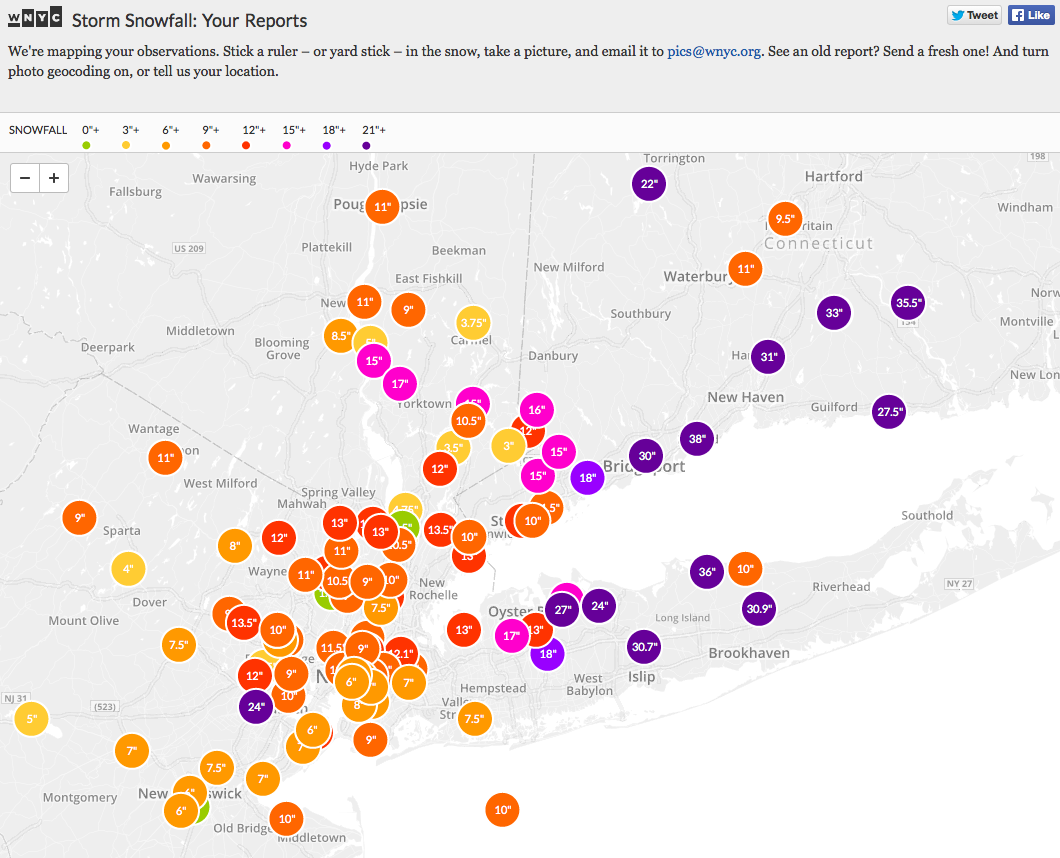
    Storm Snowfall: Your Reports | WNYC
    Le véritable Internet des objets n’est pas celui que vous croyez
    “Are you listening? Say something!” | James Bach’s Blog
    The Cathedral of Computation – Atlantic Mobile
    Making Sense of Emergent Patterns in Networks | T N T : The Network Thinkers
    The Way We Hire Is All Wrong — Backchannel — Medium
    Year-End Reading Roundup: 2014 Edition ← nytlabs
    Online dispute resolution – Wikipedia, the free encyclopedia
    http://commonaccord.org/
    Microsoft Word – Snapshot-1-15_clean copy_LB01 08 15 rs 01-12-2015 – Snapshot-1-15.pdf
    Trovebox – We Are Shutting Down
    The Humiliation of Tom Brady – The New Yorker
    Surveillance, privacy, and security: Europe’s confused response to Snowden | European Council on Foreign Relations
    Let Us Now Praise Corporate Persons by Kent Greenfield | The Washington Monthly
    Lessig on Twitter: "Let Us Now Praise Corporate Persons by Kent Greenfield | The Washington Monthly http://t.co/5dvJjfU1U0"
    We Should All Step Back from Security Journalism — The Message — Medium
    Barrett Brown sentencing: The U.S. government overreaction to hackers.
    Matt DeHart claims he’s wanted for working with Anonymous | National Post
    Ballooning the Interview — Hacking Back at North Korea with strange American culture. on Vimeo
    Microsoft Word – Snapshot-1-15_clean copy_LB01 08 15 rs 01-12-2015 – Snapshot-1-15.pdf
    FreedomPop Turns On Unlimited Wi-Fi Across The US For $5/Month | TechCrunch
    Why the Internet is, by Definition, Ungovernable
    A brief sketch of the “full stack” (intellectually speaking…) news and information company. » Pressthink
    How to Apply – Nieman Foundation
    Nieman-Berkman Fellowship in Journalism Innovation – Nieman Foundation
    Data Brokers Are Watching You | January 2015 | Communications of the ACM
    NATIONAL POST
    Barrett Brown sentenced to 63 months for ‘merely linking to hacked material’ | Technology | The Guardian
    President Obama’s State of the Union Address — Remarks As Prepared for Delivery — Medium
    2015-01-20-Indie-IoT-Johannes-Ernst.key – 2015-01-20-Indie-IoT-Johannes-Ernst.pdf
    North and South Six-Shooter Peaks | Flickr – Photo Sharing!
    Wetmachine » Tales of the Sausage Factory » Net Neutrality, Munibroadband and the SOTU Shout Out.
    Home
    Graffiti in the clouds | deadpenguinsociety
    Radio Ink Magazine
    Radio Ink Magazine
    SeatGuru Seat Map United Boeing 757-200 (752) V3 PS
    Radio Open Source: Kick Off Year Two by Open Source Media — Kickstarter
    Google MVNO – – Yahoo Search Results
    Google Rumored to Be Planning Wireless Service | SEW
    Twitter / Notifications
    2015 – The Future was now, we’re in it!
    10 Things You Won’t Be Able To Do Anymore If SkyMall Goes Away | Mental Floss
    skymall news – – Yahoo Search Results
    SkyMall Files for Bankruptcy | TIME
    Google’s Schmidt Tells Us The ‘Internet Will Disappear,’ Microsoft Bing Defines What That Means 01/26/2015
    MediaPost – News and Conferences for Media, Advertising and Marketing Professionals
    A LUMA-style Depiction Of TV As It Collides With Digital 01/23/2015
    Vivian Stanshall – Wikipedia, the free encyclopedia
    Fricative consonant – Wikipedia, the free encyclopedia
    ▶ Bonzo Dog Doo-Dah Band – Jollity Farm – YouTube
       The address book we need today — Medium
    Google’s Schmidt Tells Us The ‘Internet Will Disappear,’ Microsoft Bing Defines What That Means 01/26/2015
    #wef15 – I Tweet You
    Rhetorical – Definition and More from the Free Merriam-Webster Dictionary
    Google Chairman Eric Schmidt: "The Internet Will Disappear" – The Hollywood Reporter
    A New Form of ID Allows You to Be a Citizen of the World | VICE | United Kingdom
    Supertramp – Wikipedia, the free encyclopedia
    LittleSis – Profiling the powers that be
    Supertramp Community Coordinator Job Spec – Google Docs
    Official Google Blog: The bright side of sitting in traffic: Crowdsourcing road congestion data
    How Verizon and Turn Defeat Browser Privacy Protections | Electronic Frontier Foundation
    Turn Homepage
    critical-look-at-decentralization-v1.pdf
    All internet traffic is potentially sensitive – Adrian Short
    what the cluetrain manifesto teaches us on social media … 11 years later – Marketing & InnovationMarketing & Innovation
    Doc Searls Weblog · All my rides
    Das Textdepot | Thomas Pleils Bruchstücke aus PR, Medien und Marketing
    The GovLab Index on Internet Governance — Access (Infrastructure) | The Governance Lab @ NYUThe Governance Lab @ NYU
    The Cathedral of Computation – The Atlantic
    State of the Union Machine – Sunlight Foundation
    Page 5 of Cicada: Solving the Web’s Deepest Mystery | Rolling Stone
    Scientists: Human activity has pushed Earth beyond four of nine ‘planetary boundaries’ – The Washington Post
    Secret US cybersecurity report: encryption vital to protect private data | US news | The Guardian
    Scripting News
    Dave Gray » What is a connected company?
    Gillmor Gang: Kind of Clue | TechCrunch
    Linux for Suits – The World Live Web | Linux Journal
    Index of /2015_03
    New Clues
    "Hyperlinks subvert hierarchy" – – Yahoo Search Results
    Home Page
    Alcohol’s Neolithic Origins: Brewing Up a Civilization – SPIEGEL ONLINE
    Intellicast – Santa Barbara Weather Report in California (93101)
    Jerry’s Brain on the App Store on iTunes
    How Google Search Dealt With Mobile — Backchannel — Medium
    Fundamental Features of Persistent Compute Objects
    Twitter / Notifications
    Edit Post ‹ ProjectVRM — WordPress
    How do you maximize the help that companies and customers give each other? | ProjectVRM
    New from Rocky: The AR 670-1 compliant RLW | TacticalGear.com News
    Internet Identity Workshop XX #20 – 2015A- Eventbrite
    Scripting News
       Olympic bid has Boston asking: ‘Huh? What inferiority complex?’ – Metro – The Boston Globe
    Products-as-Platforms Is Not a Marketing Gimmick – HBR
    Doc Searls’ Clouds For Things: Yes, Please, But!
    Business Solutions – Xively
    Building a Wireless Sensor Network in Your Home – Tuts+ Computer Skills Tutorial
    New E-Toilet To Revolutionize Online Shitting | The Onion – America’s Finest News Source
    Google: Samsung Galaxy Nexus won’t get updated to Android 4.4 KitKat (updated)
    Dead Media Beat: the Internet as Icarus | WIRED
    Nest responds to my privacy questions
    Jürgen Geuter on Twitter: “Ich habe für @WIRED_Germany das ‘New Clues Manifesto’ von @dweinberger und @dsearls besprochen. https://t.co/raS66mslOY”
    The True Tragedy Of "American Sniper"
    The Tragedy of the American Military – The Atlantic
    Public Books — Justice for “Data Janitors”
    How Verizon and Turn Defeat Browser Privacy Protections | Electronic Frontier Foundation
    accenture-fjord-trends-2015.pdf
    "The Internet Would Never Have Existed Without The Copyright Monopoly" | TorrentFreak
    Martin Luther King’s heirs milk a legacy: Our view
       Copywrong
       Ready for What’s Next? Envision a Future Where Your Personal Information Is Digital Currency | WIRED
    Doc Searls Weblog · For personal data, use value beats sale value
    The Future of Broadcast Television — Shelly Palmer
    Bluegrass on the radio in a commercial place: WFNL, 102.3-FM | On the Beat Blog | NewsObserver.con
    The California-Colorado Cannabis War | Fast Company | Business + Innovation
    WHAT DO YOU THINK ABOUT MACHINES THAT THINK? | Edge.org
    Andrew Pearson | LinkedIn
    Ernst Jünger and the Problem of Nihilism in the Age of Total War | Antoine Bousquet – Academia.edu
    Eris Industries
    google maps cell phones – – Yahoo Search Results
    Who’s viewed your profile | LinkedIn
    scripting/nodeStorage · GitHub
    Radio Ink Magazine
    Acronym-ity: VRM Are The Three Most Important Letters You’ve Never Heard Of 03/22/2014
    Le Cluetrain Manifesto appliqué à la politique ·
    Fuori dal Prisma – ilSole24ORE
    Charlie Hebdo, Before the Massacre in Vimeo Staff Picks on Vimeo
    Search results for "Doc Searls" – Wikimedia Commons
    customer_service_in_2020
    New Clues
    A Quick Test
    Doc Searls (@dsearls) | Twitter
    Edit Post ‹ ProjectVRM — WordPress
    Problem loading page
    Why we need first person technologies on the Net | ProjectVRM
    Evil Sponge Bob and Satan: Inside a Guantanamo Bay Prison Riot | VICE News
    There’s Poop on the Moon
    CONTRARY BRIN
    Using a list of the 52,131 active medallion taxi… | Vizual Statistix
    Vizual Statistix : Photo
    Chester Bodkin (Senior Math, Algebra Ii) (Deceased), Bogota, NJ New Jersey
    A @United #VRM story with a happy ending | ProjectVRM
    New Clues – Traduzione in italiano
    A Tale of Two Tweets
    New app aims to fix broadband puzzle | Crain’s New York Business
    O listicle! My listicle!
    Does behavioral economics show people are altruistic or just confused?
    Charlie Hebdo, David Cameron encryption: Politicians always think surveillance is the answer.
    What David Cameron just proposed would endanger every Briton and destroy the IT industry – Boing Boing
    Charlie Hebdo, David Cameron encryption: Politicians always think surveillance is the answer.
    Maryland City Announces Groundbreaking Fiber Partnership with Ting Internet | ctc technology & energy
    A story about Jessica and her computer. — Medium
    4th Party Newsletter
    Smartphone obsolescence: How the personal cloud and IoT will disrupt the handset — Gigaom Research
    EnGenius Personal Cloud Solutions Extend Powerful Network Capabilities and Applications to Mobile Devices Anywhere – Yahoo Finance
    Barack Obama to seek limits on student data mining – Stephanie Simon – POLITICO
    Will the Respect Network enable us to take back control of our data and our lives? – Trends in the Living NetworksTrends in the Living Networks
    Can ‘User as Owner’ Policy Prevent Need for ‘Right to Be Forgotten’? | Tanis Jorge
    How Good are Display Ads at Targeting You?
    Indiana Attorney General to Push Web Privacy, Breach Notice Upgrades | Bloomberg BNA
    “Long live the open Internet”: Cluetrain authors offer an updated guide to the Web | BetaBoston
    Unmournable Bodies – The New Yorker
    Cluetrain Manifest: Doc Searls über "New Clues" – Digital – Süddeutsche.de
    Gillmor Gang: Kind of Clue | TechCrunch
    Internet Under Fire Gets New Manifesto — Backchannel — Medium
    ‘Long live the open Internet’: Cluetrain authors offer an updated guide to the Web | BetaBoston
    Opening Minds to the Spheres Among Us | Linux Journal
    Cluetrain at Fifteen | Linux Journal
    The Truth About Flight Tracking. How the NY Times Got it Wrong ✈ FlightAware
    Give me a clue
    Internet Under Fire Gets New Manifesto — Backchannel — Medium
    Rebooted Cluetrain Manifesto – Boing Boing
    Science fiction | ACCELER8OR
    Can we make a machine that thinks like a human?
    Facebook New Clues page
    e-Trust: Wait! my dreams are being mapped into Reality!
    The FTC Warns Internet Of Things Businesses To Bake In Privacy And Security | TechCrunch
    Conversational Marketing Versus Market Conversations – Brian Solis
    FPF-principles-for-wearables-Jan-2015.pdf
    Twitter / Notifications
    The Darkness in the Fairytale | illusionsofexistence
    Death by Robot – NYTimes.com
    Top 10 Gmail Labs and Features You Should Enable
    Cluetrain evolved – NevilleHobson.com
    2014 Best-Performing Cities » map
    Science fiction | ACCELER8OR
    A Teenager’s View on Social Media — Backchannel — Medium
    Exclusive: Edward Snowden on Cyber Warfare — NOVA Next | PBS
    Yelp-hating Italian restaurant ups its one-star review discount to 50% | Ars Technica
    Horror. Friendship. Determination. | Ricochet
    Magic Mirror (Snow White) – Wikipedia, the free encyclopedia
    (67) New Clues
    New Clues
       Cluetrain: The listicle.
    New Clues Tweetified – Google Docs
    Links
  • January 26, 2015

    Blogging #BlizzardOf2015 in #NYC 02

    11:31pm — Nobody is saying it, but so far the #BlizzardOf2015 in #NYC is a dud. I mean, yeah there’s snow. But it’s not a real blizzard yet. At least not here, and not in Boston, where it’s supposed to be far worse. “A little bit more than a dusting” says the CNN reporter on the street in Boston, sweeping a thin layer of snow off some pavement. The anchor on the street in New York stands in front of a bare wet sidewalks while the street behind is covered with a couple inches of slush.

    Apparently the only vehicle on the streets is CNN’s Blizzardmobile:

    Blizzardmobile

    (Why is it that my mind drops the B and calls that thing LIZZARDMOBILE?)

    Meanwhile, WNYC‘s listeners are weighing in with snow totals that look a lot deeper…

    Screen Shot 2015-01-26 at 11.42.16 PM…than what I’m seeing out my window:

    Screen Shot 2015-01-26 at 11.49.00 PM

    But the wind is getting stronger now. Maybe this thing will be as big as they’ve been predicting. But I’m not seeing it yet.

    And I do want to see it, because I love snow. A sampling:

    • January2005 on Mt. Baldy, Los Angeles
    • 16 December 2007 in Arlington, MA
    • 27-31 December 2007 in Sun Valley, ID
    • 14 January 2008 in Arlington, MA
    • 16 January 2008 at Harvard, Cambridge, MA
    • 2 February 2008 near Smuggler’s Notch, VT
    • 19 January 2009 in Arlington, MA, and at Spy Pond
    • 25-31 December 2009 in Zermatt (under the Matterhorn)
    • 27 December 2010 in New York
    • 12-13 January 2011 in Arlington, MA
    • 9 February 2013 in New York

    Plus everythjing else I’ve tagged “snow.”

    Enjoy. I’ll check back in the morning. I should be putting up fresh photos then.


    Blogging, Broadcasting, infrastructure, Journalism, News, Places, weather
  • January 26, 2015

    Blogging #BlizzardOf2015 in #NYC 01

    7:56pm — Since I’m a #weather and #journalism freak hunkered down in #NYC, I’m digging the opportunity to blog the juncture of all three #s as the #BlizzardOf2015 bears down on the Northeast Coast.

    So here’s the first interesting thing. While the coverage is all breathless with portent…

    cnn on the storm

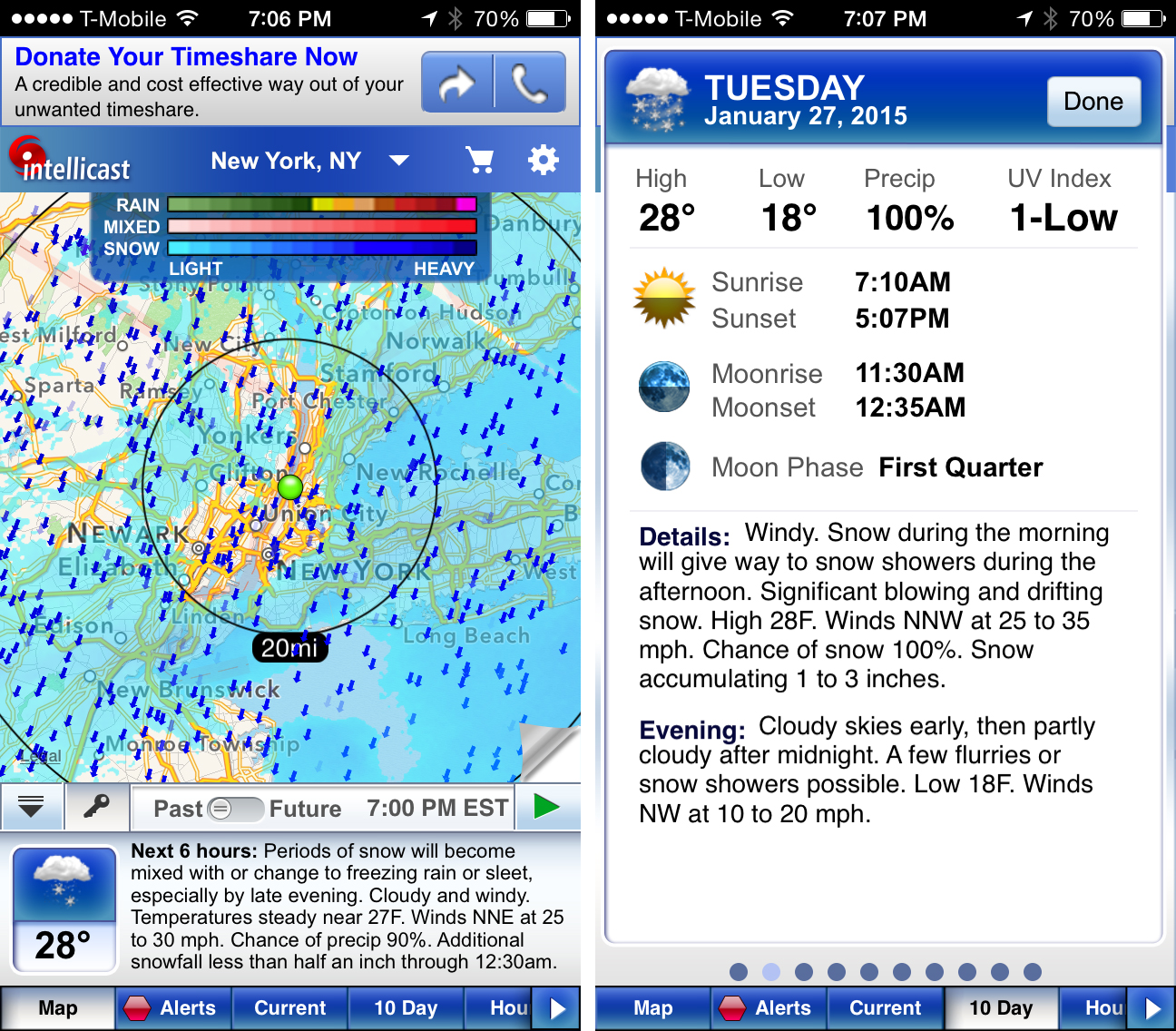
    weather channel on the storm… the generally reliable Intellicast app tells me this:

    intellicast1907

    In other words, 1) No snow now, where I am in Manhattan (under the green dot); 2) Less than half an inch more by 12:30am tomorrow; and 3) One to three inches after that. This is on top of a whopping 1 inch or so already there.

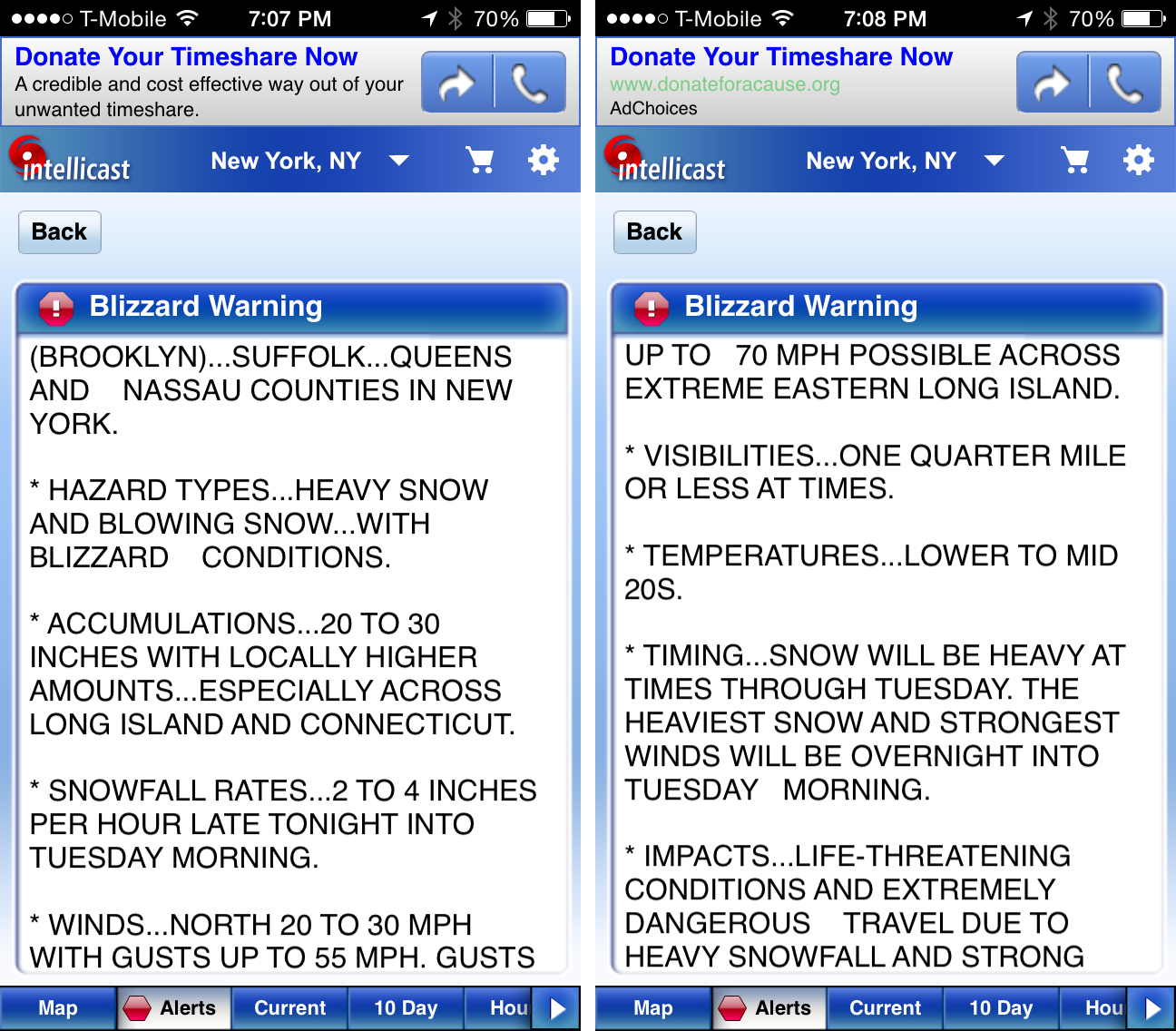
    But then there is this:

    In other words, kinda like CNN and Weather.com are saying.

    So: we’ll see. I’ll get back after we watch a movie.

    Broadcasting, infrastructure, News, Places, weather
  • January 25, 2015

    #Deflategate needs facts

    Check out this map:

    deflationgate-mapThis isn’t new. Way back in 2008, after the Patriots’ undefeated season ended with a Super Bowl loss to the Giants, The Onion wrote Patriots Season Perfect for Rest of Nation. It’s easy to hate an overdog.

    Sports is an emotional thing. We care about teams, games and players because we care about them. And, because we care, we have inventories of sports knowledge that we enjoy enlarging through reading, watching, listening and talking to others who care about the same stuff.

    Sports also holds us together. When I was a kid growing up in the 1950s, there were four topics everybody talked about: the Depression, the War, sports and TV. The first two are long gone, and TV is shattering into a zillion sub-breeds of video. In fact the only breed of TV programming that still needs to be seen live, on schedule, is sports. Thus sports rules what’s left of broadcasting. It’s also what keeps newspapers alive.

    When games aren’t on, about all you can do with sports is talk about it. Subjects come and go, but all are fueled by the need to talk about something, or anything. Hence the big topic of the moment: #deflationgate.

    I’ll put my loyalty cards on the table: I like the New England Patriots. But I’m not hard core, or a lifer. I’ve hung out in New England for the last eight and a half years, and I’ve come to favor the teams there. But I also grew up in New Jersey, just across the river from New York, where I am right now. When I was a kid I cared a lot more about the Brooklyn Dodgers and the New York Mets, Giants and Knicks than I do now about the Patriots or the Celtics. During my twenty years in North Carolina, I became a Duke basketball fan. (I also like Carolina, Wake, State and Virginia, in roughly that order.) When I lived in the Bay Area, for more than a decade and a half, I became a fan of the Giants, 49ers and Warriors. In fact I had season tickets to Warriors games for several years. So mostly I like sports, and that’s my main point. Can’t help it.

    Yet something I care about more than any team or sport is journalism. That’s been my vocation or avocation for all my adult life, and I take its virtues seriously. I also see those virtues lacking in most coverage of #deflationgate. Sure, sports coverage is mostly about opinion, the best of which is “analysis.” But how about just some actual journalism here?

    I mean, wtf are the facts? Do we actually know the ones that matter, for sure? We know some of the rules and official procedures, and that’s cool. But as for who did what, when and how, we have nothing. From Bill Belichick and Tom Brady we have denials of knowing anything about the under-inflated balls used by the Patriots in their last game, against the Colts. (Note that I don’t say “deflated,” because I’ve read or heard nothing from anybody about deflation of the balls; but we all know they had to have been inflated at some point.) Those denials, even if they prove wrong, are facts. As for the rest of the Who, What, Where, When, Why and How Much, the ratio of fact to opinion in coverage of the topic runs about one in a thousand, or worse. Who inflated and/or deflated the footballs, when, where, and how? Who inspected them — where, when and how? Perhaps by now the league knows. But the rest of us haven’t heard much more than speculation.

    The most unhelpful speculations are ad hominem arguments made against the Pats, Belichick and Brady. Yes, the Belichick and the Pats were caught cheating once. That doesn’t mean they cheated this time. Matt Leinart tweets that every team tampers with their footballs. Presumably that’s an informed opinion, but it’s still just an opinion. Where’s the proof? The same question survives John Madden fingering Brady as the buck-stopper. It’s just opinion. No facts there.

    But sentiment runs strong, especially against overdogs. I hated the New York Yankees when I was growing up, even though I liked Mickey Mantle, Roger Maris, Whitey Ford and other Yankees players. It’s easy to hate the Patriots, with their pretty-boy quarterback and their coach who bathes in a tub full of warm entrails. But we need facts here.

    Credit where due: CBS Sports, Heavy. Got any others? Love to see ’em.

    Fun, Journalism, Sports
  • January 10, 2015

    On marketing’s terminal addiction to personal data fracking and bad guesswork

    Quit fracking our lives to extract data that’s none of your business and that your machines misinterpret. — New Clues, #58

    That’s the blunt advice David Weinberger and I give to marketers who still make it hard to talk, sixteen years after many of them started failing to get what we meant by Markets are Conversations.

    For a look at modern marketing at its wurst (pun intended),check out The Big Datastillery, by IBM and Aberdeen.

    In this Linux Journal column I explain what the machine is and does:

    Copy at the top describes it as “Best-in-Class Strategies to Accelerate the Return on Digital Data” and “a revolutionary new appliance to condense terabyte scale torrents of customer, transactional, campaign, clickstream and social media data down to meaningful and actionable insights that boost response rates, conversions and customer value”.

    Below that is a maze of pipes pouring stuff into a hopper of “Best-in-Class companies” that are “2.8 times more likely than Laggards to incorporate unstructured data into analytical models”. The pipes are called:

    • Customer Sentiment
    • E-mail Metrics
    • CRM
    • Clickstream Data
    • PPC (Pay Per Click)
    • SEO Data
    • Social Media
    • Marketing History
    • Ad Impressions
    • Transactional Data

    Coming out of the hopper are boxes and tanks, connected to more piping. These are accompanied by blocks of text explaining what’s going on in that part of the “datastillery”. One says “Ability to generate customer behavioral profile based on real-time analytics”. Another says “Ability to optimize marketing offers/Web experience based on buyer’s social profile”. Another says BIC (Best in Class) outfits “merge customer data from CRM with inline behavioral data to optimize digital experience”.

    Customers are represented (I’m not kidding) as empty beakers moving down a conveyor belt at the bottom of this whole thing. Into the beakers pipes called “customer interaction optimization” and “marketing optimization” excrete orange and green flows of ones and zeroes. Gas farted upward by customers metabolizing goop fed by the first two pipes is collected by a third pipe called “campaign metrics” and carried to the top of the datastillery, where in liquid form it gets poured back into the hopper. Text over a departing beaker says “137% higher average marketing response rate for Best-in-Class (6.2%) vs. All Others (2.6%)”. (The 137% is expressed in type many times larger than the actual response rates.) The reciprocal numbers for those rates are 93.8% and 97.4%—meaning that nearly all the beakers are not responsive, even to Best-in-Class marketing.

    New Clues again:

    60 Ads that sound human but come from your marketing department’s irritable bowels, stain the fabric of the Web.
    61 When personalizing something is creepy, it’s a pretty good indication that you don’t understand what it means to be a person.
    62 Personal is human. Personalized isn’t.
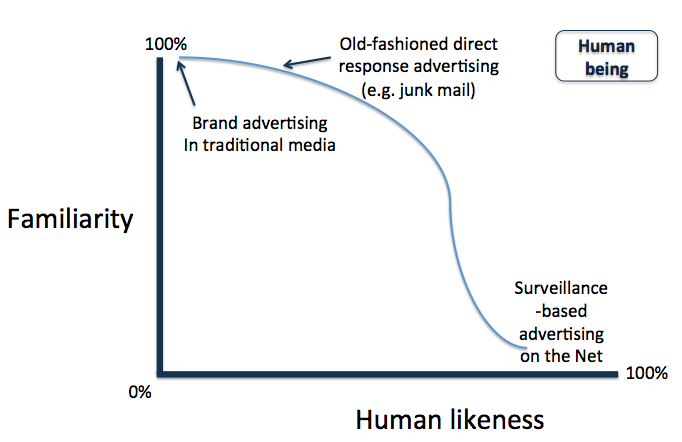
    63 The more machines sound human, the more they slide down into the uncanny valley where everything is a creep show.

    I also visited this in The Intention Economy. Here’s an early draft of a subchapter that was whittled down to something much tighter for the final version. I want to share it because a great Michael Ventura quote was lost in the whittling and is especially important for a point I’ll make shortly:

    In The Filter Bubble: What the Internet is Hiding from You, Eli Pariser writes,

    “You have one identity,” Facebook founder Mark Zuckerber told journalist David Kirkpatrick for his book The Facebook Effect. “the days of having a different image for your work friends or coworkers and for the other people you may know are probably coing to an end pretty quickly… Having two identities for yourself is an example of a lack of integrity.”

    Later Zuckerberg discounted the remark as “just a sentence I said;” but to Facebook the only you that matters is the one they know. Not the one you are.

    In Shadow Dancing in the USA (1985), Michael Ventura writes what he calls “a poetic description of subselves in a stepfamily.” He begins by asking, “… will we, or will we not, discover all that a man and a woman can be?” Here’s how he unpacks the challenge:

    … living in this small apartment, there are, to begin with, three entirely different sets of twos: Michael and Jan, Jan and Brendan, Brendan and Michael. Each set, by itself, is very different from the other, and each is different from Jan-Brendan-Michael together. But go further:

    Brendan-Jan-Michael having just gotten up ‘for breakfast is a very different body politic, with different varying tensions, depending on whether it’s a school day or not, from Brendan-Jan-Michael driving home from seeing, say, El Norte, which is different still from driving home from Ghostbusters, and all of them are different from Brendan-Jan-Michael going to examine a possible school for Brendan. The Brendan who gets up at midnight needing to talk to Michael is quite different from the Brendan who, on another night, needs suddenly to talk to Jan, and both are vastly different from the Brendan who often keeps his own counsel. The Michael writing at three in the afternoon or three in the morning, isolated in a room with three desks and two typewriters, is very different from the Michael, exasperated, figuring the bills with Jan, choosing whom not to pay; and he in turn is very different from the half-crazed, shy drunk wondering just who is this “raw-boned Okie girl” moving to Sam Taylor’s fast blues one sweltering night in the Venice of L.A. at the old Taurus Tavern. The Jan making the decision to face her own need to write, so determined and so tentative at once, is very different from the strength-in-tenderness of the Jan who is sensual, or the sure-footed abandon of Jan dancing, or the screeching of the Jan who’s had it up to here.

    I can only be reasonably sure of several of these people – the several isolate Michaels, eight or fifteen of them, whom “I” pass from, day to day, night to night, dawn to almost dawn, and who at any moment in this much-too-small apartment might encounter a Jan or a Brendan whom I’ve never seen before, or whom I’ve conjectured about and can sometimes describe but am hard-pressed to know.

    So in this apartment where some might see three people living a comparatively quiet life, I see a huge encampment on a firelit hillside, a tribal encampment of selves who must always be unknowable, a mystery to any brief Michael, Jan, or Brendan who happens to be trying to figure it out at any particular moment.

    His narrative continues until he arrives at his main purpose behind all this:

    …there may be no more important project of our time than displacing the … fiction of monopersonality. This fiction is the notion that each person has a central and unified “I” which determines his or her acts. “I” have been writing this to say that I don’t think people experience life that way. I do think they experience language that way, and hence are doomed to speak about life in structures contrary to their experience.

    But what happens now, almost thirty years later, when our experience is one of Facebook chatter and Google searches, when online life and language (“poking,” “friending” and so on) soak up time formerly spent around tables, in bars or in cars, and our environment is  “personalized” through guesswork by companies whose robotic filtering systems constantly customize everything to satisfy a supposedly singular you?

    In the closing sentences of The Shallows: What the Internet is Doing to our Brains, Nicholas Carr writes,

    In the world of 2001, people have become so machinelike that the most human character turns out to be a machine. That’s the essence of Kubrick’s dark prophecy: as we come to rely on computers to mediate our understanding of the world, it is our own intelligence that flattens into artificial intelligence.[iii]

    Even if our own intelligence is not yet artificialized, what’s feeding it surely is.

    Eli sums up the absurdity of all this in a subchapter titled “A Bad Theory of You.” After explaining Google’s and Facebook’s very different approaches to personalized “experience” filtration, and the assumptions behind both, he concludes, “Both are pretty poor representations of who we are, in part because there is no one set of data that describes who we are.” He says both companies have dumped us into what animators and robotics engineers call the uncanny valley: “the place where something is lifelike but not convincingly alive, and it gives people the creeps.”

    I don’t know about you (nor should I, being a mere writer and not a Google or a Facebook), but I find hope in that. How long can shit this crazy last?

    How long it lasts matters less than what makes it crazy.

    There are three assumptions by frackers that are certifiably nuts, because they are disconnected from reality: the marketplace, which is filled with the human beings called customers. You know: us. Those assumptions are—

    1) We are always in the market to buy something. We are not. (Are you shopping right now? And are you open to being distracted this very instant by an ad that thinks you are? — one placed by a machine guided by big data guesswork based on knowledge gained by following you around? Didn’t think so.)

    2) We don’t mind being fracked. In fact we do, because it violates our privacy. That’s why one stain on the Web looks like this:
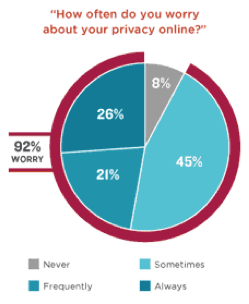
    concern
    Source: TRUSTe 2014 US. Consumer Confidence Survey.

    3) Machines can know people well — sometimes better than they know themselves. They can’t, especially when the machines are interested only in selling something.

    In fact humans are terribly complex. And they are also not, as Michael Ventura says, monopersonalities. Kim Cameron, a distinguished engineer at Microsoft and its chief authority on digital identity, is only half-joking when he calls himself “the committee of the whole.”

    Sanity requires that we line up many different personalities behind a single first person pronoun: I, me, mine. Also behind multiple identifiers. In my own case, I am Doc to most of those who know me, David to various government agencies (and most of the entities that bill me for stuff), Dave to many (but not all) family members, @dsearls to Twitter, and no name at all to the rest of the world, wherein I remain, like most of us, anonymous (literally, nameless), because that too is a civic grace. (And if you doubt that, ask any person who has lost their anonymity through the Faustian bargain called celebrity.)

    So, where do we go with from here?

    First we need to continue expanding individual agency through VRM and similar efforts. Here’s a list of developers.

    Second, marketing needs to stop excusing the harms caused by personalization of advertising by frack-fed Big Data methods. For guidance from history, read Tim Walsh‘s Big Data: the New Big Tobacco.

    Third, advertising needs to return to what it does best: straightforward brand messaging that is targeted at populations, and doesn’t get personal. For help with that, start reading Don Marti and don’t stop until his points sink in. Begin here and continue here.
     

    Books, Business, Cluetrain, Internet, problems, Technology
  • January 8, 2015

    Cluetrain Rides Again

    New CluesNew Clues is up.

    Go there and read it.

    You can respond to it in a number of ways.

    One is talk about it. You can do that here, on a Facebook page we set up for it, on Twitter (@Cluetrain is there), on your own blog, or wherever you please.

    Another is to raid it for building material. It’s open source, set free in the public domain.* Read about all that and more on the About page.

    New Clues follows up on The Cluetrain Manifesto, which appeared on the Web in 1999 and became a book in 2000. In the next post I’ll tell you more about why David Weinberger and I decided to do New Clues, but for now I’d rather shine the spotlight on what we’ve been noodling and re-noodlling toward publication over the last few months.

    * The only exception is the pet armadillo image we’ve leveraged from the oeuvre of e. res, who posted it at Flickr under a Creative Commons BY 2.0 license, which requires attribution and we are doing right here. Thanks, e. res!


    Cluetrain
  • January 6, 2015

    Tabbing along late on a Monday

    I’m not ready to tell you what I was working on today (There’s a tease, huh?), but I can share the tabs I had open:
    Andy Carvin (@acarvin) on Twitter: “Twitter will be @reportedly’s home base. We’re also on reddit at http://t.co/vW2wka61cl, FB at http://t.co/pLjKRZA4Xx, medium @ reported.ly.” That’s the announcement. A long, somewhat informative volley of tweets follows.
    reported.ly (@reportedly) | Twitter That’s its apartment in the Twitter silo.
    reported.ly will have no web presence Dave takes a wait-and-see approach. I’m with Dave in giving them some ease to figure it all out.
    F2C: Freedom to Connect » March 2 & 3, 2015, NYC David Isenberg’s outstanding conference on topics that could hardly (IMHO) matter more.
    Of sharing and millionaires and learning: A Sunday stroll | confused of calcutta Wonderful personal history lessons there.
    Data protection reforms: UK government seeks to water down meaning of ‘consent’ Bummer.
    Dada Data and the Internet of Paternalistic Things — The Message — Medium A good and scary piece of short fiction set in a future toward which we are clearly headed. By Sara M. Watson.
    NY Times eyes deep linking to drive app use – Mobile Marketer – Media On the Times’ own role in the further silo-ing (or perhaps not, sort of) of the Net.
    Apps Everywhere, but No Unifying Link – NYTimes.com Frames the problem deep linking is supposed to solve. Or perhaps indirectly also cause.
    Bay Area DNA start-up wants to assist customers with designing their own creatures Might excite you. Might creep you out.
    This is Dish’s Sling TV: an internet TV service that lets you stream ESPN for $20 | The Verge The Great Unbundling is happening. Here’s what I said about it two summers back.
    Alison Chaiken’s Embedded Linux Resources Great list of links.
    dpr » Blog Archive » GoGo does not need to run “Man in the Middle Attacks” on YouTube An assessment of a high-altitude security fail by one of the Net’s own dads.
    PureProfile heading for ASX after $2.5m raising | The Australian A new approach to intentcasting.
    Links
  • January 5, 2015

    Some tabs to start the week

    Here ya go:

    Hats Off to MozillaMy column for the January issue of Linux Journal.
    Firefox — Notes (34.0.5) — Mozilla More changes since I wrote the above.
    The magic of working together Dave on working with David Weinberger and me on something. (Stay tuned.) BTW, Dave, David and I all have the same first name. We are legion.
    Air Asia Indonesia Lost Contact from Surabaya to Singapore – Page 65 – PPRuNe Forums The latest page in a long thread in which pilots discuss what may have happened to the lost Air Asia flight.
    The History of the Internet Project Read the bulleted lists. Good and fun project, full of important stuff to remember.
    How to Start a Blog – The Free Beginner’s Guide to Blogging A good primer. One additional note: you don’t need to monetize your blog with advertising. Think “because effects” — making money because of your blog, rather than with your blog.
    Chris Dixon on Twitter:Nikola Tesla predicting today back in 1926 http://t.co/5Air6JEULu" Wireless everywhere turning the world into one big (or small) place.
    Open data: Unlocking innovation and performance with liquid information | McKinsey & Company Why open data is necessary and cool.
    Making customer experience a first person thing | ProjectVRM A post of mine at the ProjectVRM blog. Watch for more on the topic there.
    Find products on sale by Brand, Site or Product Category – TrackIf Something you could have used before Christmas. But use it anyway.
    Aral Balkan —The Camera Panopticon. Nails it.
    Ind.ie Manifesto What Aral’s about, as so should the rest of us.
    The Technology of Us Because I want to give it one more plug.
    Context Collapse, Architecture, and Plows — LadyBits on Medium  One in a series by Quinn Norton. Essential reading.
    Lecture: Privacy in Consumer Markets: Reversing the Surveillance Business Model (Schedule 31. Chaos Communication Congress)  Reuben Binns speaks.
    I Tweet Honestly, I tweet Passionately: Twitter Users, Context Collapse and The Imagined Audience. Alice Marwick and danah boyd, from 2010 and still relevant.
    Search and Apps – Give Consumers Back Their Links – John Battelle’s Search Blog In which John calls apps “chicklets.” And he’s right.
    How My Mom Got Hacked – NYTimes.com Not a bad way to use up one of your ten NYTimes monthly views per browser. (I hate that system, btw.)
    Anti-terror plan to spy on toddlers ‘is heavy-handed’ – Telegraph Any plan would be.
    Oracle Is Getting Ahead Of The Competition When It Comes To Data | TechCrunch Yes, they are.
    The Year in Content Marketing and Native Ads | Media – Advertising Age With more years to come.
    Digitization of Media Requires New Ways to Measure Marketing’s Worth By Shelley Palmer. Not bad for a sell-side view.
    Areas of Coverage – Economic-Value-Report.pdf Cover page for the below, and more.
    Economic Value of the Advertising-Supported Internet Ecosystem Important fact: that ecosystem is not the Web, much less the Net. I’m not even sure it’s an ecosystem.
    API Security: Deep Dive into OAuth and OpenID Connect Not a bad view into how APIs work.
    Who’s the true enemy of internet freedom – China, Russia, or the US? | Comment is free | The Guardian Evgeny Morozov doesn’t offer a solution, but does lay out the problem.
    What’s Happening to New York’s Skyline? – NYTimes.com Get ready for more “pencil” high-rises, all re-making New York’s profile. (The first of these is already taller than the Empire State Building and the new One World Trade Center, if you subtract the spires of each. And get this: it’s residential.)
    Doc Searls Weblog · Snow on the Water An oldie but goodie.
    Links
    links, tabs
  • January 3, 2015

    FlightAware’s Amazing MiseryMap

    FlightAware's Misery MapThat’s FlightAware‘s MiseryMap. Go there now, click on the blue “play” button and watch what happens. If you’re close to now (8:56pm EST), you’ll see what weather does directly to major airports in Chicago, New York and Atlanta, and indirectly (by delayed flights due to unavailable airplanes, mostly) to Houston, Dallas, Los Angeles, Miami, etc. If you’re at some other time in the future, it will still show weather and flight delays, because we always have both.

    The MiseryMap is also one of the coolest and most useful examples of data visualization on the Web. And a trifecta winner for weather, aviation and geography freaks like me.

    Aviation, infrastructure, weather
    air travel, airlines, aviation, data, data journalism, data visualization, flightaware, infrastructure, maps, MiseryMap
  • January 1, 2015

    Tabbing into the New Year

    Some tabs I just closed, with reasons why I had them open…

    • Optimism: A Driving Force of Human Evolution | The Technology of Us Don Peppers, who put the book together, makes clear why he’s been a guiding light for the duration.
    • Amazon.com: The Technology of Us: Getting to the heart of humanity in a technology-driven world eBook: Ken Tuchman: Kindle Store. Don’s book, on Kindle.
    • Free the People! | The Technology of Us My chapter in Don’s book.
    • Four Ways 2014 Was a Pivotal Year for the Internet Nice summary by Timothy Karr.
    • This Ugly Ad Saved My Business – Grigoriy Kogan Good explanation of how (as Strunk & White put it) what you say matters more than how you say it.
    • DIY radio with PODcasting | Doc Searls’ IT Garage In which I predicted, in September 2004, when a search for “Podcasting” brought up just 24 results, that it would be huge. And look at it now.
    • Cybersecurity Stands Accused | Security Architect Correctly. Dan Blum wants answers too. Give him some.
    • The Second Languages In Every Part Of The World – Business Insider Amazing graphic.
    • Time Goes By – What it’s really like to get older Ronni Bennett’s blog. Shows how good an old fashioned blog (run by the person herself) can be.
    • United Fare Class Chart Nice view into how a confusopoly works.
    • This 22-Year-Old Computer Whiz Figured Out How To Game Airlines — Now Orbitz and United Are Suing Him – Business Insider If you can’t beat them, sue them.
    • The 13 best headphones of 2014 | What Hi-Fi? Even as my hearing rots, I still love good headphones. Nice run-down.
    • http://www.ftc.gov/news-events/blogs/techftc/2014/05/technology-science This came out >2 years ago. Did it do any good?
    • http://20committee.com/2014/12/27/putins-orthodox-jihad/ An interesting take on the most important leader in the world right now.
    • http://www.getsync.com/ A Torrent thing. Checking it out.
    • https://tweeps2opml.appspot.com/list Get RSS feeds of all your twitter friends.
    • http://ngmdb.usgs.gov/maps/MapView/ Great #geology link.
    • NGMDB Product Description Page Another great #geology link.
    • Six Colors: Web apps, native apps, and app ecosystems Glen Fleischman unpacks it for us.
    • What will digital life look like in 2025? Highlights from our reports | Pew Research Center Pleased to have contributed to a number of those.
    • A Simple Proposal to Fix the Internet — Arthur Fontaine’s Blog Good read. Makes a case.
    • Here’s How A Global Insurgency Can Take Down Uber – Global Guerrillas By John Robb, who knows this kinda stuff.
    • The Philosopher’s Beard: Recovering Adam Smith’s ethical economics Digging into Smith is always a Good Thing.
    • Opportunity in surveillance marketing consolidation? Another great post by Don Marti, whose observations of advertising are the best in the business.
    • Tracking Preference Expression (DNT) A proposal by the W3C that’s getting some notice. Need to dig into it.
    • How much do Google and Facebook profit from your data? | Ars Technica More than you do. A lot more.
    • Americans increasingly view the internet, cellphones as essential | Pew Research Center Not surprising, but interesting.
    • LEAKED: Secret Negotiations to Let Big Brother Go Global | Wolf Street More to make you paranoid, if you aren’t already.
    • odd letters | the online home of Molly Sauter Catch up with her. She’s good.
    • Next Big Future: Fastest Internet in the world is in Minneapolis with 10 gigabits per second And providing, when it’s ready, the best residential and business network ocean frontage in the world.
    • Data Brokers Are Watching You: Communications of the ACM – January 2015 – Page 28-29 Like it says. Important stuff.
    • Your hidden Facebook photos were never really hidden. This app finds them. – Mashable Uh oh.
    • More Data on Attributing the Sony Attack – Bruce Schneier He stays on the case so you don’t have to.
    Links
  • December 28, 2014

    Raising a glass to @AtwatersBakery

    No sooner do I publish Let’s bring the cortado / piccolo to America than I discover it has already arrived at Atwater’s in Baltimore:

    atwaters-cortado

    And here’s how it’s featured on the coffee menu:

    atwaters-coffee-menu

    @AtwatersBakery at Belvedere Square Market was already our favorite place to grab a bite in Baltimore. (Here’s a menu.) Could be they already offered cortados and I didn’t know. Usually we go there for the bakery’s homey and original breads, soups and sandwiches. But either way, I hope their embrasure of the cortado is a harbinger of a larger trend.

    Anyway, if you’re in The Monumental City, check ’em out. They have six locations, so it shouldn’t be too hard.

    Business, Culture, Family, food, Geography, Places
    Baltimore, Maryland
  • December 26, 2014

    Let’s bring the cortado / piccolo to America

    There are ideal ratios of coffee and milk, if you don’t want the flavor of either to fully prevail. To me the closest to the ideal ratio is what in Spain and Peets they call a cortado, some elsewhere call a gibraltar, and Australians and Kiwis call a piccolo (short for piccolo latte). This is a photo of the latter:

    piccolo

    To be clear about scale, that’s a four-ounce glass. Or cup. What matters is the size.

    AustralianCoffeeLovers.com explains the piccolo here.

    To me this is roughly what a cappuccino in the US should look like in a clear glass. Alas, what we usually get in the U.S. (especially from Starbucks) is ten ounces of milk and one ounce of espresso in a twelve-ounce cup. Or maybe two ounces of espresso. Peet’s cappuccinos, when done right (which is in what they call “traditional”), get the ratio about the same (~1:1 coffee and steamed milk, and poured so the two mix into a creamy combination).

    Anyway, most coffee shops in the U.S. and the U.K., other than Peet’s, don’t know from a cortado or a piccolo. So I say let’s educate them. Here’s a goal: by the end of 2015, most coffee shops in the U.S. will know what you mean when you order either one. Possible?

    [Later, on Christmas Eve, 2020…] Well, two days from now it’ll be six years since I wrote the above, and saying “cortado” to the average barista at the average coffee shop (which continues to round to Starbucks) will still get you a blank response. But at least Peet’s has it on the cash register menu, though not the menu on the wall. In fact, Peet’s also took “traditional cappuccino” off the wall for reasons unknown, though it remains on the cash register menu. Here’s what the manager at the Peet’s on Lake and California (my fave) in Pasadena says is the best drink to order in the store: double breve cortado. That will get you two ounces of espresso and a slightly smaller amount of frothed half-and-half, poured in so the two mix well into a creamy blend.

    [Update on 17 December 2025…]  Well, we succeeded: Starbucks makes a cortado now. It’s on the menu, or at least that thing they use to key in the order. I need to try a few to see how close they come to getting it right, but it’s a big step. Hats are finally off.

    Here at home in Santa Barbara, where I have a machine like those used in good coffee shops (an ECM Giotto), my cortados are either a single 1 oz. shot of espresso and about the same amount of frothed half-and-half. Or, if I use the bottomless portafilter, 2 oz. of espresso. The frothing of the milk, however, increases the volume, so the whole thing takes up most of a 4 oz. cup. The glasses I use here are about 3.5 oz., so you can see that the whole thing is pretty small:

    But quite tasty.

    Culture, food, Geography, Personal, Photography, Travel, VRM
  • December 26, 2014

    After-Christmas Free Tab Sale

    I just ran across a pile of tabs from November. (Different browser, different pile, both thanks to OneTab.) Here they are:

     FlightAware MiseryMap
     AWC – ADDS Turbulence
     A Call to Israeli Engineers! Adtech Is Not For You. | Aleph
     Newsies, techies and that troublesome term "product." (with tweets) · jayrosen_nyu · Storify
     Cars – Products: Who Should Control Connected Car Data?
     DLD Pulse: Tweet by Andrian Kreye
     WTF is dark traffic? – Digiday
     This terrible CVS receipt shows why Apple Pay has little to fear from retailers – Quartz
     Getting started with Radio3
     One-in-five would pay more for house with fast internet – Telegraph
     Average Peak Broadband Speeds Rise in America | The Connectivist
     Hungary’s Internet tax arouses mass opposition – Boing Boing
     Own Choice — Medium
     Mozilla Launches Firefox Developer Edition | TechCrunch
     Signaling and saving Journalism
     Transcript of the Magliozzis’ commencement address | MIT News
     Modeling a Pandemic like Ebola with the Wolfram Language—Wolfram Blog
     Amanda Palmer: why fans choose to pay artists they love – Boing Boing
     Citizen Four | GreatHouse Stories
     DesigningCX | Human-Centered Design & Customer Experience Innovation Tools
     With bitcoin the internet is now a sovereign state : Bitcoin
     How the Market Ruined Twitter – Justin Fox – Harvard Business Review
     How to get into your Harvard | Educational Blog
     World’s Data Protection Leaders Highlight Internet of Things, Big Data Privacy R… | Bloomberg BNA
     Community Broadband Podcast
     Connected Things
     Why Twitter launched Fabric, in 5 devastating charts | VentureBeat | Marketing | by John Koetsier
     A big reset button on business | Decoding the new economy
     The Ad Contrarian: Finally, The True Value Of A Facebook Fan
     don marti brand advertising sides privacy – Google Search
     Surfacing, not hiding, the creepy?
     Italy Pioneers An Internet Bill of Rights | TechPresident
     Doc Searls Weblog · Table for two
     Jammed — Backchannel — Medium
     Waiting on the Riverbank: Intent Casting in Practice | DISRUPT.SYDNEY.14
     The diaspora* Project
     Peak Password
     Why Are New York City’s Subway Platforms So Hot? | Co.Design | business + design
     The Longest Now
     Copywrong
     Our Machine Masters – NYTimes.com
     When consumers become media for themselves | ProjectVRM
     Does the FCC really not get it about the Internet? – The Washington Post
     New Tech City: The Other Ed Snowdens: Inside the Mind of Two Privacy Whistleblowers – WNYC
     Tesco’s Downfall Is a Warning to Data-Driven Retailers
     My 15 Minutes of Fame as a B-List Gamergate Celebrity | Brian Keegan
     Doc Searls Weblog · Wallets should be wallets
     The Apple Pay Effect: Companies Get Behind Mobile Payment
     Notes from Cassandra Summit: The Rise of Top Line IT | Planet Cassandra
     Facebook has totally reinvented human identity: Why it’s even worse than you think – Salon.com
     The future is disappearing: How humanity is falling short of its grand technological promise – Salon.com
     The Writer Cartoon | Savage Chickens – Cartoons on Sticky Notes by Doug Savage
     Fed up, US cities take steps to build better broadband | Ars Technica
     Cisco: 13% of North American Cities Have Made Smart City Deployments – Telecompetitor
     Preparing for Climate Change through Energy Internet and eVehicles: High Level Architecture for Building Zero Carbon Internet Networks , ICT products and services
     Open Appointments for Massages, Haircuts, Dentists, Yoga and more – MyTime
     The Invisible Environment – The Future of an Erosion
     Report: Advertisers Threatening To Pull Money Now The Only Remaining Way To Effect Any Change | The Onion – America’s Finest News Source
     Find products on sale by Brand, Site or Product Category – TrackIf
     TrackIf
     College Football Fan Map – NYTimes.com
     “Oprah” for indie bands: Apple once loved unknown acts—what changed? | Ars Technica
     Why Haters Hate: Kierkegaard Explains the Psychology of Bullying and Online Trolling in 1847 | Brain Pickings
     Kittens & Kierkegaard
    Links
  • December 24, 2014

    Giant Christmas Eve Used Tab Closing Sale

    Here ya go, all free. (If I had time to turn the URLs into text, I would, but I don’t. Merry Christmas, ya’ll.)

    • Above-and-Beyond Responses: Part 1 | Pew Research Center’s Internet & American Life Project (has some thoughts by yours truly)
    •  Above-and-Beyond Responses: Part 2 | Pew Research Center’s Internet & American Life Project (has more thoughts by yours truly)
    • Twitter and Facebook aren’t working (or do, as junk food)
      earth :: an animated map of global wind, weather, and ocean conditions
    • Wind Animation
    • Windyty, wind forecast
    • Maps Mania: The Animated Wind Forecast Map
    • Intellicast – Weather Active Map
    • http://www.jerrypournelle.com/chaosmanor/
    • Interface | Authorship for the App age
    • http://1uapps.com/about/
    • http://techcrunch.com/2014/12/20/the-internet-of-things-is-not-a-shiny-new-toy/
    • My experience at Improving Reality | Edgeryders
    • The Dark Truth: How AT&T and Big Telecom are working to destroy democracy in America | CREDO mobile
    • Knight Foundation: Net Neutrality Report
    • Big Data, Machine Learning, and the Social Sciences — Medium
    • Welcome to Fruugo!
    • Balkinization: Interview on the Black Box Society
    • The Internet is Temptation Island.
    • Video Of The Week: A History Lesson On Why We Need Neutral Networks – AVC
    • Why China’s Mobile Providers Are a Giant Problem for Its Music Industry | Billboard
    • I Started Serial, But It Didn’t End the Way I Had Hoped | TIME
    • The Information not-so-super Highway
    • Searchless RideShare in UK – DriverCollect.com
    • Hero Monkey Saves Friend’s Life – Digg
    • http://technologyofus.com/searls-free-the-people/
    • Public Perceptions of Privacy and Security in the Post-Snowden Era | Pew Research Center’s Internet & American Life Project
    • http://www.credomobile.com/lp/dec14/dark-truth/index.aspx?aid=2744081&pc=319497&utm_campaign=319497&utm_content=decoffer50&utm_medium=acq_email&utm_source=house_em#fact2
    • The 3 Big Myths that Are Holding Back America’s Internet — Backchannel — Medium
    • Ting, Consumer Cellular, & Republic Top Latest Consumer Reports Cell-Phone Service Ratings: Consumer Reports http://pressroom.consumerreports.org/pressroom/
    • Hey, remember that time you asked us to fix home Internet access too? – Ting.com
    • Ting Acquires Majority Stake In Blue Ridge InternetWorks, Expands From Mobile To Fixed Internet Access | Tucows Inc.
    • Homepage -Blue Ridge InternetWorks | Enterprise Web Hosting and Internet Services
    • BBC News – Net is ‘less free and more unequal’, says web founder
    • Cyber Sovereignty Must Rule Global Internet | Lu Wei
    • The 3 Big Myths that Are Holding Back America’s Internet — Backchannel — Medium
    • Sony leaks reveal Hollywood is trying to break DNS, the backbone of the internet | The Verge
    • Why Sony Pictures should release The Interview online | The Verge
    • Peak indifference-to-surveillance – Boing Boing
    • Love, Life and R: Personal Analytics Gets Real | WIRED
    • Michael Wolff on digital media in 2015: ‘A deluge of crap’
    • http://krebsonsecurity.com/2014/06/2014-the-year-extortion-went-mainstream/
    • Let’s Face It, We Don’t Really Care About Privacy | Digital Tonto
    • Data privacy by the numbers
    • Online advertising is the new digital cancer
    • Privacy is not dead: Microsoft lawyer prepares to take on US government | Technology | The Guardian
    • Digital Ad Spending to Pass TV by 2017, Magna Global Says | Agency News – Advertising Age
    • I’ve Been Mugged: Digital Advertising Firm Pays $750K To Settle Online Privacy Abuses
    • Verizon to FCC: You can’t stop Netflix-like interconnection payments | Ars Technica
    • From Mass Media to the Digital Revolution: An Interview with Fred (…) – Books & ideas
    • TV is over: Mobile has officially demoted TV to second-rung media status | VentureBeat | Business | by Jim Edwards, Business Insider
    • Irving Wladawsky-Berger: The Science of Innovation
    • Richard Feynman and The Connection Machine – The Long Now
    • This Rock in My Bra Told Me I Am Too Distracted | Re/code
    • Here’s the tiny human twig in the Tree of Life – ScienceAlert
    • How Instagram Alters Your Memory – CityLab
    • Study to Examine Effects of Artificial Intelligence – NYTimes.com
    • Joho the Blog » Jeff Jarvis on journalism as a service
    • The insight driven organisation | The insight driven organisation | London Business School BSR
    • The Future of HR – A Painless Renaissance – HCM Essentials
    • Public Perceptions of Privacy and Security in the Post-Snowden Era | Pew Research Center’s Internet & American Life Project
    • About me – Сайт tatianaindina!
    • Center for New Media and Society
    • Leadership for Disruption and Innovation | Haydn Shaughnessy | LinkedIn
    • A Room With A Pew – Blog
    • http://tdworld.com/grid-opt-smart-grid/global-smart-cities-market-reach-us156-trillion-2020
    • http://thenetmonitor.org/research/2014
    • Why China’s Mobile Providers Are a Giant Problem for Its Music Industry | Billboard
    • https://hbsdigitalinitiative.curated.co/
    • https://digital.hbs.org/
    • https://epicbrowser.com/thank_you.php
    • http://www.theguardian.com/commentisfree/2014/dec/12/hong-kong-occupy-protests-far-from-over
    • Aaron Sorkin: The Press Shouldn’t Help the Sony Hackers – NYTimes.com
    • Disrupting Digital Business – The Book | A Software Insider’s Point of View
    • The Wellness Industry’s Terrible, Horrible No-Good Very Bad Week | The Health Care Blog
    • Six Colors: No, let’s not bring back the suits
    • The future of terrestrial radio in the age of podcasts.
    • Roads and Travel in New England 1790-1840 | Teach US History
    • A selection from a decade of visits to tower and studio sites in the Northeast and beyond
    • Evolution Going Great, Reports Trilobite | The Onion – America’s Finest News Source
    • Radio Ink Magazine
    • wjz bound brook – Bing Images
    • Radio Antenna Engineering – Stability of Directive Broadcast Arrays
    • Radio Antenna Engineering – Editorial
    • WABC (AM) – Wikipedia, the free encyclopedia
    • JIM HAWKINS’ WABC RADIO 77 Transmitter Page
    • Bound Brook, NJ – Google Maps
    • Welcome WiredTiger to MongoDB | MongoDB
    • MongoDB Acquires WiredTiger Inc. | MongoDB
    • Product Categories Collectibles – Fybush Media
    • About the program | Open Technology Fund
    • The Rise of AdBlock Reveals A Serious Problem in the Advertising Ecosystem | Monday Note
    • Adblock Plus – Features
    • adblock plus open source code – Google Search
    • How to Stop Comcast from Ruining The Internet — Backchannel — Medium
    • The Comcast-TWC merger threatens competition – Stop MegaComcast
    • Amazon.com : Canon EOS 5D Mark III 22.3 MP Full Frame CMOS with 1080p Full-HD Video Mode Digital SLR Camera (Body) : Camera & Photo
    • Exclusive: Tsu Launches as First Social & Payment Platform Where Users Own Their Content | Billboard
    • Shanley Kane of Model View Culture Challenges a “Corrupt” Silicon Valley | MIT Technology Review
    • How "dislike" might work
    • Planet Waves FM: Interview with Andrew McLuhan
    • http://www.howmuchdotheyknowabout.me/
    • http://fair.org/blog/2014/12/11/investigative-reporting-working-with-ad-partners-to-monetize-the-audience/
    • Google admits that advertisers wasted their money on more than half of internet ads – Quartz
    • http://zgp.org/targeted-advertising-considered-harmful/
    • http://www.privacybydesign.ca/index.php/paper/big-privacy/
    • http://radar.oreilly.com/2014/12/how-browsers-get-to-know-you-in-milliseconds.html
    • https://panopticlick.eff.org/
    • http://www.meltingasphalt.com/ads-dont-work-that-way/
    • https://medium.com/@direwolff/context-privacy-and-autonomy-908d91f2c4
    • Terrestrial & Satellite AIS Tracking Service in Realtime – vesseltracker.com
    • http://foreignpolicy.com/2014/12/08/the-problem-with-the-senate-torture-report-cia-enhanced-interrogation/
    • http://ww2.kqed.org/news/2014/12/11/photos-storm-scenes-from-around-the-bay-area
    • http://www.dtc.umn.edu/%7Eodlyzko/misc/gallamore-meyer.pdf
    • http://www.dtc.umn.edu/%7Eodlyzko/misc/harriman-hill.pdf
    • http://www.cnri.reston.va.us/series.html
    • http://www.keepeek.com/Digital-Asset-Management/oecd/science-and-technology/measuring-the-digital-economy/investing-in-smart-infrastructure_9789264221796-6-en#page1
    • http://avc.com/2014/12/veniam/
    • http://battellemedia.com/archives/2014/09/lessons-mobile-deep-dive-quickening-is-nigh.php
    • http://battellemedia.com/archives/2014/11/web-killing-apps.php
    • http://www.thetechnologyofus.com/
    • http://failedarchitecture.com/the-port-authority-bus-terminal-myth-mystery-mess/?utm_source=digg&utm_medium=email
    • https://gigaom.com/2011/12/11/why-spotify-can-never-be-profitable-the-secret-demands-of-record-labels/
    • https://www.google.com/search?q=rg–45&ie=utf-8&oe=utf-8&aq=t&rls=org.mozilla:en-US:official&client=firefox-a&channel=sb#newwindow=1&safe=off&rls=org.mozilla:en-US:official&channel=sb&q=IEEE-STO
    • http://www.ieee-isto.org/member-programs
    • http://cyber.law.harvard.edu/projectvrm/Main_Page#VRM_Goals
    • http://whatever.scalzi.com/2014/12/05/whatever-holiday-shopping-guide-2014-day-five-charities/
    • http://www.wired.com/2012/07/a-domain-of-ones-own/
    • https://gigaom.com/2014/12/04/its-showtime-in-fight-against-state-barriers-to-public-broadband/
    • http://mic.com/articles/105522/colorado-towns-stand-up-to-the-tyranny-of-cable-companies
    • http://flightaware.com/squawks/view/1/7_days/popular_new/45414/Qantas_to_suspend_744_flights_to_Antarctica_from_2015
    • https://www.linkedin.com/pulse/article/20141204174020-261404895-it-s-time-to-revolutionize-race-relations
    • http://www.nytimes.com/2014/12/04/opinion/why-are-some-cultures-more-individualistic-than-others.html?_r=1
    • https://ting.com/blog/organic-net-neutrality/
    • http://internetdistinction.com/wsisimpacts/statements/fcc-nn-info-soc-letter/
    • https://bitly.com/a/bitlinks
    • https://twitter.com/search?q=%22The%20New%20Republic%22&src=tren
    • http://www.brianrosenwald.com/blog/2014/12/5/a-few-quick-thoughts-on-the-new-republic
    • https://www.google.com/search?q=seth+johnson+on+twitter&ie=utf-8&oe=utf-8&aq=t&rls=org.mozilla:en-US:official&client=firefox-a&channel=fflb
    • http://www.flipsnack.com/peterw/rappahannock-magazine-december-2014.html
    • https://www.facebook.com/messages/?action=read&tid=mid.1405231590577%3A0ee057382b06171480
    • http://www.koda.dk/fileadmin/user_upload/docs/Analysis_Music-Streaming-In-Denmark_2014.pdf
    • http://www.spotifyartists.com/spotify-explained/#royalties-in-detail
    • http://arstechnica.com/information-technology/2014/12/att-still-throttles-unlimited-data-even-when-network-not-congested/
    • http://www.ericsson.com/res/docs/2014/ericsson-mobility-report-november-2014.pdf
    • http://www.c365.ro/video/carrot-clarinet-linsey-pollak-126.html
    • http://www.amazon.com/Who-Owns-Sky-Common-Capitalism/dp/1559638559
    • https://www.flickr.com/photos/docsearls/75974745/sizes/l
    • Merkel speaks out against net neutrality – The Local
    • http://blogs.law.harvard.edu/doc/2014/12/02/latest-linkpile/
    • https://www.dropbox.com/s/3uirxs71uzxzjmm/Glome%204%20Publishers%20%2B%20WF.pdf?dl=0
    • http://cashbackcatalog.com/profile/locking
    • https://devland.glome.me/#/wiki/Home.md
    • http://www.slush.org/
    • http://vimeo.com/91443707
    • http://glome.me/
    • https://crowdspending.com/preregister/
    • http://www.linuxjournal.com/content/linux-vs-bullshit
    • http://www.ccs.neu.edu/home/cbw/pdf/imc151-hannak.pdf
    • http://www.gwlr.org/2014/10/03/calo/
    • http://liorprosor.wordpress.com/2014/12/02/a-call-to-israeli-engineers-ad-tech-might-still-be-right-for-you/
    • http://ubos.net/blog/2014/11/24/ubos-beta1-available/
    • file:///Users/dsearls2/Documents/BACKUP/Business/Qredo/website/dsearls-site1/index.html
    • http://pctechmag.com/2014/11/google-unitel-to-build-submarine-fibre-network/
    • http://www.nifti.com/
    • 2014 UK Consumer Data Privacy Study: Consumer Privacy Edition from TRUSTe
    • Dear White People: Here Are 5 Reasons Why You Can’t Really Feel Black Pain | Alternet
    • Bitly. The power of the link.
    • The Technology of Us on Twitter: "A new era of “vendor relationship management,” where individuals dictate what, where and how they’ll buy – @dsearls http://t.co/4bvH9a36Zs"
    • Tears | Melting Asphalt
    • Gerald Robert Ahearn (Deceased), Bogota, NJ New Jersey
    • The Cicret Bracelet: It’s like a tablet…but on your skin! | Cicret
    • Information Fiduciary: Solution to Facebook digital gerrymandering | New Republic
    • Balkinization: Information Fiduciaries in the Digital Age
    • A Call to Israeli Engineers! Adtech Is Not For You. | Aleph
    • http://aleph.vc/a-call-to-israeli-engineers-adtech-is-not-for-you/
    • gartner-presentation-04-07-14.pdf
    • http://www.feelguide.com/2014/11/19/harvard-unveils-mri-study-proving-meditation-literally-rebuilds-the-brains-gray-matter-in-8-weeks/
    • http://zgp.org/~dmarti/business/unpacking-privacy/
    • http://www.cnri.reston.va.us/series.html
    • http://electrospaces.blogspot.ro/2014/11/incenser-or-how-nsa-and-gchq-are.html
    • http://digg.com/video/anglerfish-on-camera?utm_source=digg&utm_medium=email
    • http://www.meltingasphalt.com/ads-dont-work-that-way/
    • Who’s taking all the online ad money? (it’s not me)
    • http://streetfightmag.com/2013/03/08/limits-on-behavioral-ads-could-give-publishers-more-control/
    • https://medium.com/@chrismessina/thoughts-on-google-8883844a9ca4
    • http://www.theguardian.com/technology/2013/jul/26/porn-sites-internet-traffic-uk
    • https://medium.com/five-hundred-words/the-search-for-absurdity-55c6808f1a23
    • The Revolution In Tennis Stats That Didn’t Stick | FiveThirtyEight
    • Ranking Digital Rights | Ranking ICT sector companies on respect for free expression and privacy
    • Fiber fight: Broadening broadband Gig City touted as model in broadband debate | Times Free Press
    • AT&T’s good cop, bad cop routine with the FCC – The Washington Post
    • UPDATE: AT&T joins case; Chanute needs state nod to offer fiber broadband, says 1947 law | The Wichita Eagle
    • How A Feud Between Two Russian Companies Fueled A ‘Spam Nation’ : All Tech Considered : NPR
    • Public Books — Changing Climates of History
    • How to rebuild journalism
    • With Big Data Comes Big Responsibility
    • Understanding “New Power”
    • Spotify in 2013: revenues of €746.9m and a €93.1m operating loss
    • Paris Review – The Art of Fiction No. 64, Kurt Vonnegut
    • Logitech Ultrathin Keyboard Cover for iPad Air Review & Rating | PCMag.com
    • Radio World :: Blog – Looking at LPFM
    • The NUG: What is it & Why Join? | Nautel Broadcast
    • Radio World: Let’s Save a Vital National Media Resource: AM Radio
    • Silicon Valley’s Culture of Amorality – Water Will Find its Way | LinkedIn
    • How to Explain Net Neutrality to Your Relatives: A Thanksgiving Guide
    • Technology and the Moral Dimension | Om Malik
    • The Left-Right Political Spectrum Is Bogus – The Atlantic
    • Jaron Lanier Says Transparency Is the Path to a Sustainable Techonomy » Techonomy
    • RIAA 2014 Mid Year shipments memo and 2 yr table Final – 1806D32F-B3DD-19D3-70A4-4C31C0217836.pdf
    • Spotify: Friend or Foe?
    • The Tyranny of Free | East Bay Express
    • The Age of Context with Robert Scoble | Constellation Research Inc.
    • The Semantic Apocalypse | Speculative Heresy
    • Social Media Is Not Self-Expression – The New Inquiry
    • Tequila, U.S. surveillance and me | paulolivier.dehaye.org
    • ‘The Unwinding,’ by George Packer – NYTimes.com
    • Doc Searls Weblog · How Radio Can Defend the Dashboard
    • Doc Searls – Google Search
    • Conversation with @billjaneway, @pmarca and @danfrost (with tweets) · pkedrosky · Storify
    • Piece by Piece, The Blue Model Sickens and Dies – The American Interest
    • Facebook, You’ve Got a Friend: Matt Mullenweg Thinks You Own the Future of Advertising | PandoDaily
    • Your online journalism brand is doomed…unless you master these four basic tech tips (and break one well-known online rule)
    • Saturday Post: Silicon Valley’s Liquid Amorality – Water Will Find Its Way -SVW
    • Big, bad tech: how America’s digital capitalists are taking us all for a ride | John Naughton | Comment is free | The Guardian
    • Lucky Is Carving Out an E-Commerce Identity by Putting Readers, Not Products, First | Adweek
    • What Is In-Stream Advertising? | Chron.com
    • http://www.datasociety.net/initiatives/fellows-program/
    • http://edge.org/conversation/the-myth-of-ai
    • http://mashable.com/2014/09/16/artificial-intelligence-failure/
    • http://www.cpb.nl/en/publication/targeted-advertising-platform-competition-and-privacy
    • http://zgp.org/~dmarti/business/optimal-privacy-protection/
    • http://projects.aljazeera.com/2014/terms-of-service/#1
    • https://medium.com/@sharkyl/how-to-make-streaming-royalties-fair-er-8b38cd862f66
    • http://www.koda.dk/fileadmin/user_upload/docs/Analysis_Music-Streaming-In-Denmark_2014.pdf
    • http://daringfireball.net/linked/2014/11/18/uber-dirt
    • http://www.vox.com/2014/11/17/7082317/language-maps-charts
    • http://research.neustar.biz/2014/09/15/riding-with-the-stars-passenger-privacy-in-the-nyc-taxicab-dataset/
    • https://modelviewculture.com/pieces/the-fantasy-and-abuse-of-the-manipulable-user
    • http://zgp.org/targeted-advertising-considered-harmful/
    • http://crowdspending.com/
    • http://tomslee.net/2013/03/futureeverything-notes.html#comment-2715
    • http://zgp.org/~dmarti/business/monkey-badger/
    • http://ad.aloodo.com/
    • https://twitter.com/technologyofus/status/535190891955101696/photo/1
    • http://fly.historicwings.com/2012/12/volcano-bombing/
    • http://www.arturoerbsman.com/cumulus.html
    • https://ioptconsulting.com/blog/
    • http://en.wikipedia.org/wiki/Radio-frequency_identification
    • http://networkcultures.org/mycreativity/2014/10/16/never-mind-the-sharing-economy-heres-platform-capitalism/
    • https://ioptconsulting.com/busting-the-myth-that-people-dont-care-about-privacy/
    • http://demo.ottw.net/fall2014_keynote1?ch_id=298
    • http://www.wired.com/2014/11/indie-hosters/
    • http://www.theguardian.com/media-network-outbrain-partner-zone/native-advertising-quality-scalability
    • http://contently.com/strategist/2014/10/10/the-new-york-times-takes-native-advertising-to-the-next-level-with-cole-haan/
    • http://blogs.law.harvard.edu/doc/2014/11/22/on-native-advertising/
    • http://digiday.com/publishers/andrew-sullivan-native-ads/
    • https://www.google.com/search?q=wikimedia+commons&ie=utf-8&oe=utf-8&aq=t&rls=org.mozilla:en-US:official&client=firefox-a&channel=fflb
    • http://www.washingtonpost.com/news/the-intersect/wp/2014/11/19/everything-google-knows-about-you-and-how-it-knows-it/
    • http://www.scmp.com/article/1645231/one-country-two-internets-and-why-we-need-protect-it
    • https://medium.com/backchannel/the-definitive-story-of-information-wants-to-be-free-a8d95427641c
    • http://www.brennancenter.org/analysis/im-terrified-my-new-tv-why-im-scared-turn-thing
    • http://thehackernews.com/2014/10/verizon-wireless-injects-identifiers-to.html
    • http://interactive.guim.co.uk/embed/2014/apr/image-opacity-slider-master/index.html?ww2-dday
    • https://www.youtube.com/watch?v=fuWfEwlWFlw
    • Investigate Time Warner and Comcast’s "Social Contract" on America | Bruce Kushnick
    • http://www.wired.com/2014/10/verizons-perma-cookie/
    • https://ioptconsulting.com/escaping-advertisings-uncanny-valley/
    • http://kensegall.com/2014/07/the-relentless-and-annoying-pursuit-of-eyeballs/
    • http://uk.businessinsider.com/heres-another-sign-that-google-glass-is-doomed-2014-11?r=US
    • http://www.fastcompany.com/3038488/the-number-one-thing-consumers-want-from-brands-honesty
    • http://www.forbes.com/sites/andygreenberg/2013/12/16/an-nsa-coworker-remembers-the-real-edward-snowden-a-genius-among-geniuses/
    • http://www.theguardian.com/music/2014/nov/17/steve-albini-at-face-the-music-how-the-internet-solved-problem-with-music
    • http://www.theguardian.com/music/2014/nov/17/steve-albinis-keynote-address-at-face-the-music-in-full
    • http://www.completemusicupdate.com/digests/gh69m/cmudigest04_oct2014.pdf
    • http://www.nytimes.com/2014/11/17/opinion/paul-krugman-when-government-succeeds.html
    • http://www.dslreports.com/shownews/The-FCC-Calls-ATTs-Fiber-to-the-Press-Release-Bluff-131346
    • http://www.ted.com/talks/susan_etlinger_what_do_we_do_with_all_this_big_data
    • http://www.salon.com/2003/03/12/spectrum/
    • http://blogs.law.harvard.edu/vrm/2013/03/03/the-all-silo-mobile-marketplace/
    • http://broadbandbreakfast.com/2014/11/broadband-expert-andrew-odlyzko-warns-telecom-investors-that-industry-has-its-math-wrong-again/
    • http://www.buddeblog.com.au/frompaulsdesk/data-retention-policy-risks-gains/
    • http://muninetworks.org/content/republicans-and-democrats-alike-restore-local-authority-colorado
    • http://oecdinsights.org/2014/11/06/what-difference-does-a-mobile-operator-more-or-less-make-to-you/
    • http://www.rollingstone.com/politics/news/the-9-billion-witness-20141106
    • A Rare Peek Into The Massive Scale of AWS
    • https://blog.torproject.org/blog/partnering-mozilla
    • https://www.mozilla.org/en-US/about/manifesto/
    • http://blog.mozilla.org/privacy/2014/11/10/introducing-polaris-privacy-initiative-to-accelerate-user-focused-privacy-online/
    • http://adage.com/article/digital/online-ad-fraud/292285/
    • False rumors do not propagate like True ones | Twitter Trails
    Links
  • December 18, 2014

    We’re all going to need clothes

    door knocker, beacon hillIn the physical world we know what privacy is and how it works.

    We know because we have worked out privacy technologies and norms over thousands of years. Without them we wouldn’t have civilization.

    Doors and windows are privacy technologies. So are clothes. So are manners respecting the intentions behind our own and others’ use of those things. Those manners are personal, and social. They are how we clothe, shelter and conduct ourselves in the world, and how we expect others to do the same.

    The Internet is a new virtual world we also inhabit. It was born in 1995 with the first graphical browsers, ISPs, email and websites. It arrived in our midst as a paradise. But, as with Eden, we walked into it naked — and we still are, except for the homes and clothing we get from companies like Google, Amazon, Facebook and Apple. They clothe us in uniforms, one for every login/password combination. Who we are and what we can do is limited by what they alone provide us. Yes, it’s civilized: like the middle ages. We toil and prosper inside the walls of their castles, and on their company lands. In many ways the system isn’t bad. In many othr ways it’s good. But it isn’t ours.

    To have true privacy in the networked world, we need to be in charge of our own lives, our own identities, our own data, our own things, in our own ways.

    We should be able to control what we disclose, to whom, and on what terms.

    We should be able to keep personal data as secret and secure as we like.

    We should be able to share that data with others in faith that only those others can see and use it.

    Our digital identities should be sovereign — ours alone — and disclosed to others at our discretion.

    (True: administrative identifiers are requirements of civilization, but they are not who we are, and we all know that.

    Think of how identity works in the physical world. It’s not a problem that my family members call me Dave, the government calls me David, other people call me Doc — and the rest of the world calls me nothing, because they don’t know me at all.

    This is a Good Thing. It is enough to recognize each other as human beings, and to learn people’s names when they tell us. Up to that point we remain for each other literally anonymous: nameless. This is a civic and social grace we hardly cared about until it was stripped from us online.

    In the physical world, companies don’t plant tracking beacons on people, or follow them around to see who people are are, where they go and what they do — unless they’ve been led by the hideous manners of marketers who believe it’s good to do that.

    Those manners won’t change as long as we don’t control means of disclosing our selves and our data. Until we have true privacy, all we’ll have are:

    • Crude prophylaxis, such as tracking and advertising blockers
    • Talk about which companies screw us the least
    • Talk about how governments screw us too
    • Calls for laws and regulations that protect yesterday from last Thursday

    We won’t get true privacy — the kind we’ve known and understood offline since forever — until we have the online equivalents of the clothing, doors and manners.

    All we’ll get from most big companies are nicer uniforms.

    I look forward to what we’ll get from the Barney Pressmans of the online world. Here’s a classic ad for Barney’s (his clothing store) that ran in the 1960s: http://youtu.be/KMIgu9-zd8M. (Just watch the first one, which ends :47 seconds in.) That’s where my headline came from.


    Business, Culture, Future, Life, Past, Personal, Personal clouds, problems, Technology, VRM
  • December 15, 2014

    Listening to Serial? Remember the West Memphis Three.

    On Saturday I invited Serial listeners to recall the Edgar Smith case. Smith got away, literally, with murder. He did it by convincing the media and the public (and to a lesser degree the courts) that he was innocent man, falsely convicted of brutally killing a teenage girl. After he was released he attempted another murder, confessed to the original one and went back to prison.

    Now I invite Serial listeners to recall a counter example: the West Memphis Three, who were convicted as teenagers in 1994 for the murders of three boys in West Memphis, Arkansas in 1993. One was sentenced to death and the other two were given life sentences. It was alleged, on debatable evidence gained by poor police work, that the victims were killed in a Satanic ritual.

    All three are now free, having given Alford pleas. These are “guilty” pleas in which innocence is still maintained. (It’s complicated. Look it up.) To make a long story too short, it is now clear that they got bum raps and that other persons are the more likely perps. The miscarriage of justice in the case is so extreme that the dad of one of the victims has taken up the Three’s cause.

    I met two of the Three, plus the dad, in 2012 after a screening of the documentary West of Memphis at the Santa Barbara Film Festival. I’m sure they are innocent.

    The Memphis Three’s case, like Edgar Smith’s, is irrelevant to Adnan Syed’s. (He’s serving time for murder in the case Serial explores). The jury is still in for that one, and Adnan is still officially guilty. But maybe keeping these other cases in mind will help us all keep our minds open.

    Meanwhile, HuffPo has a nice set of takes by prosecutors and defense attorneys.

    Broadcasting, Culture, Journalism, Law, Life
  • December 13, 2014

    Listening to Serial? Remember the Edgar Smith case.

    I’m now four episodes into Serial, the hugely popular reality podcast from WBEZ and This American Life. In it reporter Sarah Koenig episodically tugs together many loose ends around the murder of Hae Min Lee, a Baltimore teenager, in 1999. The perp, said the cops and the proscecutor at the time, was former boyfriend Adnan Syed, who was convicted by a jury of first degree murder. They deliberated about as long as it takes for an afternoon nap. He’s been in prison ever since.

    My provisional conclusion is that the court was right to find Adnan guilty. My case for that conviction (or vice versa) is an ad hominem one: the whole thing is eerily eminiscent (for me) of Edgar Smithedgar-smith, (that’s his mug photo on the right) who served a record length of time on death row before successfully arguing for a retrial, which resulted in a lesser conviction and his release — after which he kidnapped and tried to kill someone else, confessing as well to the original crime. He’s an old man now, serving time for the second crime.

    While still in jail for the first crime, Smith earned a high degree of media attention and celebrity with his book Brief Against Death, which was a bestseller at the time. I read it and believed him. So did William F. Buckley Jr., who befriended Smith, and was instrumental in getting Smith’s case reconsidered, by both the courts and the public. Buckley even wrote the introduction to Smith’s book.

    Think of the media-intensive Smith case as the Serial of its time.

    Back then a good friend of mine was studying at the John Jay College of Criminal Justice in New York, and interviewed Smith. “He’s guilty,” my friend said. “The guy is brilliant, but he’s also a liar.” Later Bill Buckley said the same thing.

    It haunts me that I was snookered by Smith, and comforts me none to know I wasn’t alone.

    This of course makes no case at all against Adnan Syed. He might be innocent as a lamb. And I’d like to say he’s innocent until proven guilty. But his guilt has already been decided by a court of law, so now it’s the other way around: he needs to prove his innocence. Or at least raise the shadow of doubt to a height under which he can be sprung.

    I worry about what will happen if all the current interest in this case results in Adnan’s release. What if he really did kill Hae — meaning he’s as remorseless and manipulative as Edgar Smith?

    With the case headed to an appeals court, this now appears possible.

    I’ll keep my mind open as I listen through the rest of Series. It’s outstanding radio. And I also invite the @Serial team to look at the Smith case as well — if they haven’t already.* It may not be relevant, but it is similar.

    Bonus case: Jack Henry Abbott.

    * (14 December) Have they? I’ve now listened through Episode 7 and so far they haven’t mentioned it.

    Broadcasting, Journalism, News, Past, Personal, Strange stuff
  • December 12, 2014

    Is perfectly personalized advertising perfectly creepy?

    The uncanny valley is where you find likenesses of live humans that are just real enough to be creepy. On a graph it looks like this:
    461px-Mori_Uncanny_Valley.svg

    So I was thinking about how this looks for advertising that wants to get perfectly personal. You know: advertising that comes from systems that know you better than you know yourself, so they can give you messages that are perfectly personalized, all the time. I think it might look like this:

    Screen Shot 2014-12-12 at 11.40.56 PM

    Traditional brand advertising — the kind we see in print, hear on radio and watch on TV — is fully familiar, but not at all human. It comes from companies, by way of media that also aren’t human. A little less familiar, but slightly more human, is old fashioned direct response advertising, such as junk mail. The messages might be addressed to us personally, and human in that respect, but still lacking in human likeness. Avertising that gets highly personal with us, because it’s based on surveillance-fed big data and super-smart algorithms, is  much less familiar than the first two types, yet much more human-like. Yet it’s not really human, and we know that. Mostly it’s just creepy, because it’s clearly based on knowing more about us than we feel comfortable having it know. And it’s only one kind of human: a salesperson who thinks we’re ready to buy something, all the time — or can at least be influenced in some way.

    I’m just thinking and drawing out loud here, and don’t offer this as a final analysis. Mostly I’m metabolizing what I’m learning from Don Marti‘s thinking out loud about these very different kinds of advertising, and how well they actually work, or don’t — for advertisers, for the media they support, and for the human targets themselves. (Like Don I also dig Bob Hoffman’s Ad Contrarian.)

    So there ya go. I welcome your thoughts.

    [Later…] I was just reminded of T.Rob‘s excellent Escaping Advertising’s Uncanny Valley and Sara Watson’s pieces cited below (she’s a Berkman Center colleague):

    • Colin Strong: Are brands entering an uncanny valley? and Is the marriage of big data and advertising headed for an ‘uncanny valley’?
    • Sara M. Watson: The Uncanny Valley of Targeted Marketing, The Uncanny Valley of Personalization and When big data falls into the uncanny valley
    • Alex Bramwell in Linkedin: The Uncanny Valley and why big data marketers are headed for it
    • @FelixSalmon in Wired: The Uncanny Valley of Advertising
    • Farhad Manjoo in Slate: The Uncanny Valley of Internet Advertising — Targeted Web ads are too dumb to be useful and just smart enough to make you queasy.
    • Mike Masnick in Innovation: Getting past the uncanny valley in targeted advertising
    • Helen Beckett in BVEX: Uncanny Valley: Deadly Destination of OTT Digital Marketer
    • Paul McEwan in TribalYell: The uncanny valley of interactive advertising

    What we see here is a groundswell of agreement about what’s going on. But do we see a reversal in the marketplace? Maybe we will if @rwang0 is right when he tweets “2015 is not the year of the crowd, it’s the year when the crowd realizes they are the product and they don’t like it.”

    Business, Ideas, problems
«Previous Page Next Page»

Author, journalist, and a leading blogger since 1999. More on the About page.

Recent Posts

  • Fendsday
  • Twos Day
  • Onday
  • Someday
  • An Immodest Proposal for the Music Industry
  • Tryday
  • Toward a Human Future for AI
  • Flursday

Archives

Recent Comments

  1. Shooting for the World – ProjectVRM on Privacy is a Contract
  2. BestPhotos on Clearing things up
  3. Doc Searls on The News Business
  4. Jordan on The News Business
  5. Don Duval on Toward a Human Future for AI

GET NEW POSTS BY EMAIL


Recent Posts

  • Fendsday
  • Twos Day
  • Onday

©

Doc Searls Weblog

All Rights Reserved.

Designed with WordPress. Hosted by Pressable.