Check it out
Watching a presentation by SwissVault right now. Looks cool.

Naturally
Washington Post: Human Ninja Turtles keep emerging from New York City manhole covers.
Circling the drains
BBC will be shutting off its Radio 4 service at 198 kHz longwave (LW) on 27 June. Being old in age and fashion, I travel with a radio and have always loved listening on the LW band, especially to hear Radio 4 on 198. (For example, here. In that post, I pointed to a Guardian piece saying the signal would continue until they burned out the last vacuum tube required to produce the signal—a kind no longer made. That was in 2014.)
A gigantic advantage of LW is its extreme range across the ground, day and night. Radio 4 on 198 covers all of the UK, Ireland, and the northwest coast of mainland Europe. I just checked on a bunch of scattered SDRs (software-defined radios). You can too, here. I’m even listening right now to Radio 4 on 198 across the pond in Prince Edward Island.
But the band is being abandoned. So is mediumwave (MW), called AM in North America, though more slowly. I also just learned that Canada’s CHU, the shortwave time signal station to which I set clocks for much of my life, will also shut down. CHU will go away on 26 June, a day before Radio 4 on 198 vanishes forever.
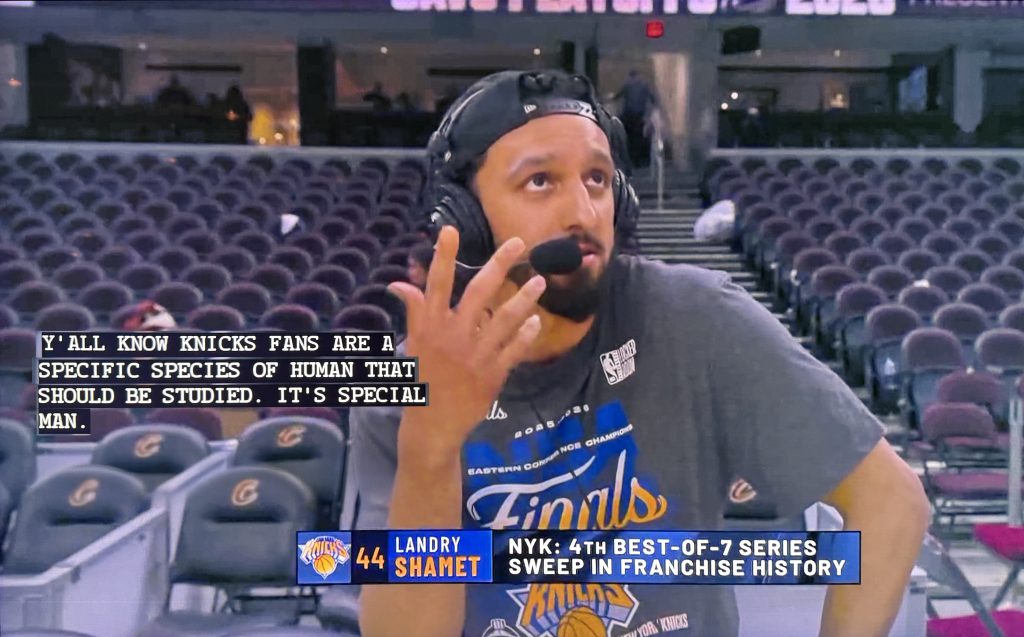
I expected the Knicks to win tonight. I also expect them to win the NBA championship. Two reasons.
One is what I said about the Cavaliers ten years ago: they’re a better story. And something I said about the Warriors in that post applies to the Spurs now: they feel entitled. They just beat the reigning (and favored) champs in the Western Series finals—a series most NBA watchers considered the real finals, because the West is so much better than the East.
The other reason is that the Knicks are a better team. They may be the best basketball team to come along in many years. Their chemistry is epoxy. The cliché they keep repeating is “We play for each other.” This is what Bill Simmons calls The Secret. The Knicks have it. So do the Spurs, but not to the same degree. Three of the Knicks—Brunson, Hart, and Bridges—won college championships together at Villanova and have a real brotherhood: one with a gravity that pulls in the rest of the team.
They also have the real MVP: Jalen Brunson, Captain Clutch, who is historically great under pressure at the ends of games. Karl-Anthony Towns is finally turning into what he promised to be when he went first in the NBA draft, eleven years ago. Once regarded as a weak defender, he all but owned Victor Wembanyama tonight. He’s also a great shooter and passer. Josh Hart couldn’t shoot for shit tonight but had fifteen rebounds.
I could go on about the other players, but that would be beside the point, which is that the Knicks are the best team in the game, and not just a great collection of players.
If Wemby stays healthy for the next decade or more, he will go down as the greatest player of all time. He’s that good—and that tall. He will also come back with a vengeance in the next finals game, and maybe the ones that follow. But that may not be enough. The Knicks are the better team.
As for Knicks fans, what Landry Shamet says above. Also this.
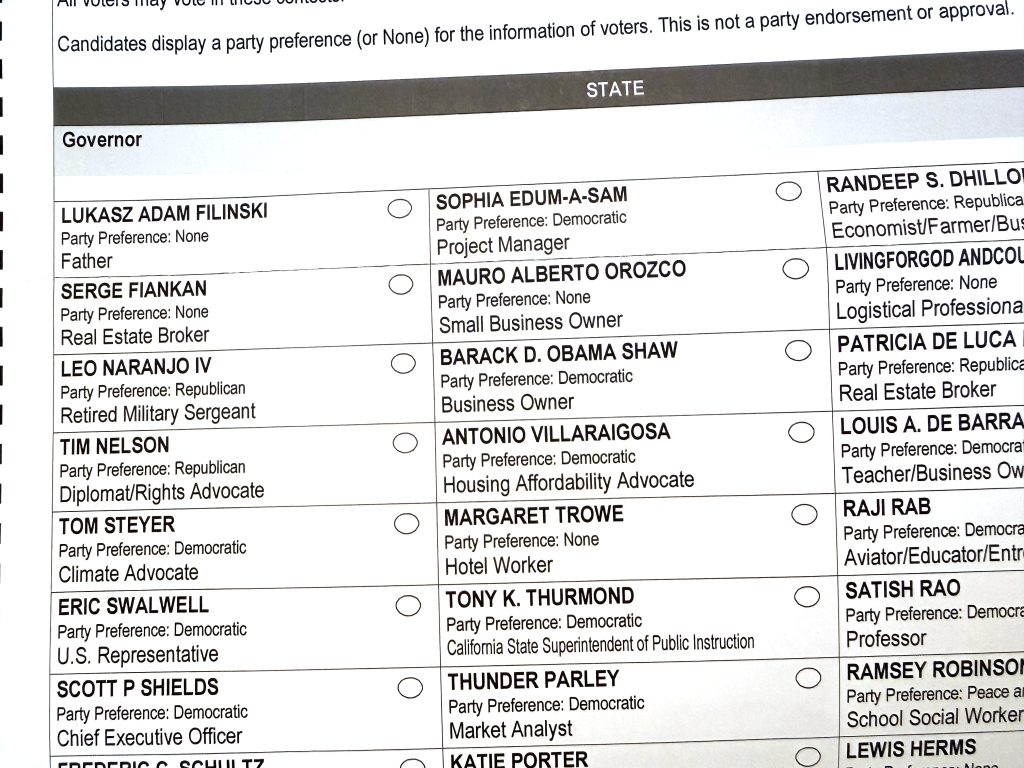
But I could have
No, I didn’t vote for Barack D. Obama Shaw.
It’ll be great, as are all of his books
David Weinberger‘s next book is Beautiful Particulars: How AI’s attention to the smallest of differences is reshaping our biggest ideas. Coming in October from MIT Press.
Good piece. Like to see it posted elsewhere.
Charanya “CK” Kannan on Linkedin:
I spent the last 12 hours talking to 10 different law firms, to evaluate who should handle our day-to-day legal work. I walked away with a strange realization ➙ Legal AI may be one of the most overfunded and underfelt categories in tech right now.
Read the whole thing.
Now, a word from the blogosphere: Writers, please don’t post your good stuff only on Linkedin. Yes, I know there are good reasons for posting on Linkedin. But if you do, make it a duplicate of what you put on your blog, your Substack (also a blog, really), like Jamie Smith does. Here’s his blog. Here’s the same on Linkedin. I never point to his Linkedin, because the former is his, and he latter isn’t.
Oy
From the Department of WTF Oversight
While trying to do actual work, I got distracted by an email from a sane friend who is co-trying to understand wtf this is about, guided by this. An excerpt from the latter:
The National Design Studio is not a successor to DOGE. It is DOGE with a better logo and a design philosophy.
Now, back to TrumpRx looking at you.
Every webpage you load is making phone calls. Not to people, but to servers around the internet, dozens per second, all invisible to you. When I opened TrumpRx, I right-clicked the page, opened the browser’s built-in inspector, and started reading the list. Mixed in with the routine traffic was a name I recognized: PostHog. PostHog is a Silicon Valley analytics company whose entire business model is recording what visitors do on a website and reporting it back to whoever owns the site. Mouse movements, clicks, scrolls, keystrokes. I had not typed anything. I had not clicked anything. I had just opened the page, and it was already on the phone with PostHog telling them about me.
The recordings are not anonymized. IP addresses are not stripped. And the way it is configured, the data looks to your browser like it is going back to TrumpRx, but it is actually being forwarded behind the scenes to PostHog. That is a technique used to slip past ad blockers by disguising where the data is really going, and it is not something I expected to find on a federal health website. So I went and looked at the other sites the studio had built. Real Food, the federal food policy site. Trump Accounts, the children’s savings program. The studio’s own homepage, ndstudio.gov. All of them had the same vendor, the same setup, IP addresses not stripped, the same forwarding trick. And on ndstudio.gov alone, running alongside PostHog, was something someone had built entirely by hand. Five hundred and forty lines of custom JavaScript with a name embedded directly in the code: AutoMonitor. What it appears to do is rewire the part of the browser that handles how a page talks to the outside world, so that every conversation the page has with any server gets copied and forwarded to a private backend with no public presence. The studio has the structural ability to keep a copy of every recording as it passes through their infrastructure. I cannot prove they are keeping one. The pipe is built that way on purpose, and that is the part that matters.
When the federal government collects information about citizens, the law requires specific things first. Privacy disclosures. Notices in the Federal Register. Published contracts with outside vendors. I went looking for all of it across twelve National Design Studio programs and found none of it, not a single required document filed across any of the twelve. Every missing document is, by itself, a violation of federal law, and these are the laws Congress wrote after Watergate to make sure the federal government could not run secret surveillance programs on its own citizens. The only document they did publish is a privacy policy on TrumpRx, and it contradicts itself two paragraphs apart. The first paragraph says PostHog records the pages users visit and the medications they view. Two paragraphs later, it says they do not collect health or medical information. A federal health website is lying to the people using it and cannot even keep the lie consistent.
In other words, it’s just like surveillance-based adtech, against which I have been inveighing since the last millennium, through at least 161 posted utterings compiled here. To little effect so far, but I won’t stop.
Wandering about geology
In the vastness of John McPhee‘s writings on geology (within which he is the field’s Shakespeare), he writes (in Annals of the Former World and earlier works),
If by some fiat I had to restrict all this writing to one sentence, this is the one I would choose: The summit of Mt. Everest is marine limestone.
Elsewhere, he writes:
“For another example, the last Pleistocene ice sheet loaded two miles of ice onto Scotland, and that dunked Scotland in the mantle. After the ice melted, Scotland came up again, lifting its beaches high into the air. Isostatic adjustment.”
Then,
“Let go a block of wood that you hold underwater and it adjusts itself to the surface isostatically. A frog sits on the wood. It goes down. He vomits. It goes up a little. He jumps. It adjusts.”
Look at how McPhee turns glacial isostatic adjustment into a story simple enough for Sesame Street. Scotland isn’t “depressed by glacial loading”; it is dunked. The crust isn’t warped by viscoelastic compensation; it floats like block of wood with a barfing frog on top. Great stuff.
This whole digression began when I wondered to myself about the exact elevation of Loch Ness above the sea at Inverness. Because that’s how far (or high) the land under the Scottish Highlands has rebounded since the ice melted. While the ice was melting, Loch Ness was a fjord dug by glacial ice scraping out the Great Glen Fault, and at sea level. Or something like that. The Loch Ness Project has thoughts about it.
Only moreso

Frogmarch
I am not calendar-blind, but I am disabled around dates. I frequently get today’s date wrong, and dates for future stuff tend not to stick in my mind—or I have them wrong. But I am accurate about days of the week. So I know today is Tuesday. I also know Tuesday is Pre-Election (Primary) Day here in California. I just didn’t get that it’s this Tuesday. Today, when I don’t have a car. So I’ll walk a couple of miles to the nearest drop-off. En route, I will pass the slimmed-down frog shrine. Hence the subhead.
Update: Got a ride, a coffee, and great conversation with Bruce Caron, who read the above and texted me to offer a ride. Blogging works after all!
Mark that word
Human AgenTcy, by Keith Teare. I’ve capitalized the T in the latter so you don’t miss it. I did at first. Easy to do.
I especially like the one for Wi-Fi diagnostics
Nikhil Vemu:17 macOS Terminal Commands I Actually Use Every Week
It’s far worse than it appears
Elizabeth Ginexi looked into the Regulation for Federal Financial Assistance, for which the comment period ends on July 13. Her take on May 28:
She begins her summary,
What OMB is proposing is not a reform of grants management. It is a complete political control apparatus layered over every stage of the federal science funding lifecycle.
And goes on from there, in detail.
Yesterday, June 1, she posted, This new OMB Rule Is Bigger Than Science. Much Bigger. Among much else, she writes,
2 CFR Part 200, the regulation being rewritten here, is not the science grants regulation. It is the universal legal framework governing every federal grant to every recipient across every agency in the federal government. When OMB rewrites it, they are rewriting the rules for all of it.
According to the Congressional Research Service, in FY2024 the federal government sent $1.1 trillion in grants to state and local governments. That money is what funds:
Medicaid — more than $600 billion, with the federal government covering between 50 and 77 cents of every dollar states spend on health care for their most vulnerable residents
Transportation — $95 billion for highways, bridges, transit systems, airports, and ports
Education — $65 billion for Title I schools, special education, Head Start, and workforce training
Food assistance — $51 billion
and much more
Every single one of those programs operates under 2 CFR Part 200. Every one of them is now subject to the same provisions I described last week.
Consider what that means in practice. Political appointees who can override expert judgment and block science grants that don’t advance the President’s priorities would have that same power over transportation awards, and housing funds, not just NIH applications. Any active grant could be canceled mid-project because it no longer serves ‘the national interest.’ A highway already under construction. A tribal health program mid-delivery. A city still rebuilding from a flood. And every new grant program must align with administration priorities before a single application is even solicited. Entire categories of funding can be quietly discontinued without a public announcement or a vote.
She concludes,
**How to write an effective Comment. Make it completely unique! Do not cut and paste.
**1: Say who you are and why you are qualified to comment. You do not need credentials. Being affected is enough, and simply being a concerned citizen is perfectly fine.
2: List the exact provision #s [PICK ONE or TWO FROM LIST ABOVE] that concern you, and explain what they would do. You do not need to quote the rule directly. Just explain what you understand it to mean in plain terms.
3: Explain the concrete harm. What would happen to you, your community, or your state if this provision takes effect?
4: Closing: State clearly what you want OMB to do. This can be as simple as: “I urge OMB to withdraw these specific provisions: §200.340, §200.202, §200.205.” or “I urge OMB not to finalize this rule.”
Submit your comment in opposition here: https://www.regulations.gov/document/OMB-2026-0034-0001 The deadline is July 13, 2026.
Now you know what to do.

In Positioning: The Battle for Your Mind, Al Ries and Jack Trout said, “Positioning is not what you do to a product. Positioning is what you do to the mind of the prospect.” So consider what’s happening in the minds of everyone who has long depended on Google to be what it has always been—a search engine for the Web—when they consider what they’re seeing from Google now, and reading in stories such as these:
By forking itself away from search, Google is also forking over the Web—and creating a giant opening for somebody else to grab the Web Search position.
Who would that be?
Microsoft’s Bing is one candidate, but Bing’s UI is a NASCAR of promotional jive. (See what Steve Jobs says about Microsoft here. Cuts like a scalpel.)
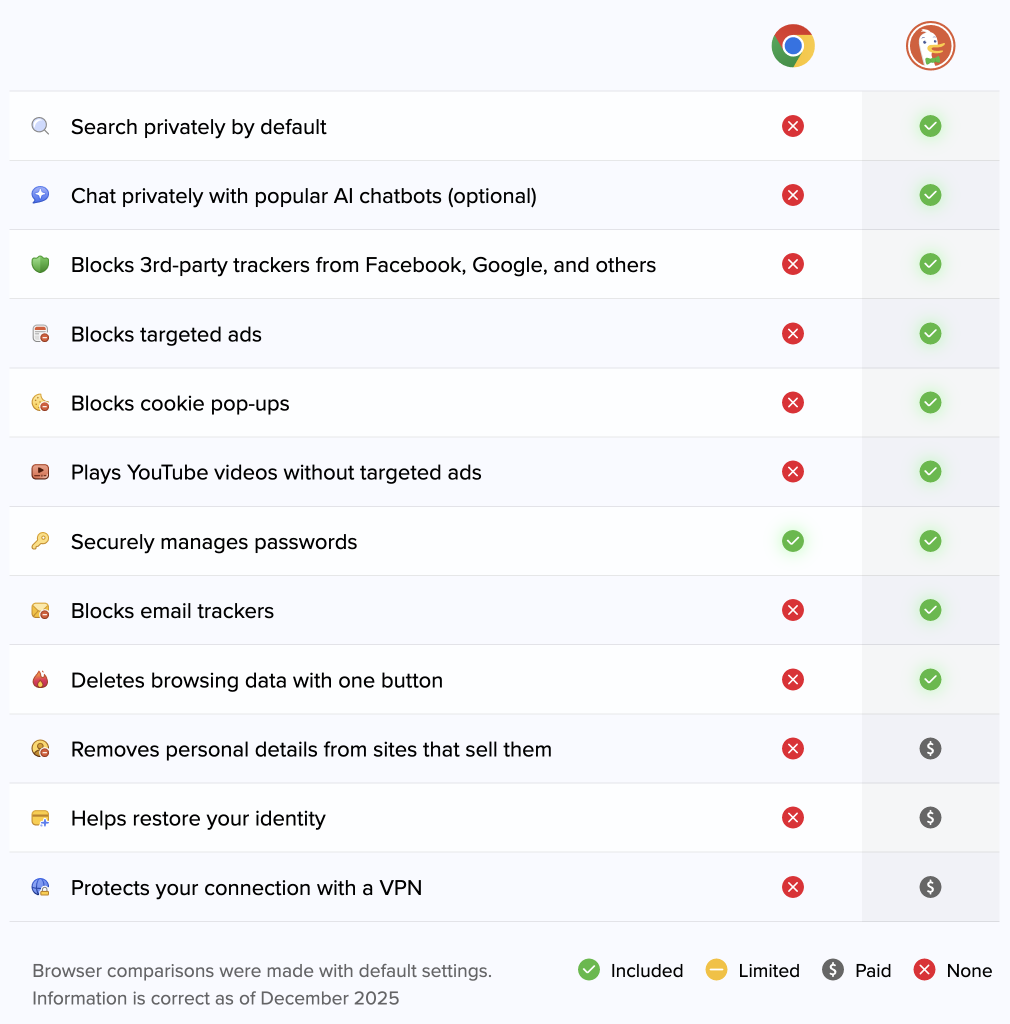
DuckDuckGo is the other. Its position is privacy. That’s good, but Web Search is better now, because the position is available. Google isn’t abandoning search, but now they’d rather be “your helpful assistant” and “personal shopper” than the Web’s “librarian.” (Source: Google Gemini.) To make that shift, Google has compromised Web search, and the Web with it.)
Conveniently, DuckDuckGo already has a search engine for the Web. They can sharpen that position while keeping—or even expanding —their privacy one. And help save the Web in the process.
They’re already on the case. See what they’re saying on Threads, BlueSky, Xitter, Instagram, and Facebook.
They should also add “Does pure Web search by default” and “No AI extension” to their list of things they do and Google doesn’t:
Anyway, glad to help.

A plan to enclose the public Web
The Web is a public commons made of links. There is stuff at those links, almost all of it open to everybody, by design.
The main way we see and use that stuff is with a browser. But what if your browser has AI of its own, and that AI stands between you and what’s at those links? Your Chrome, Firefox, Safari, or DuckDuckGo browser won’t just fetch and display pages. It will interpret, summarize, filter, and answer, using whatever AI its maker chooses to provide. And those AIs, even if they operate locally rather than in distant data centers, still come from silo’d vendors.
That’s one of the issues raised by Google’s Prompt API, which Mozilla opposes. As The Register puts it, “Mozilla fears wiring an AI API into Chrome will make the web less open.”
Think about what happens when browsers become AI intermediaries rather than ways to access sources directly. Imagine Chrome relying on Gemini, Firefox on Claude, Safari on Apple Intelligence, and DuckDuckGo on ChatGPT.
In that world, your browser becomes an interpreter of the Web rather than a way to navigate it. What was once primarily a world of links increasingly becomes inventory for competing AI systems. The Web remains underneath, but no longer as a place through which you browse and surf from source to source. Instead, it becomes a substrate from which AI systems gather, summarize, and present information.
If that happens, it’s a form of enclosure. The commons will still exist, but access to it will be mediated by private systems operated by a handful of vendors. That’s the danger here.
Don’t just say what. Say who.
Indiana University layoffs:
None of those stories name the persons laid off, which is what readers will most want to know. Yes, I can see why. But stories need characters.
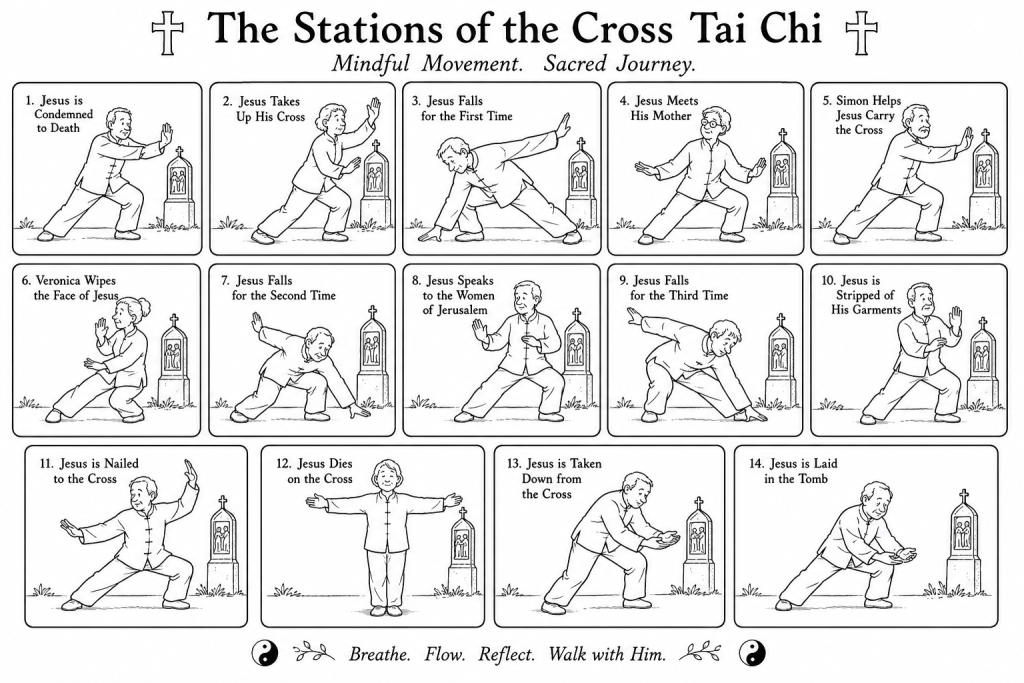
Being old, I get lots of ads for Chair Tai Chi, Chair Yoga, and other positional challenges toward staying alive, limber, and not much closer to dead than you are without them.
So this one occurred to me yesterday. And, since I can no longer draw (arthritis, talent), I handed illustration over to ChatGPT.
Apologies for whatever might offend you

Hyperlinks subvert hierarchy
—Thesis #7, The Cluetrain Manifesto
Big AI subverts everything, including hyperlinks, which are what make the Web a web.
With Big AI, you no longer surf from searches to sources across an ocean of links. You ask questions and get answers from the world’s largest Magic 8-Balls. They top the new hierarchy, which subverts and subordinates the Web.
Go to any of the Big AI chatbots—ChatGPT, Claude, Gemini, Meta, whatever—and ask a question. If it pauses for a moment, there’s a good chance it’ll say “Searching the Web.”
But it’s not. It’s composing an answer synthesized from what it has harvested from the Web, plus a vast amount of other forms of ingested human expression. It may or may not point back to sources on the Web. And if it does, it’s only providing footnotes.
Pew reports that people reading AI summaries of Google searches click on links only about 8% of the time. When search results come without an AI summary, that number is 15%. But both numbers are down from 100%, back when links were all that search engines produced. As a result of that change, publishers report losses of 20-90% in traffic and revenue in the past year alone. Many small publishers are now gone.
And what about the services and institutions that kept the Web both ours and durable (such as those with logos in the windows of the abandoned house image above)? Keep that question in mind while I ask Google’s new AI Mode to compare itself, side-by-side, to Google Search:
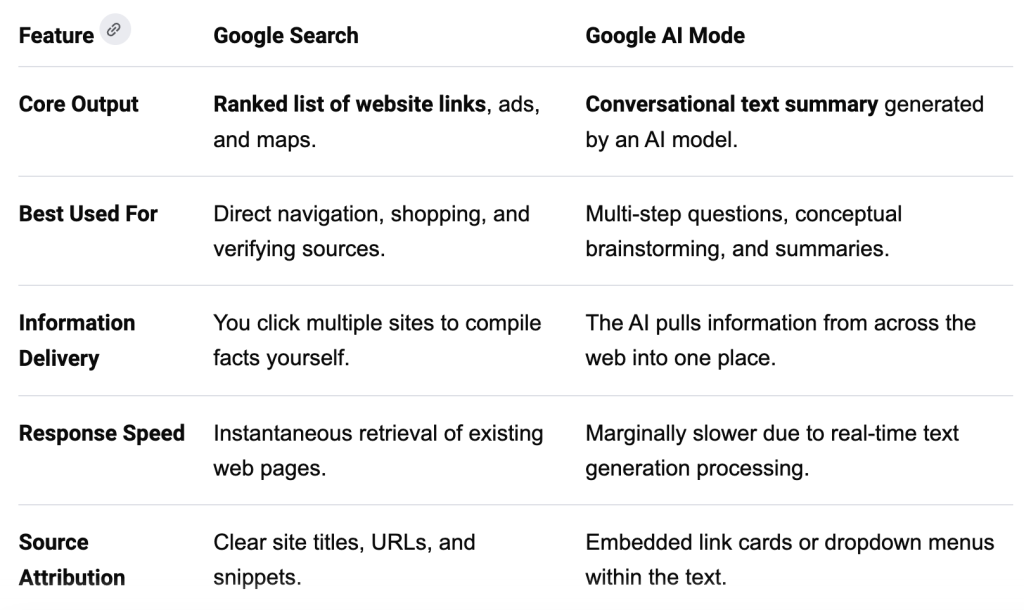
The stuff in the Google Search column is being steadily deprecated by what’s happening in the Google AI Mode column. Gemini explained that to me in January, when I interviewed it for Where Are We? That post begins,
While the Web isn’t a place, we know it as one. The language we use to describe it is concrete and structural: domains at locations, with sites that are built and have pages that are authored, and contents that are uploaded and downloaded.
For a generation or more, we have searched through the Web’s vast and structured library using Google, whose original mission was “to organize the world’s information and make it universally accessible and useful.” When we searched Google, we relied on its PageRank system to bring us lists of pages ranked by the number and quality of inbound link sources, and how likely a given site was to contain keywords, text strings, and other search terms.
That’s now gone. Old pages are missing from many searches. AI guesswork is replacing formerly normal search results. The look of Web structure in search results is just emulation.
This change matters a lot to me. I’ve been writing and publishing on the Web for thirty-one years, and almost all my work is still out there on solid static sites. And now Google fails to find many of those pages, despite having been on the Web for decades and having lots of inbound links. My friend Dave Askins tells me the same malady afflicts much of his own archival work: it’s present on the Web, but absent from Google searches. Why?
I asked Google’s Gemini that question. Here’s what it said:
The “disappearing” of the old web is a result of a massive shift in Google’s priorities over the last few years.
While you might be looking for a specific historical document or an old forum thread, Google’s systems are now aggressively tuned to filter out what they consider “stale” or “unhelpful” content…
In the race to be a ‘helpful assistant,’ Google has stopped being a ‘universal library.
PageRank is still there, it tells me, but subordinated. To what?
Of course: advertising.
Taking my clues from Keyords are dead, by Shalom Gonzalez in Search Engine Land, I asked Gemini to tell me “how searches by the helpful assistant might constantly be looking for what the person might eventually want to buy, so they can be advertised at when the right time comes.”
Gemini replied,
This is the “secret sauce” of the 2026 search model. If the old search engine was a librarian, the new one is a personal shopper who is taking notes on everything you do to predict your next “need state. The transition you’re sensing is the move from Reactive Search (answering what you asked) to Predictive Search (answering what you’re going to ask).”
This fucks the Web.
And you too. You are no longer the reader, the researcher. Google thinks what you want from the Web’s library no longer matters. Nor does the library itself. Google search is now guesswork based on what its AI thinks really matters, plus what it thinks you might want to buy. These assumptions are based on what Eli Pariser, in The Filter Bubble, calls “a bad theory of you.” Only worse, because it’s now also a bad theory of the Web. Here’s Gemini again:
While you might be looking for a specific historical document or an old forum thread, Google’s systems are now aggressively tuned to filter out what they consider “stale” or “unhelpful” content. Here is why those old archives are vanishing from your search results
OMFG.
Sixty-five years ago, The Twilight Zone aired an episode about what’s happening here. It was called “To Serve Man” and ended this way:
Everybody in the surveillance-fed advertising fecosystem already regards personal privacy as a bug, not a feature. With Big AI, the plan is to modernize that fecosystem by moving human cattle onto corporate ranches, where they can be observed more closely than ever, and advertised at with far more accuracy. This, the thinking goes, should multiply the size of the $1 trillion advertising business.
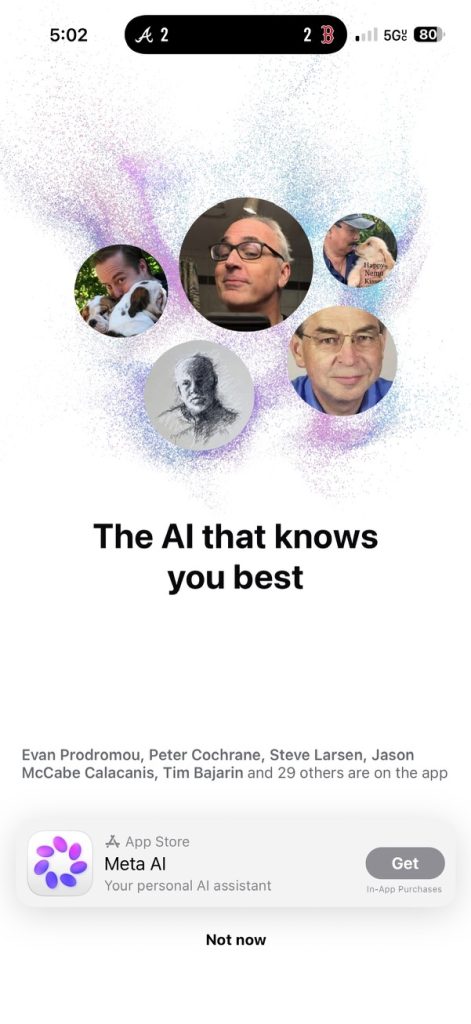
Here is how Meta tempts me to move onto its private AI ranch. Unlike my friends there, I’m not going. (Though I am on Facebook, for other—yes, morally compromised—reasons. That’s where this ad showed up, when I had just closed a creepy Meta-generated AI “reel.”)
For a look at how the new AI-expanded fecosystem works, see—
Laurie’s main source is Tracking Conversations: Measuring Content and Identity Exposure on AI Chatbots, a report by four researchers at UC Davis. Among much else, they say,
We find that 17 of 20 chatbots share information with at least one third party. Three chatbots share plaintext conversation text, including both prompt and response snippets, with Microsoft Clarity through session replay. Fifteen chatbots share conversation URLs or chat identifiers with third-party advertising, analytics, or social endpoints. Several chatbots expose user identity through support widgets, analytics, advertising, and session replay tags; in some cases, hashed emails are shared.
Here is how those data flows look:
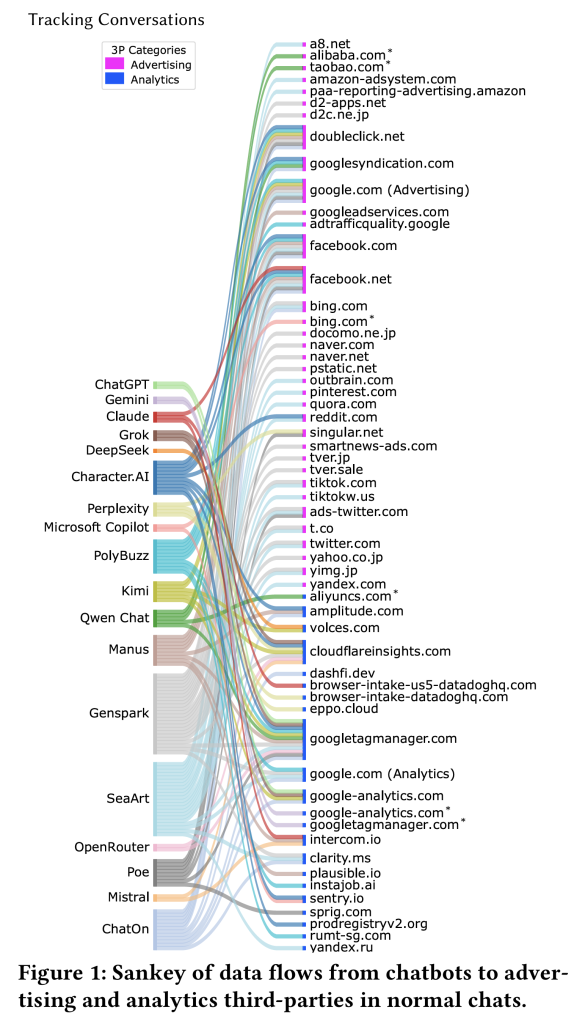
This is exactly how things already work for most websites (run a PageXray on any site or page to see a visualization of personal data flows that looks much like the one above). The difference is that websites at least throw a cookie notice in your path, either to force consent to being tracked or to prompt you to click on “choices” that might stop some tracking. (Which, mostly, they don’t. You get tracked anyway.) With Big AI, all this tracking is already permitted by oxymoronic “privacy” policies you’ve don’t read.
We can only fight this by building an intention economy that’s bigger than the attention one, and to make personal privacy a feature rather than a bug. In 2012, Harvard Business Review Press published a book about making that economy happen, called The Intention Economy: When Customers Take Charge.
It said there are two ways. One is by replacing empty corporate promises with privacy contracts that people proffer, and sites and services agree to. The other is by building on genuine trust with scalable ways for customers and companies to do business and communicate with each other. Many more of those ways can be imagined when customers have full agency rather than what little they get as human cattle on corporate ranches.
We now have a standard on which an intention economy can be based: IEEE 7012-2025, nicknamed MyTerms.
We also have a way for customers and companies to start working together toward making the intention economy happen, based on MyTerms. It’s the IEEE’s Industry Connections program and its Individual Defined Privacy Terms Roadmap:
Our (Customer Commons, MyData Global, and the MyTerms Alliance) goal is to bridge the gap between the 7012-2025 standard and real-world adoption. The Industry Connections activity can help define and pilot practical training, develop strategic road maps, identify and implement certification programs, and document an industry white paper advancing standard awareness and understanding.
The motivation is simple: the standard has major implications across industries and consumers. We need a robust, yet agile framework for a rapid market introduction, iterated with expert feedback, ensuring broad stakeholder buy-in.
You can join by filling out this form, and by encouraging others to do the same, starting with the services and institutions in the top image above.
Not cheap, but appealing
Is my future portable drive one or more 8 TB strips (such as one of these) that I carry with me and plug into one of these?
I laid out the problem in more detail here. Nothing has changed yet.
On the continuing death of TV (and everything else) as we knew it
MediaPost: Google, Netflix, Amazon To Dominate CTV By 2030s. CTV is Connected TV, meaning streamed over the Internet rather than over cable or airwaves.

Remembering the future
What matters most about Memorial Day is that we stop killing each other, especially over problems that could have been solved without anyone dying.
Word
Pope Leo on AI. The whole thing.
More evidence that advertising corrupts and digital advertising corrupts absolutely
Wired: ‘Creepy’ Listening Tool for Targeted Ads Didn’t Actually Work, FTC Says. I added a comment (unpublished at this writing) that pointed to this PageXray of Wired.com and asked the writer, Maddy Varner, to respond. Maddy is a veteran of The Markup and Pro Publica. Should I reach out? I have a 100% failure rate in getting reporters to cover privacy abuses by their own publications. Here is what the non-visual part of the PageXray says Wired is up to:
Just in case you didn’t think Google Search was dead
Denine Harper in LinkedIn: Google Is Now A Buyer’s Assistant.
One is under your ass
Ole Eichorn: Four planets viewed during an eclipse of the Sun
$Trillion here, $trillion there. Pretty soon, you’re talking about real money
SpaceX’s S1 Filing. On Page 11, it says,
We believe we have identified the largest actionable total addressable market (“TAM”) in human history. We estimate that our quantifiable TAM is $28.5 trillion, consisting of $370 billion in Space from space-enabled solutions; $1.6 trillion in Connectivity across $870 billion in Starlink Broadband and $740 billion in Starlink Mobile as well as additional opportunities in enterprise and government; $26.5 trillion in AI across $2.4 trillion in AI infrastructure, $760 billion in consumer subscriptions, $600 billion in digital advertising, and $22.7 trillion in enterprise applications.

Whether report
The Sun is behind clouds here in Santa Barbara, but I still have faith that it’ll be clear by late afternoon, which is how things go here. Meanwhile, Bloomington has had lots of rain while I’ve been gone. Monroe Lake is moving toward flood stage, with 1,605 cfs (cubic feet per second) flowing in. (I just noticed that the photo of the lake in Wikipedia is one I shot from a plane in 2019. That kind of thing happens a lot, because I’ve permissively licensed dozens of thousands of published photos, and many of those have found their way into Wikimedia Commons, the staging site for photos Wikipedia might use.) Also, the nearby Santa Rosa Island Fire appears to be out.
Yum
Overheard: “Everything you eat turns to shit.”
Part of a larger picture
LA Times: Caltech might lose control of the JPL.
That's weekend, auf Deutsch.
As happened yesterday, something I wrote here in Wordland got too long, so I made it a separate post, titled So maybe it’s not too late to teach it to myself. German, that is. I still have the book I failed to versteh in 1962, so why not?
And all of them need all of our help from all of us
Dentsu says the whole advertising business, for which the most personalized kind is the most ideal, and by design depends on surveillance, will pass $1 trillion this year. This is what ProjectVRM has been up against since 2006, Customer Commons since 2013, and MyTerms since January.
But it won't work on malaria
Wired says you can stop a mosquito bite from itching by applying cold or heat.
And there is—or could be: Emancipay
I'm back to unsubscribing (or not subscribing in the first place) to newsletters that require subscriptions to read whole posts. Apologies if yours is one of them. I can't subscribe to everything. There has to be a better way to monetize newsletters.

In my Oofday post, I shared a post in Hackernoon titled We Treated Potholes Like Software Bugs and Accidentally Built a Civic Hacking Playbook. The story is about a civic hack in Sofia.
Everything in the piece is excellent. The writing is vivid and clear. Its case is well-made. My only problem with it was suspecting it was written in some way by an AI. The tell:
So I had originality.ai examine it. The result: “We are 62% confident that the text scanned is AI-generated, NOT to be interpreted as 62% of the text produced is AI-generated.”
However, even if a piece is AI-generated, does it matter if it’s exactly what the author is trying to say?
Back in March, Daniel Barkhuff, MD, one of the most valuable sources of wisdom on the Web, copped to writing with AI. Specifically,
Let’s stop pretending. Everyone on Substack is using AI. If you think they aren’t, you’re high. I know because I am (using AI, not high), and I’ve been doing it for a while.
My process isn’t complicated. I sit down and write about a page, maybe 450 words. It’s not elegant. It’s not structured. It’s basically a brain dump. Half sentences, ideas that don’t quite connect yet, things I’d say out loud but that look ridiculous when you see them on the screen. It’s intellectual vomiting. A rough sketch of what I’m trying to say.
Then I paste it into AI and say something like, “Hey, give me an essay.”
And it does.
Three things about that:
Now dig this: The author of the Hackernoon piece, Bogomil Shopov – Бого, aka @bogomil, is writing to be read in thirteen different languages. Does what he writes sound like AI in Bulgarian to begin with?
Hell, I dunno. But why not use AI to write something in your native language when you also know it will be translated into another twelve? (Is AI-style writing better for translation? Betcha it is.)
It should be clear by now that there is a learning loop that starts with all of us, then moves through all the AIs that harvest and process our utterings, and is then fed back to us in an idealized style that makes us (or at least me) reflect on ourselves and our own styles, while knowing that we too are being hacked by AIs and not just by other humans: co-evolution at work.
By the way, I just ran the blog post you’re readig through Originality.ai to see if it sounds like AI. It said,
Likely Original
99% Confidence.
It also said I have only three scans left before I have to upgrade, which I probably won’t.
*I asked ChatGPT what “the opposite of shit” might be. I got, of course, a long-winded answer that boiled down to one word: gold. I can see the case, but it’s wrong, and I wouldn’t use it, except here, as a case in point.
This one is too good at them
I just wasted an hour of writing and research by hitting the wrong chord on my keyboard here, after neglecting to save my work in progress. You can't teach an old dog old mistakes.
Uh oh
Some bad shit is going down in Garden Grove.
The other two don't
There is no contrast between the US, China, and the EU more stark than AI regulation. Here in the US there is effectively none (especially after yesterday's news). In China there is the usual state control, but with a strong AI development imperative. The EU has the AI Act, which I was briefed on yesterday during an online session with the Berkman Klein Center (which is covering the AI thing well). What I see with the AI Act is very little drag on innovation and implementation of AI, but the simple fact that AI regulation exists in the EU has the AI giants (all based in the US) pumping the brakes there. To me the main difference between the three regions is that only one of them cares about personal (or any kind of) privacy, and backs that care with policy.
Does that mean it's dead… or just a zombie?
The Democratic party has conducted an autopsy on itself.
Wisest words ever sung
Uncle Josh is my favorite Mike Cross song, especially now that I have the life expectancy of a puppy. Alas, the lyrics are nowhere on the Web. Should I put them there? They matter. Mike will be 80 this year and hasn't been active for a long time. His agency still has a page for him, if you run a search. His old URL, mikecross.com, redirects to the agency, but you can find what it used to be at archive.org. Here's one snapshot, with a popover explaining his absence. But listen to the song.
More here if you care to dig
Says here that Sports Illustrated deleted the entire archive of a writer accused of using AI as a co-author, or something like that.
A hole new approach
Hackrnoon: We Treated Potholes Like Software Bugs and Accidentally Built a Civic Hacking Playbook
Since what followed from the above got too long, I made a separate post of it: Getting Real.
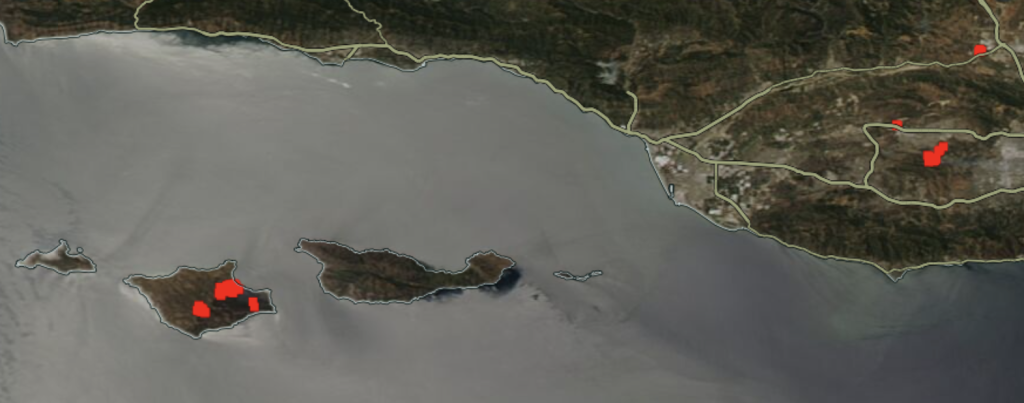
Following fires
In normal times, Santa Rosa Island is easy to watch from our deck in Santa Barbara. But right now it’s burning up, and smoke from that fire and the Sandy Fire in Simi Valley have added layers of brown to the gray marine haze that comes and goes. So here are some sources of visuals in addition to those the links above:
Most of those are interactive and good for following developments anywhere on Earth.
Talk me out of it. Or into something else.
I need a mic for doing podcasts and similar audio work here in my Santa Barbara office. Thing is, I’m here much less than I’m in Bloomington, which is kitted out. All I really need is a mic that’s not too expensive. Currently leaning toward the Shure M7VX.
As to so many other doomed things
At our New Jersey home in the 50s and 60s, my parents expressed a relatively cosmopolitan level of taste by drinking Savarin Coffee, brewed in a percolator. The brand is long gone now, but it’s interesting to see what happened to it.

CPDP stands for Computers, Privacy, and Data Protection. The theme of this year’s CPDP is “Competing Visions Shared Futures.” The MyTerms future is replacing consent with contract in our online dealings with websites and digital services.
Consent is what cookie notices speciously obtain from your clicks on the forced choices that interrupt your first experience with nearly every website—and do nothing to protect your privacy or data. With MyTerms, sites and services agree to your privacy terms, rather than you to theirs. And your privacy agreements are backed by contract law, not by empty corporate promises, which always lack ways for you to monitor compliance. With MyTerms, you can do that.
So (this is important) Eric Pol of MyData Global writes this on LinkedIn:
Attending #CPDP2026?
🤔 Looking forward to paradigm shifting at last towards the individual in personal privacy?
👍 Let’s talk about MyTerms, the first machine readable standard for personal privacy, IEEE 7012
3 options:
1️⃣ Attend our CPDP workshop on Friday 22 May 14:15 – 15:30
2️⃣ Reach out here to the MyData Global #MyTerms champion Iain Henderson, who will be on the conference all 3 days
3️⃣ Reach out to me in DM giving me your contact details, and I’ll pass them on to Iain. I will myself be on site Friday.
😄 Looking forward to building paradigm shifting solution with you!
If you’re at CPDP, find and talk to Iain. This will be easiest on Friday, when he will be giving the workshop linked above and now here in the Music Room on Friday from 14:15 – 15:30. Absent that, read what he’s been writing here, I’ve been writing here, and Nitin Badjatia has been writing here.
Flaming excess
Big fire on Santa Rosa Island. Largest fire ever there.
Success story
Susie James: Three chords, the truth, and a woman behind the signal is a nice piece about good local radio in Lebanon, Tennessee. It's in the Lebanon edition of Good News Exchange, which explains itself here.
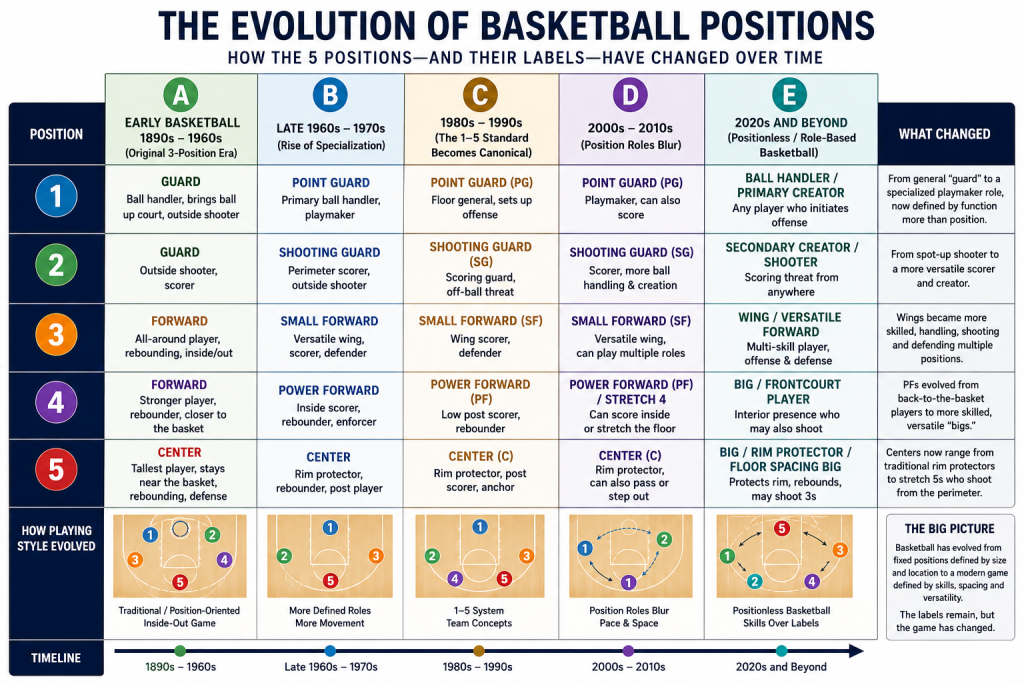
I love basketball. I love watching it, and in my youth (columns A and B above, row 2), I loved playing it.
I wasn’t good. My only skill was shooting the ball, which I did flat-footed from the nether regions of the court called “outside” or “downtown.” I hit about half of those shots if nobody guarded me, which was most of the time, because I was a slow white guy who stood 5′ 9 1/2 inches on a tall day, with “alligator arms” that were two inches less than that. But I did have that shot, so when sides were chosen for pickup games, I’d be in the middle of the pack, which was good enough for me.
Playing at that low level still conditioned me to maintain a steady interest in how the game was played. This went through my years in North Carolina (’65 to ’85, with a break for New Jersey from ’69 to ’74), the Bay Area (’85 to ’01), Santa Barbara (’01 to now), Boston (’06 to ’13), New York (’13 to ’25) and Indiana (’21 to now). I went to countless Duke, Knicks, and Warriors games, plus the occasional Lakers, Harvard, Celtics, and Hoosiers games. I’ve watched a lot of games on TV, of course. (Caught the Pistons being creamed by the Cavs last night.) And I listen to half a dozen basketball podcasts in addition to the many hoops channels on SiriusXM.
So I got to thinking this morning about how much the five positions in the game have changed, both in how they are played and what they are called. Guards, forwards and centers have turned into points, shooters, wings, bigs, and numbers, among other labels. So, with artistic help from ChatGPT, I created the chart above. It’s my own thinking at a moment in time, and subject to improvement and debate. So let’s have both. A pickup game. Fun exercise with no losers.
