• Apple is a clothing company

    applebutton1The headline above came to me this morning after reading Walt Mossberg’s latest, titled The post-Jobs Apple has soared financially, but lacks a breakthrough product.

    Because the main things Apple makes are extensions of ourselves. That’s what our phones and laptops have become. They are things we almost wear, like our clothing.

    Is it just coincidental that Apple Stores inhabit shopping districts also populated by upscale clothing retailers? Or that Angela Ahrendts, who runs those stores, came to the company from Burberry? Or that its Watch, sold as what the fashion business calls an accessory, clearly matters far more to the company than what we used to call “peripherals” (screens, printers, drives, etc.) and that Apple hardly seems to care at all about the latter?

    And is it coincidental that Apple has lately clarified how it differs from nearly every other tech company by caring almost absolutely about personal privacy?

    Apple’s Jobsian obsession with design (and, one might say, fashion), while interesting, also misdirects attention away from the company’s deeper focus on enlarging its customers’ capacities in the world.

    Dig this: Apple cares so much about the bodies using its products that Tim Cook recently said this to Rick Tetzeli of FastCompany: “When you look at most of the solutions, whether it’s devices, or things coming up out of Big Pharma, first and foremost, they are done to get the reimbursement [from an insurance provider]. Not thinking about what helps the patient. So if you don’t care about reimbursement, which we have the privilege of doing, that may even make the smartphone market look small.”

    With all that in mind, it’s easy to understand why Apple’s product lineup looks stale. Shirts, skirts and hats are stale too. They’ve also been around for thousands of years, and we’ll never stop wearing them.

    It took me a long time to come to this realization. Here’s what I wrote in Apple Rot, a post here in January 2013, and repeated in Proof that Steve Jobs is dead, posted May 2014:

    …look at what Apple’s got:

    • The iPhone 5 is a stretched iPhone 4s, which is an iPhone 4 with sprinkles. The 4 came out almost 3 years ago. No Androids are as slick as the iPhone, but dozens of them have appealing features the iPhone lacks. And they come from lots of different companies, rather than just one.

    • The only things new about the iPad are the retina screen (amazing, but no longer unique) and the Mini, which should have come out years earlier and lacks a retina screen.

    • Apple’s computer line is a study in incrementalism. There is little new to the laptops or desktops other than looks — and subtracted features. (And models, such as the 17″ Macbook Pro.) That goes for the OS as well.

    • There is nothing exciting on the horizon other than the hazy mirage of a new Apple TV. And even if that arrives, nothing says “old” more than those two letters: TV.

    Since then Apple has come out with the Watch (points for originality with that one), introduced the hardly-seen (but cool-looking) Mac Pro (now also very stale), killed its Thunderbolt display, held its Time Capsule to a paltry (and damn near useless) 3Tb, done little to improve its AirPort Wi-Fi base stations — and has iterated its desktops and laptops so minimally that you can get along for years without a new one. Kinda like a good pair of jeans.

    So maybe all that matters for Apple is that it accessorizes its customers better than everybody else.

    You can hear a hint toward that from Tim Cook in this recent FastCompany report: “Our strategy is to help you in every part of your life that we can…whether you’re sitting in the living room, on your desktop, on your phone, or in your car.”

    Here’s betting Apple’s announcement on Wednesday will be all about stuff meant to be a part of you. And not much that sounds like the rest of the personal computer business. (Which, we might remember, Steve Jobs pretty much invented.)

  • The cash model of “customer experience”

    coins

    Here’s the handy thing about cash: it gives customers scale. It does that by working the same way for everybody, everywhere it’s accepted. It’s also anonymous by nature, meaning it carries no personal identifiers. Recording what happens with it is also optional, because using it doesn’t require an entry in a ledger (as happens with cryptocurrencies). Cash has also been working this way for thousands of years. But we almost never talk about our “experience” with cash, because we don’t need to.

    Marketers, however, love to talk about “the customer experience.” Search for customer+experience and you’ll get 35+ million results, nearly all pointing to stuff written by marketers and their suppliers. Even the Wikipedia entry for customer experience reads like an ad for a commercial “CX” supplier. That’s why a big warning box at the top of the article says it has “multiple issues” (four, to be exact), the oldest of which has persisted, uncorrected, since 2012. Try to read this, if you can:

    In commerce, customer experience (CX) is the product of an interaction between an organization and a customer over the duration of their relationship.[1] This interaction includes a customer’s attraction, awareness, discovery, cultivation, advocacy and purchase and use of a service.[2][not in citation given] It is measured[by whom?] by the individual’s experience during all points of contact against the individual’s expectations. Gartner asserts the importance of managing the customer’s experience.[3]

    Customer experience implies customer involvement at different levels – such as rational, emotional, sensorial, physical, and spiritual.[4][need quotation to verify] Customers respond diversely to direct and indirect contact with a company.[5] Direct contact usually occurs when the purchase or use is initiated by the customer. Indirect contact often involves advertising, news reports, unplanned encounters with sales representatives, word-of-mouth recommendations or criticisms.[6]

    Customer experience can be defined[by whom?] as the internal and personal responses of the customers that might be line[clarification needed] with the company either directly or indirectly. Creating direct relationships in the place where customers buy, use and receive services by a business intended for customers such as instore or face to face contact with the customer which could be seen through interacting with the customer through the retail staff.[7][clarification needed] We then have indirect relationships which can take the form of unexpected interactions through a company’s product representative, certain services or brands and positive recommendations – or it could even take the form of “criticism, advertising, news, reports” [7] and many more along that line.[7]

    Wholly shit. Do you—or anybody—have any idea what the fuck they’re talking about? Did you even try to read more than a few words of it?

    Why would an industry big enough to put 35 million documents on the Web not have one comprehensible document in the only place where it would make full sense?

    Here’s why: the CX industry is talking to itself. It’s one big all-BS echo chamber.

    And actual customers want no part of it. I mean, really.

    Hey, you’re a customer, dear reader. Do you want, or would you actually pay, for any of the shit that industry talks to itself about?

    Here’s a different question: is it fixable?

    I think so.

    Basically, CX has two problems: complexity and perspective. Let’s unpack those.

    First, complexity.

    Company promotions tend to be complex, because they’re gimmicks. Meaning they are a come-on to customers and not a persistent and predictable part of doing business.

    Because promotional gimmicks are temporary and provisional, they also tend to have a bunch of moving parts. Even coupons, the simplest of promotional gimmicks, require that the company mint its own currency, for conditional uses, for limited periods of time, with restrictions on eligibility and lots of other forms of cognitive and operational overhead for everybody: the company, the customer, and whatever other partners that might be involved.

    Here’s a good example.

    This morning I got a promotional email from T-Mobile with a promo that looked interesting to me: an hour of free Wi-Fi from GoGo In-Flight, the next time I get on a plane. When I went to T-Mobile link for the promo, I found these instructions:

    Before you board

    • Have a valid E911 address on file and a T-Mobile phone number.
    • To get your hour of FREE Wi-Fi and unlimited texting, make one Wi-Fi call before you board.
    • If you don’t have Wi-Fi calling, you can still get FREE Wi-Fi for one hour and use iMessage, Google Hangouts, WhatsApp, and Viber all flight long.”

    Each of those bullet points contained deal-killing conditions:

    • I don’t know if I have a “valid E911 address.” In fact, I didn’t know what one was until I looked it up in Wikipedia, 30 seconds ago.
    • I think I know what they mean by a “Wi-Fi call,” but my experience of that (or what I think it is) with T-Mobile is with making normal calls on my T-Mobile phone over Wi-Fi where there is no T-Mobile cellular coverage. Would I have to look for a place at an airport where there’s no cell coverage but there is Wi-Fi? Am I making a Wi-Fi call when my phone says “T-Mobile Wi-Fi,” but I’m also getting a signal reading on my phone? I don’t know, and I don’t want to take the time to find out.
    • I have no interest in getting a free hour of Wi-Fi that limits me to four services I don’t use.

    So I went on Twitter, tweeted what I hoped would be some good feedback to @T-Mobile and @GoGo. Here’s that tweet, with responses from both companies:
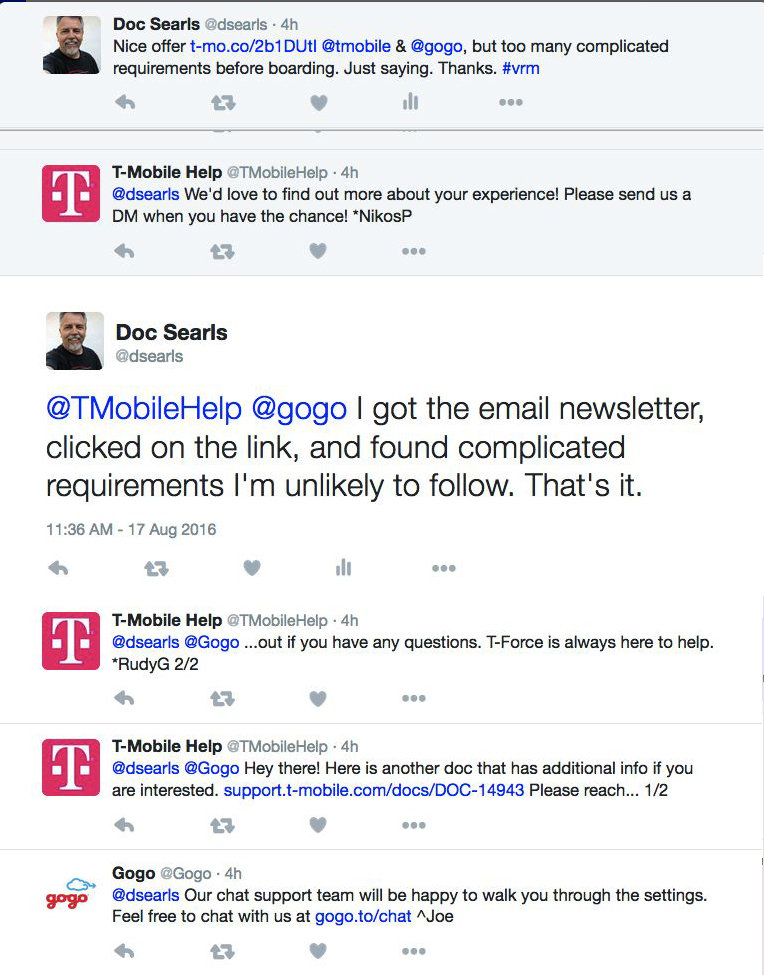
    dsearls-tmobile-gogo-thread

    Before we go forward with the lessons from this example, I want to make clear that I do appreciate what *NikosP, *RudyG and ^Joe are trying to do here. I am also clear that there are buildings full of other good people, all doing “social CRM,” or whatever its called this week, to care about customers and give them the best possible experience.

    The problem for me, as a customer, is that getting this free hour of Wi-Fi on a plane isn’t worth the trouble. The problem for T-Mobile and GoGo In-Flight is that it’s probably not worth the trouble for them either.

    Many years ago the great Jamie Zawinski uttered the best (and perhaps only worthy) critique, ever, of Linux. He said, “Linux is only free if your time has no value.” You can swap any promotion you like for “Linux” in that sentence. For example, “An hour of Wi-Fi on a GoGo equipped plane is only free if your time has no value.”

    As Don Marti often puts it, customers are much better at applied behavioral economics than any of the companies trying to make customers fall for promotional come-ons.

    So I’m wearing my applied behavioral economist hat when I decide that my time is worth more to me than whatever sum of it I might spend getting one hour of free wi-fi on a plane some day, even with all the help being tweeted to me.

    I am also noticing that my time would be spent on this thing, and not invested. Worse, it would all be gone in one hour. Worse than that, it would be gone on a plane, where the working conditions are not ideal.

    I have no idea how much time and money T-Mobile and GoGo In-Flight are spending on this promo, but I wouldn’t be surprised if the internal and external costs of it turn out to be far higher than whatever they would get out of investing the same amount of money and effort on simply making their services better.

    So that’s complexity.

    Now let’s look at perspective.

    All of the CX perspective—100% of it—is anchored on the corporate side, the seller’s side (or the CX system supplier side). Not the customer side. Worse, in every CX case the perspective is of one company, or a small collection of companies (e.g. T-Mobile and GoGo Inflight, or both plus the four other companies in the third of the first set of bullet points above).

    Each of those companies is doing its own kind of CX to “deliver” an “experience” that is exclusive to them. In fact, that’s one way they compete. With this promo, T-Mobile is trying to do something Verizon, AT&T and Sprint aren’t doing.

    The problem with this perspective is that it makes the customer’s experience different for every company she deals with. Worse, she has to spend non-recoverable time and effort trying to figure out what’s going on with each of the different companies imposing cognitive burdens along with promotional bargains. As the promos add up, the diminished returns are compounded, and the bargains add up to far less than $0.

    If we take away the complexity, and take the customer’s perspective, we see only two ways a company can “deliver” the best possible “experience” to customers:

    1. By making it as simple as possible to deal with the company; and
    2. By offering better products and services than competitors. That’s it.

    For example, my wife and I have T-Mobile phones because we travel a lot outside the U.S. T-Mobile, alone among U.S. mobile phone carriers, provides free data and texting in something like 200 other countries, plus just 20¢/minute for phone calls, which we don’t make because it’s free or cheaper to use some other way to talk over the Internet. We also like not worrying about data usage, because T-Mobile essentially has no data usage caps. So we don’t worry about going over. To obtain those simple graces, we put up with T-Mobile’s inferior coverage outside metro areas in the U.S. (though, to its credit, is catching up fast).

    Our 19-year-old son, on the other hand, doesn’t travel much outside the country, so his phone is on Ting, which has outstanding customer service and the simplest possible usage pricing, with no promotional gimmicks. So both company and customer have low cognitive and cost overhead to deal with.

    Which gets me back to cash.

    Cash comes from the customer’s perspective. She can use the same cash with every company she deals with, because cash has scale—for her. She isn’t busy thinking, “Gee, I need to use Walmart’s money at Walmart and Burger King’s money at Burger King.” The cash in her purse gives her scale across every company that accepts it. Cash also gives her the same leverage across all her credit cards and other vendor-dealing instruments she carries in her wallet. Cash also doesn’t require an intermediator. In other words, there’s no need for a cash vendor. Cash also doesn’t track you. It doesn’t require an entry in a ledger. (Yes, it’s good to have that in many cases, but optional record-keeping is a huge grace. Thus, cash is a great CX model.

    So, is there hope we can wind down the BS in CX, and bring something with cash-like scale into the portfolio of tools customers have for dealing with many different companies?

    Yes, there is.

    A number of VRM developers are now working on CX, mostly by helping companies welcome help from customers, and learning from it. There are also some CRM companies starting to look toward VRM as a way of giving customers cash-like scale across many different companies as well. (The jlinc protocol, for example, has a lot of promise in that direction.)

    That work, and other developments like it, give me hope that “Markets are conversations” will actually mean something—in less than two decades after marketers were first inspired to talk about it.

  • Shooting the Bluecut Fire

    BluecutFireTo get away from the heat today—into a little less heat and an excuse to exercise, I drove up to Mt. Wilson, where I visited the Observatory and walked around the antenna farm there. As it happened, the Bluecut Fire was also visiting the same San Gabriel Mountains, a few miles to the east at Cajon Pass. Starting at 10:36 in the morning, it was past 10,000 acres with 0% containment by the time I observed it in the mid to late afternoon.

    Here’s a photo set. If anybody wants to use any of them, any way they please, feel free.

    The view here is to the east, along the spine of the range, across 10,064-foot (3068m) Mt. San Antonio, also known as Old Baldy. I like to ski there (at Mt. Baldy) in the winter. Nothing like skiing nearly two miles up, looking down on 20 million people enjoying subtropical weather. The lifts are open in the summer (for zip-lining), so you can get up there and watch the fire from a closer (but safe) vantage, I assume. Check first.


    Save

    Save

    Save

  • Nobody else owns our experiences

    shackles

    Who Owns the Mobile Experience? is a report by Unlockd on mobile advertising in the U.K. To clarify the way toward an answer, the report adds, “mobile operators or advertisers?”

    The correct answer is neither. Nobody’s experience is “owned” by somebody else.

    True, somebody else may cause a person’s experience to happen. But causing isn’t the same as owning.

    We own our selves. That includes our experiences.

    This is an essential distinction. For lack of it, both mobile operators and advertisers are delusional about their customers and consumers. (That’s an important distinction too. Operators have customers. Advertisers have consumers. Customers pay, consumers may or may not. That the former also qualifies as the latter does not mean the distinction should not be made. Sellers are far more accountable to customers than advertisers are to consumers.)

    It’s interesting that Unlockd’s survey shows almost identically high levels of delusion by advertisers and operators…

    • 85% of advertisers and 82% of operators “think the mobile ad experience is positive for end users”
    • 3% of advertisers and 1% of operators admit “it could be negative”
    • Of the 85% of advertisers who think the experience is positive, 50% “believe it’s because products advertised are relevant to the end user”
    • “the reasons for this opinion is driven from the belief that users are served detail around products that are relevant to them.”

    … while:

    • 47% of consumers think “the mobile phone ad experience (for them) is positive”
    • 39% of consumers “think ads are irrelevant
    • 36% blame “poor or irritating format”
    • 40% “believe the volume of ads served to them are a main reason for the negative experience”

    It’s amazing but not surprising to me that mobile operators apparently consider their business to be advertising more than connectivity. This mindset is also betrayed by AT&T charging a premium for privacy and Comcast wanting to do the same. (Advertising today, especially online, does not come with privacy. Quite the opposite, in fact. A great deal of it is based on tracking people. Shoshana Zuboff calls this surveillance capitalism.)

    Years ago, when I consulted BT, JP Rangaswami (@jobsworth), then BT’s Chief Scientist, told me phone companies’ core competency was billing, not communications. Since those operators clearly wish to be in the “content” business now, and to make money the same way print and broadcast did for more than a century, it makes sense that they imagine themselves now to be one-way conduits for ad-fortified content, and not just a way people and things (including the ones called products and companies) can connect to each other.

    The FCC and other regulators need to bear this in mind as they look at what operators are doing to the Internet. I mean, it’s good and necessary for regulators to care about neutrality and privacy of Internet services, but a category error is being made if regulators fail to recognize that the operators want to be “content distributors” on the models of commercial broadcasting (funded by advertising) and the post office (funded by junk mail, which is the legacy model of today’s personalized direct response advertising  online).

    I also have to question how consumers were asked by this survey about their mobile ad experiences. Let me see a show of hands: how many here consider their mobile phone ad experience “positive?” Keep your hands down if you are associated in any way with advertising, phone companies or publishing. When I ask this question, or one like it (e.g. “Who here wants to see ads on their phone?”) in talks I give, the number of raised hands is usually zero. If it’s not, the few parties with raised hands offer qualified responses, such as, “I’d like to see coupons when I’m in a store using a shopping app.”

    Another delusion of advertisers and operators is that all ads should be relevant. They don’t need to be. In fact, the most valuable ads are not targeted personally, but across populations, so large populations can become familiar with advertised products and services.

    It’s a simple fact that branding wouldn’t exist without massive quantities of ads being shown to people for whom the ads are irrelevant. Few of us would know the brands of Procter & Gamble, Unilever, L’Oreal, Coca-Cola, Nestlé, General Motors, Volkswagen, Mars or McDonald’s (the current top ten brand advertisers worldwide) if not for the massive amounts of money those companies spend advertising to people who will never buy their products but will damn sure known those products’ names. (Don Marti explains this well.)

    A hard fact that the advertising industry needs to face is that there is very little appetite for ads on the receiving end. People put up with it on TV and radio, and in print, but for the most part they don’t like it. (The notable exceptions are print ads in fashion magazines and other high-quality publications. And classifieds.)

    Appetites for ads, and all forms of content, should be consumers’ own. This means consumers need to be able to specify the kind of advertising they’re looking for, if any.

    Even then, the far more valuable signal coming from consumers is (or will be) an actual desire for certain products and services. In marketing lingo, these signals are qualified leads. In VRM lingo, these signals  are intentcasts. With intentcasting, the customers do the advertising, and are in full control of the process. And they are no longer mere consumers (which Jerry Michalski calls “gullets with wallets and eyeballs”).

    It helps that there are dozens of companies in this business already.

    So it would be far more leveraged for operators to work with those companies than with advertising systems so disconnected from reality that they’ve caused hundreds of millions of people to block ads on their mobile devices — and are in such deep denial of the market’s clear messages that they deny the legitimacy of a clear personal choice, misdirecting attention toward the makers of ad blocking tools, and away from what’s actually happening: people asserting power over their own lives and private spaces (e.g. their browsers) online.

    If companies actually believe in free markets, they need to believe in free customers. Those are people who, at the very least, are in charge of their own experiences in the networked world.

    Save

  • The best FM radio

    Somebody in Quora asked “Which is the best FM radio?”

    So far, mine is the only answer. It’s tops with a whopping 3 upvotes, out of 139 views. Not a lot of box office there. So I’ve decided to duplicate the answer here,, for whatever additional good it might do. I also added a bit, because I can’t stop doing that. So read on…

    becker-europa

    Here’s your rule of thumb: The best FM radios today are in cars. And, since most car radios use identical or similar chipsets, many of them are tied for the distinction. (Though there are a few dogs. I once met a Toyota RAV-4 with a truly sucky radio. Other Toyota radios have been fine.)

    The best of the best are in slightly older cars that have a vertical outside whip antenna. FM waves resonate best with antennas about 30 inches long, give or take, which ideally will be removed as far as possible from metal that might obstruct received signals. For practical and fashion reasons, most radios in new cars are compromised by the lack of an outside whip antenna, instead using short stubby rubberized ones on the outside, or thin horizontal ones embedded in rear windows and disguised to look like part of the defrosting systems there. Engineers have found ways to make these perform almost as well as outside whip antennas, but they’re still not the real thing.

    The best radio I have ever known was the one in my wife’s 1992 Infiniti Q45a, which featured a “diversity” antenna system: a very innovative approach that chooses or combines signals from more than one antenna. The radio in the Q45a used both a motorized retracting whip outside antenna and a horizontal one embedded in the rear window, and chose the best reception coming from either or both. AM reception was also outstanding on that radio, featuring C-QUAM, the then-current AM stereo technology. Even when stations stopped broadcasting with that method, the sound quality was outstanding for AM, because activating AM stereo listening also widened the bandwidth, which maximized sound quality for mono stations as well. (When that car died, my wife replaced it with a very similar one three years newer. Alas, that was after Nissan, Infiniti’s parent company, had “de-contented” out some features the company thought the owner wouldn’t notice. One was the AM stereo feature, and along with it the wider bandwidth. So that radio still pulls in signals (and retains the diversity antenna), but sounds like shit on AM. An automotive engineer at the time told me this move saved Nissan 5¢ on cars that cost upwards of $50k new. Little did Nissan know or care that one reason we chose that first car was the quality of the AM radio. The one we replaced it with was only $5k, so it was a helluva deal at the time.)

    The best AM radio I ever heard was the Becker in the 1966 Volvo 122s that my parents brought in Belgium on their only trip to Europe. (It looked a lot like the one above.) The FM dial only went up to 104 in Europe back then, while the U.S. band went to 108, so the radio cutting out stations at the top end of the dial. The radio was also mono, with just one speaker that faced forward from the deck below the rear window. But reception was about as good as it gets on FM and unlike anything I’ve ever heard before or since on AM. In the daytime, when AM signals travel only along the ground, I could get WNBC/660 (now WFAN) and WABC/770 all the way past Richmond, Virginia, when I drove from New York to North Carolina. Even in Greensboro, I could still hear the faint signals of both stations. (Here’s a coverage map for WFAN. No radio today is getting much of a signal outside the farthest line there, at least in the daytime.) And at night I could get listenable signals, bouncing in off the sky, from KFI/640 from Los Angeles, KNBR/680 from San Francisco and KSL/1160 from Salt Lake City. A close second to that was the after-market Motorola AM radio my parents bought in 1965 for their 1963 Chevy Bel-Air. Motorola in those days was perhaps the world’s most advanced provider of radio gear for many mobile purposes, and it showed in their radios.

    There are two reasons car radios tend to be better than ones you carry or leave plugged in at home. One is their wide range of required operating conditions: from streets in city canyons among signal-reflecting skyscrapers (some topped with FM transmitters that can overwhelm circuitry of nearby radios) to far rural hills, mountains, plains and valleys. The other is that most radio listening these days is in cars.

    A problem for both stations and listeners today is that interest in radio has faded in recent years, as more and more listening has moved to computers and mobile devices, and from stations to streams and podcasts. Modern car radios are therefore now entertainment systems that subordinate radio with each new generation of electronics. AM radio is completely gone from some cars, including Teslas. To put it simply, over-the-air radio is slowly fading, if not dying outright.

    Still, there are good radios that will help you enjoy what old-fashioned broadcasting still has to offer.

    For home or portable radios, you’ll find good models from C.Crane, Sangean and Eton/Grundig. I have a Grundig Satellit 800, which has outstanding FM reception, plus an old Sangean (made for Radio Shack), and the C.Crane CC Pocket Radio (there on the left) which are both also outstanding. GE’s SupeRadio is also deservedly a legend. Here are some on eBay. All generations of the SupeRadio are good. I have two of them I bought new in the ’90s, and they still work fine.

    Here in my kitchen I also have the Teac HD-1, which was billed as a clock radio, but really isn’t. Instead it’s an FM/AM radio that also features an outstanding HD FM tuner, and okay AM HD tuner. No longer made, it’s still available on the used market. (I know because I just bought my second one, on Amazon.)

    HD produces better sound, plus additional channels. So a station may be two or three in one. For example, WNYC-FM in New York has WQXR (its classical sister station) on its HD-2 channel, and WNYC-AM on its HD-3 channel. More importantly, HD clears up the truly awful multipath interference that afflicts urban radio listening, especially in apartment buildings like mine, which are dwarfed by countless other larger buildings standing in every signals’ path while also degrading and reflecting countless “ghost” signals along the way. (That’s called “multipath” interference.) If you live in a city and FM sounds like crap on local stations, get an HD radio just to clear up the bad sound. (By the way, your wi-fi and cell phone systems use multipath to improve reception by finding additional paths over which to send and receive streams of data. Digital is hugely advanced over old-fashioned analog FM in that respect.)

    For pure reception performance, the best non-car radios I have ever owned or used date from the 60s, and came from European manufacturers. The standout manufacturers were Tandberg, Nordmende and Grundig. I have also used but not owned the Sony ICF-2010, which is legendary and deserves to be. All those are billed as shortwave radios, but do great work on FM and AM.

    Bonus links: Why music radio is dying, The Slow Sidelining of Over-the-air Radio, Approaching the end of radio’s antenna age.

  • Blogging the way it ought to be

    PAPERSFunction follows form.

    Since the form of a WordPress blog (which this is) favors writing long pieces over short ones, that’s mostly what I’ve written here, since I started in August 2007. Essays, you might say.

    Since the form of a 1999.io blog is writing pieces of any length, and posting them easily from a WYSIWYG editor, I’ve been blogging there instead of here. At least lately. My last post here was on June 29. Since then I’ve put up 31 posts at 1999.io:

    1. Idle words that aren’t
    2. Bots vs. Humanity
    3. Leading thoughts
    4. The Best Way to Blog
    5. Looking for something
    6. Promotion as friction
    7. Open Source lives, to say the least
    8. A Cajun network pioneer
    9. Remembering what they probably never taught you in school
    10. An Unnecessary Fight: Wired & Condé Nast vs. Customers
    11. The only code I learned was Morse
    12. Internet for the 100%
    13. On the continuing death of over-the-air TV
    14. The risk of being dead wrong
    15. Shootings
    16. What have I done?
    17. Speaking of dubious
    18. Yum.
    19. I loved it
    20. A fire sale on CBS’ legacy
    21. Knicks & Nets
    22. Kinda like mass hypnosis
    23. Stereo—it’s all in your head now
    24. Approaching the end of radio’s antenna age
    25. Some helpful additional AirBnB questions
    26. AM radio musings in Quebec
    27. What will Verizon do with Flickr?
    28. Maybe Canada is the control and the U.S. is the experiment
    29. Listeners to public radio stations: loose the pre-roll on your live stream
    30. Waiting for Verizon to screw Yahoo users and customers
    31. Yahoo users and customers have plenty to cry about

    Posting on 1999.io is easier than tweeting. It’s even easier than it was on my original blog, where I posted from 1999 to 2007. Take a look at that one. Note that the posts are any length I liked.

    Both systems were created by Dave Winer. Hats off to Uncle Dave for bringing back blogging like it used to be, should have been all along, and shall be again.

  • Desert warfare training in live ghost towns, seen from the sky

    I’ve been fascinated for years by what comes and goes at the Fort Irwin National Training Center

    fortirwin

    —in the Mojave Desert, amidst the dark and colorful Calico Mountains of California, situated in the forbidding nowhere that stretches between Barstow and Death Valley.

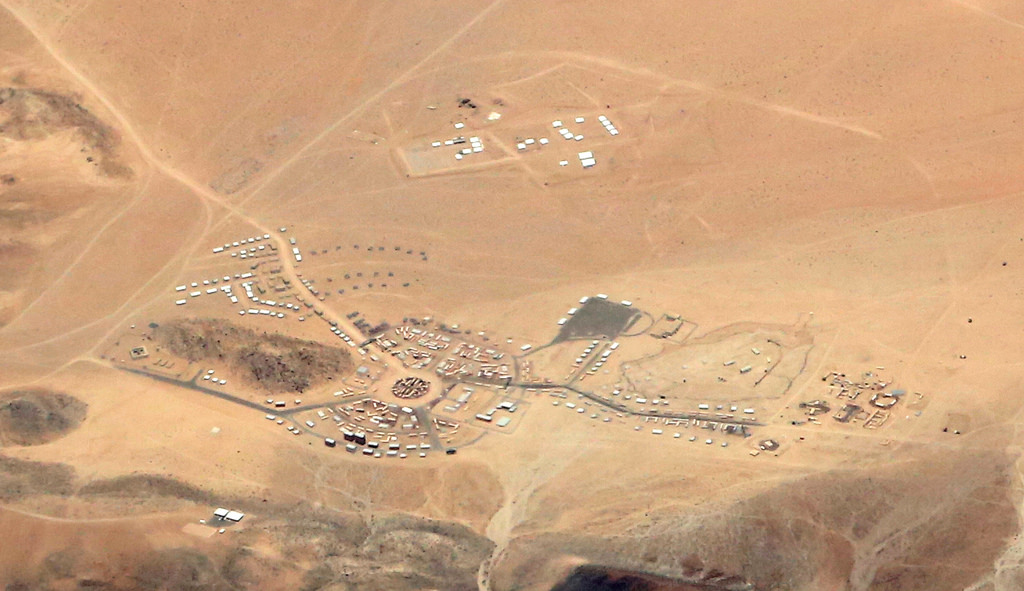
    Here and there, amidst the webwork of trails in the dirt left by tanks, jeeps and other combat vehicles, fake towns and other structures go up and come down. So, for example, here is Etrebat Shar, a fake town in an “artificial Afghanistan” that I shot earlier this month, on June 2:

    etrebat-shar1

    And here is a broader view across the desert valley east of Fort Irwin itself:

    etrebat-shar2

    Look to the right of the “town.” See that area where it looks like something got erased? Well, it did. I took the two shots above earlier this month, on June 2. Here’s a shot of the same scene on June 25, 2013:

    etrebat-shar3

    Not only is the “town” a bit bigger, but there’s this whole other collection of walls and buildings, covering a far larger area, to the right, or east.

    I also see in this shot that it was gone on December 8, 2014.

    Now I’m fascinated by this town and the erased something-or-other nearby, which I also shot on June 2:

    othertown

    It appears to be “Medina Wasl,” which Wikipedia says is one of twelve towns built for desert warfare training:

    One of the features of the base is the presence of 12 mock “villages” which are used to train troops in Military Operations in Urban Terrain (MOUT) prior to their deployment. The villages mimic real villages and have variety of buildings such as religious sites, hotels, traffic circles, etc. filled with foreign language speaking actors portraying government officials, local police, local military, villagers, street vendors, and insurgents. The largest two are known as Razish and Ujen, the closest located about 30 minutes from the main part of the post. Most of the buildings are created using intermodal containers, stacked to create larger structures, the largest village consists of 585 buildings that can engage an entire brigade combat team into a fight.

    Now I’m slowly going through my other shots over the years to see if I can find Razish and Ujen… if they haven’t been erased.

    It would be cool to hear from military folk familiar with Fort Irwin, or veterans who have worked or fought mock battles in those towns.

  • Why the Cleveland Cavaliers will win tonight

    LeBron JamesI’m a Golden State Warriors fan. Not huge, but big enough to have held season tickets through the Run TMC years. (I grew up a Knicks fan, and liked the Celtics when I lived in Boston, but those are less leveraged these days.) So I do want the Warriors to win tonight.

    But I don’t expect them to, because the Cavs make a better story.

    LeBron James has made clear, especially over the last two games, that he is the best all-round player of all time. Michael Jordan had no weaknesses, but he wasn’t as strong as LeBron at defense, passing, shot blocking, and treating the other team the way a bowling ball treats pins. Or as strong, period.

    Nobody on Earth is playing any game, anywhere ,with more determination, skill and strength than LeBron James is right now. And nobody is better at getting his whole team to play as one. Or at a more ideal time and place.

    Kyrie Irving is also playing his best, which means he can pretty much get whatever shot he wants, whenever he wants it. And Tristan Thompson, a near-nobody before the playoffs, is playing like the second coming of Stephen Adams, who gave Thompson and the Cavs coaching staff a clinic on how a big man can take advantage of the Warriors’ weakness in the middle.

    Let’s face it: the OKC Thunder figured out the Warriors pretty well. Even though the Thunder failed, they took the Warriors to seven games and gave the Cavaliers a lot of lessons to work with. Now that Bogut is out and Iguodala is slowed by back problems, the Warriors also lack their best shot blocker and their best defense against LeBron. Draymond Green also needs to play cautiously to avoid more technical and flagrant fouls, to which he is highly prone. Harrison Barnes has been subtracting from his free agent value nearly every time he shoots the ball. Even Shawn Livingston, normally a great floor leader when he comes off the bench for Steph, has been shooting bricks.

    Four things look good for the Warriors tonight: 1) they’re playing at home, 2) their three best players are healthy, 3) two of those players are the best outside shooters in the game, and 4) one of those two was the unanimous MVP this year for good reasons. Even though Steph hasn’t been his old self enough in this series, it could be lights out if he shows up big tonight. Same goes for Klay.

    If a game between two great teams doesn’t stay close to the end, one of the two will melt. That’s what happened in every game so far in this series. In total both teams have the same number of points, but each team has melted before the end three times. The problem for the Warriors is that they melted twice in each of the last two games: first at home, and then in Cleveland. They also melted under tremendous heat from the Cavaliers. Actually it was worse than that. They came apart at the seams. We saw that when Steph Curry pitched a fit after his sixth foul and Klay Thompson walked to the locker room before the game ended. Both moves were weak and childish, inviting no confidence from their teammates and giving plenty to their opponents.

    No doubt the Warriors can win. But no doubt they also feel entitled, and that’s a problem too. You get a clear sense in this series that the Cavs want to win the title more than the Warriors want to keep it (along with the legacy of a record-breaking regular season). That legacy isn’t a burden to the Cavaliers. It’s a rooster they want to knock off its shed.

    So, again, I don’t want to see King James wear the crown tonight. But either way it goes, he’ll still earn the right to the nickname. And he’ll be the MVP when it matters most.


  • The Internet deserves its proper noun

    doc036cThe NYTimes says the Mandarins of language are demoting the Internet to a common noun. It is to be just “internet” from now on. Reasons:

    Thomas Kent, The A.P.’s standards editor, said the change mirrored the way the word was used in dictionaries, newspapers, tech publications and everyday life.

    In our view, it’s become wholly generic, like ‘electricity or the ‘telephone,’ ” he said. “It was never trademarked. It’s not based on any proper noun. The best reason for capitalizing it in the past may have been that the word was new. But at one point, I’ve heard, ‘phonograph’ was capitalized.”

    But we never called electricity “the Electricity.” And “the telephone” referred to a single thing of which there billions of individual examples.

    What was it about “the Internet” that made us want to capitalize it in the first place? Is usage alone reason enough to stop respecting that?

    Some of my tech friends say the “Internet” we’ve had for all these years is just one prototype: the first and best-known of many other possible ones.

    All due respect, but: bah.

    There is only one Internet just like there is only one Universe. There are other examples of neither.

    Formalizing the lower-case “internet,” for whatever reason, dismisses what’s transcendent and singular about the Internet we have: a whole that is more, and other, than a sum of parts.

    I know it looks like the Net is devolving into many separate systems, isolated and silo’d to some degree. We see that with messaging, for example. Hundreds of different ones, most of them incompatible, on purpose. We have specialized mobile systems that provide variously open vs. sphinctered access (such as T-Mobile’s “binge” allowance for some content sources but not others), zero-rated not-quite-internets (such as Facebook’s Free Basics) and countries such as China, where many domains and uses are locked out.

    Some questions…

    Would we enjoy a common network by any name today if the Internet had been lower-case from the start?

    Would makers or operators of any of the parts that comprise the Internet’s whole feel any fealty to what at least ought to be the common properties of that whole? Or would they have made sure that their parts only got along, at most, with partners’ parts? Would the first considerations by those operators not have been billing and tariffs agreed to by national regulators?

    Hell, would the four of us have written The Cluetrain Manifesto? Would David Weinberger and I have written World of Ends or New Clues if the Internet had lacked upper-case qualities?

    Would the world experience absent distance and cost across a The Giant Zero in its midst were it not for the Internet’s founding design, which left out billing proprietary routing on purpose?

    Would we have anything resembling the Internet of today if designing and building it had been left up to phone and cable companies? Or to governments (even respecting the roles government activities did play in creating the Net we do have)?

    I think the answer to all of those would be no.

    In The Compuserve of Things, Phil Windley begins, “On the Net today we face a choice between freedom and captivity, independence and dependence. How we build the Internet of Things has far-reaching consequences for the humans who will use—or be used by—it. Will we push forward, connecting things using forests of silos that are reminiscent the online services of the 1980’s, or will we learn the lessons of the Internet and build a true Internet of Things?”

    Would he, or anybody, ask such questions, or aspire to such purposes, were it not for the respect many of us pay to the upper-cased-ness of “the Internet?”

    How does demoting Internet from proper to common noun not risk (or perhaps even assure) its continued devolution to a collection of closed and isolated parts that lack properties (e.g. openness and commonality) possessed only by the whole?

    I don’t know. But I think these kinds of questions are important to ask, now that the keepers of usage standards have demoted what the Net’s creators made — and ignore why they made it.

    If you care at all about this, please dig Archive.org‘s Locking the Web open: a Call for a Distributed Web, Brewster Kahle’s post by the same title, covering more ground, and the Decentralized Web Summit, taking place on June 8-9. (I’ll be there in spirit. Alas, I have other commitments on the East Coast.)

  • Help: why don’t images load in https?

    For some reason, many or most of the images in this blog don’t load in some browsers. Same goes for the ProjectVRM blog as well. This is new, and I don’t know exactly why it’s happening.

    So far, I gather it happens only when the URL is https and not http.

    Okay, here’s an experiment. I’ll add an image here in the WordPress (4.4.2) composing window, and center it in the process, all in Visual mode. Here goes:

    cheddar3

    Now I’ll hit “Publish,” and see what we get.

    When the URL starts with https, it fails to show in—

    • Firefox ((46.0.1)
    • Chrome (50.0.2661.102)
    • Brave (0.9.6)

    But it does show in—

    • Opera (12.16)
    • Safari (9.1).

    Now I’ll go back and edit the HTML for the image in Text mode, taking out class=”aligncenter size-full wp-image-10370 from between the img and src attributes, and bracket the whole image with the <center> and </center> tags. Here goes:

    cheddar3

    Hmm… The <center> tags don’t work, and I see why when I look at the HTML in Text mode: WordPress removes them. That’s new. Thus another old-school HTML tag gets sidelined. 🙁

    Okay, I’ll try again to center it, this by time by taking out class=”aligncenter size-full wp-image-10370 in Text mode, and clicking on the centering icon in Visual mode. When I check back in Text mode, I see WordPress has put class=”aligncenter” between img and src. I suppose that attribute is understood by WordPress’ (or the theme’s) CSS while the old <center> tags are not. Am I wrong about that?

    Now I’ll hit the update button, rendering this—

    cheddar3

    —and check back with the browsers.

    Okay, it works with all of them now, whether the URL starts with https or http.

    So the apparent culprit, at least by this experiment, is centering with anything other than class=”aligncenter”, which seems to require inserting a centered image Visual mode, editing out size-full wp-image-whatever (note: whatever is a number that’s different for every image I put in a post) in Text mode, and then going back and centering it in Visual mode, which puts class=”aligncenter” in place of what I edited out in text mode. Fun.

    Here’s another interesting (and annoying) thing. When I’m editing in the composing window, the url is https. But when I “view post” after publishing or updating, I get the http version of the blog, where I can’t see what doesn’t load in the https version. But when anybody comes to the blog by way of an external link, such as a search engine or Twitter, they see the https version, where the graphics won’t load if I haven’t fixed them manually in the manner described above.

    So https is clearly breaking old things, but I’m not sure if it’s https doing it, something in the way WordPress works, or something in the theme I’m using. (In WordPress it’s hard — at least for me — to know where WordPress ends and the theme begins.)

    Dave Winer has written about how https breaks old sites, and here we can see it happening on a new one as well. WordPress, or at least the version provided for https://blogs.harvard.edu bloggers, may be buggy, or behind the times with the way it marks up images. But that’s a guess.

    I sure hope there is some way to gang-edit all my posts going back to 2007. If not, I’ll just have to hope readers will know to take the s out of https and re-load the page. Which, of course, nearly all of them won’t.

    It doesn’t help that all the browser makers now obscure the protocol, so you can’t see whether a site is http or https, unless you copy and paste it. They only show what comes after the // in the URL. This is a very unhelpful dumbing-down “feature.”

    Brave is different. The location bar isn’t there unless you mouse over it. Then you see the whole URL, including the protocol to the left of the //. But if you don’t do that, you just see a little padlock (meaning https, I gather), then (with this post) “blogs.harvard.edu | Doc Searls Weblog • Help: why don’t images load in https?” I can see why they do that, but it’s confusing.

    By the way, I probably give the impression of being a highly technical guy. I’m not. The only code I know is Morse. The only HTML I know is vintage. I’m lost with <span> and <div> and wp-image-whatever, don’t hack CSS or PHP, and don’t understand why <em> is now preferable to <i> if you want to italicize something. (Fill me in if you like.)

    So, technical folks, please tell us wtf is going on here (or give us your best guess), and point to simple and global ways of fixing it.

    Thanks.

    [Later…]

    Some answer links, mostly from the comments below:

    That last one, which is cited in two comments, says this:

    Chris Cree who experienced the same problem discovered that the WP_SITEURL and WP_HOME constants in the wp-config.php file were configured to structure URLs with http instead of https. Cree suggests users check their settings to see which URL type is configured. If both the WordPress address and Site URLs don’t show https, it’s likely causing issues with responsive images in WordPress 4.4.

    Two things here:

    1. I can’t see where in Settings the URL type is mentioned, much less configurable. But Settings has a load of categories and choices within categories, so I may be missing it.
    2. I wonder what will happen to old posts I edited to make images responsive. (Some background on that. “Responsive design,” an idea that seems to have started here in 2010, has since led to many permutations of complications in code that’s mostly hidden from people like me, who just want to write something on a blog or a Web page. We all seem to have forgotted that it was us for whom Tim Berners-Lee designed HTML in the first place.) My “responsive” hack went like this: a) I would place the image in Visual mode; b) go into Text mode; and c) carve out the stuff between img and src and add new attributes for width and height. Those would usually be something like width=”50%” and height=”image”. This was an orthodox thing to do in HTML 4.01, but not in HTML 5. Browsers seem tolerant of this approach, so far, at least for pages viewed with the the http protocol. I’ve checked old posts that have images marked up that way, and it’s not a problem. Yet. (Newer browser versions may not be so tolerant.) Nearly all images, however, fail to load in Firefox, Chrome and Brave when viewed through https.

    So the main question remaining are:

    1. Is this something I can correct globally with a hack in my own blogs?
    2. If so, is the hack within the theme, the CSS, the PHP, or what?
    3. If not, is it something the übergeeks at Harvard blogs can fix?
    4. If it’s not something they can fix, is my only choice to go back and change every image from the blogs’ beginnings (or just live with the breakage)?
    5. If that’s required, what’s to keep some new change in HTML 5, or WordPress, or the next “best practice” from breaking everything that came before all over again?

    Thanks again for all your help, folks. Much appreciated. (And please keep it coming. I’m sure I’m not alone with this problem.)

  • Why fix a problem that doesn’t exist?

    We all know what this symbol means:

    usedhead

    Two people are not allowed to share an iPad.

    Just kidding. It means the lavatory in the airplane is occupied. Also that it can be used by persons of either gender.

    Which gender you are is of no concern to the airline. Or to the lavatory. Because it doesn’t matter.

    The fact that lavatories outside airplanes generally sort visitors by gender is also not a big deal. They’ve done that for a long time. To my knowledge this is a matter of custom more than of law.

    But for some damn fool reason, “conservative” legislators (you know, the kind that supposedly don’t like new laws and bigger government) in North Carolina, which was my home state for two decades, decided to pass the Public Facilities Privacy & Security Act, which was meant to overturn a piece of local legislation in Charlotte prohibiting operators of public facilities from discriminating on the basis of gender identity or sexual orientation.

    Much freaking out has ensued since then. All of it could have been avoided if conservative sympathies actually applied. Meaning, leave well enough alone.

    Or just don’t be stupid and pigheaded, which North Carolina’s legislature and governor are clearly being right now.


  • Is the online advertising bubble finally starting to pop?

    1-e10zgDdxrcJgNcp9Njr4GQ

    I started calling online advertising a bubble in 2008.

    I made “The Advertising Bubble” a chapter in The Intention Economy in 2012.

    I’ve been unpacking what I figure ought to be obvious (but isn’t) in 52 posts and articles (so far) in the Adblock War Series. This will be the 53rd.

    And it ain’t happened yet.

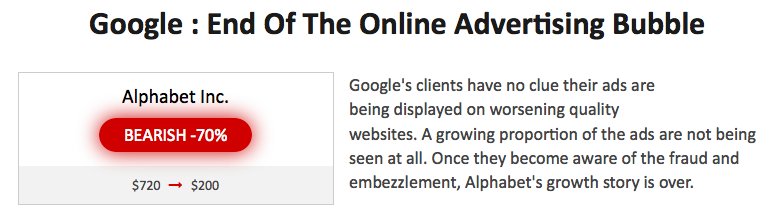
    But, now comes this, from Kalkis Research:

    kalkis-on-google

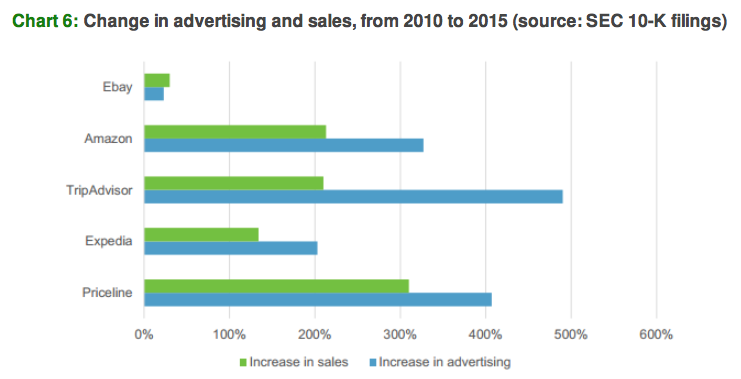
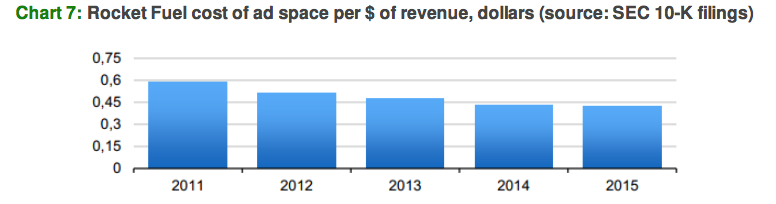
    Some charts:

    googlecpc

    adblocking

    change-in-advertising-vs-sales

    costofadspace

    And here is their downbeat conclusion:

    We are living through the latest stages of the online advertising bubble, as available high-quality ad space is shrinking, leading to a decline ad space quality, and a decline of ad efficiency. Awareness for fraud is growing, and soon, clients will cut their online ad spending, and demand higher accountability. This will destroy the high-margin market of automated reselling worthless ad space, and will force advertisers to focus only on prime publishers, with expensive ad space.

    This is a re-run of the online advertising crash of the early 2000s, when the proliferation of banners and pop- ups destroyed any value these ads had (and led people to install pop-up killers, just like with ad blockers today)…

    We estimate that the online advertising market has been artificially inflated since the end of 2013, and is much more mature than its pundits are claiming. 90% of Google’s revenues come from advertising. We expect Alphabet’s share price to go down by 75%…

    A larger number of companies will be impacted, as a growing number of third-party tech giants are involved in the advertising play (Oracle, Amazon, Salesforce), and we expect the whole tech sector to be hard hit by the unwinding of the bubble…

    Currently, January 2018 Alphabet puts with a strike of $400 are trading at around $8, for a 20x return should our scenario materialize.

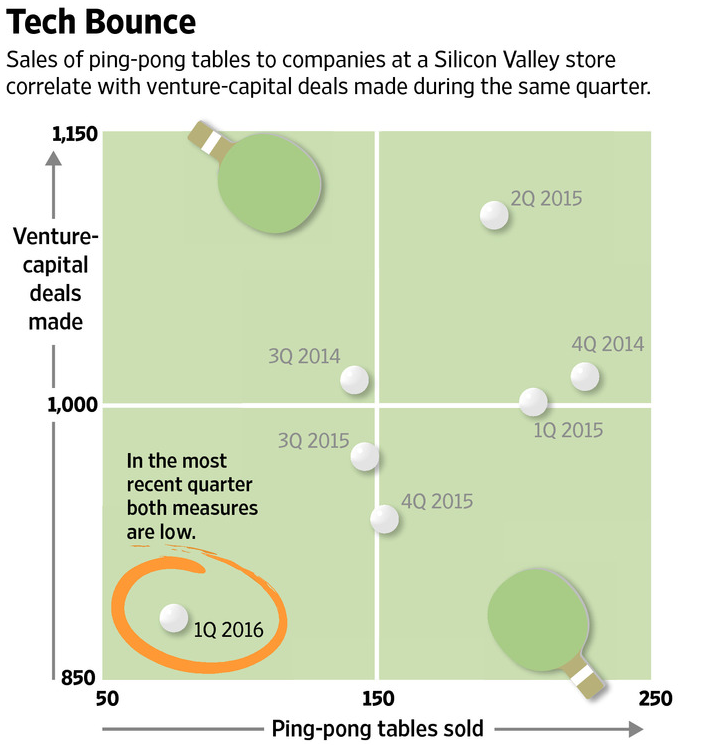
    There are other signs. For example, a falling ping-pong table index:

    pingpongtable

    GroupM, the “world’s largest media investment group,” also just published Interaction 2016, which is also bearish on adtech:

    Advertisers and the entities that place their ads have always sought relevance and engagement; the consumer has chosen to set a higher bar. Advertisers and the buyers of media have a further responsibility.

    Until now, we have assumed almost all data are worth having. But however much he gathers, no advertiser commands complete, continuous data. This creates a risk that the advertiser’s left hand may not know what his right hand is doing. A customer who has already made a purchase may be bombarded with redundant repeat ads wherever he roams: what we might call the phenomenon of “repetitive irrelevance.” Even worse, several advertisers may be sharing the same data and using performance-oriented media, multiplying the “repetitive irrelevance.” Tracking and targeting intended to make advertising welcome makes it a nuisance. It is dysfunctional. The advertiser damages his reputation and pays to do so.

    This brief analysis suggests that a partial solution to adblocking is a combination of design, technology, common sense and the ability to establish the point, across channels and vendors, at which the application of a particular data point becomes the poison of marketing rather than the antidote to ineffectiveness.

    The emphasis is mine. (Hey, I know boldface tends to get read and blockquotes don’t.)

    There are other signs. Last May Business Insider said The ad tech sector looks an awful lot like a bubble that just popped. In June, The Wall Street Journal said adtech investment dollars are running dry. “These companies are struggling to even get meetings,” they said. In December Ad Exchanger called 2015 a “reality check” year for adtech.

    Clearly the end isn’t near for Facebook or Google. Tony Haile, founding CEO of Chartbeat — and to me the reigning king of adtech moneyball — compares Facebook to the Sun, and everybody else to planets and other debris orbiting around it. One pull-quote: “It is Facebook that curates and distributes. It owns the relationship with the user, and decides what content the user sees and how many see it.” Meanwhile Google, which places a huge percentage of online ads (for itself and countless others), is said by Digiday to be exploring an “acceptable ads” policy obviously modeled on the one launched by Adblock Plus. And while ad fraud has been bad, AdAge reports that it’s down, dramatically: “analytics firm Integral Ad Science found a 20.9% decrease in both overall and programmatic ad fraud last quarter compared to the fourth quarter of 2015.”

    Still, I’ve been told by one (big) adtech exec that his business is “a walking zombie” and that he’s looking toward “the next paradigm.” One of the biggest online advertisers told me late last year that they yanked $100 million/year out of adtech and put it into traditional advertising for one simple reason: “It didn’t work.” I have a sense that they are not alone.

    Got any more examples? I want us to get as clear a picture as we can of the adtech edifice as it starts crumbling to the ground. Or not. Yet.

    (Later…) Okay we have some:

  • Dear Adobe, Please buy Flickr

    A photo readers find among the most interesting among the 13,000+ aerial photos I've put on Flickr
    This photo of the San Juan River in Utah is among dozens of thousands I’ve put on Flickr. it might be collateral damage if Yahoo dies or fails to sell the service to a worthy buyer.

    Flickr is far from perfect, but it is also by far the best online service for serious photographers. At a time when the center of photographic gravity is drifting form arts & archives to selfies & social, Flickr remains both retro and contemporary in the best possible ways: a museum-grade treasure it would hurt terribly to lose.

    Alas, it is owned by Yahoo, which is, despite Marissa Mayer’s best efforts, circling the drain.

    Flickr was created and lovingly nurtured by Stewart Butterfield and Caterina Fake, from its creation in 2004 through its acquisition by Yahoo in 2005 and until their departure in 2008. Since then it’s had ups and downs. The latest down was the departure of Bernardo Hernandez in 2015.

    I don’t even know who, if anybody, runs it now. It’s sinking in the ratings. According to Petapixel, it’s probably up for sale. Writes Michael Zhang, “In the hands of a good owner, Flickr could thrive and live on as a dominant photo sharing option. In the hands of a bad one, it could go the way of MySpace and other once-powerful Internet services that have withered away from neglect and lack of innovation.”

    Naturally, the natives are restless. (Me too. I currently have 62,527 photos parked and curated there. They’ve had over ten million views and run about 5,000 views per day. I suppose it’s possible that nobody is more exposed in this thing than I am.)

    So I’m hoping a big and successful photography-loving company will pick it up. I volunteer Adobe. It has the photo editing tools most used by Flickr contributors, and I expect it would do a better job of taking care of both the service and its customers than would Apple, Facebook, Google, Microsoft or other possible candidates.

    Less likely, but more desirable, is some kind of community ownership. Anybody up for a kickstarter?

    [Later…] I’m trying out 500px. Seems better than Flickr in some respects so far. Hmm… Is it possible to suck every one of my photos, including metadata, out of Flickr by its API and bring it over to 500px?

    I also like Thomas Hawk‘s excellent defense of Flickr, here.


  • Toward an ethics of influence

    2016-05-02berkman

    This event is now in the past and can be seen in its entirety here.

    Stop now and go to TimeWellSpent.io, where @TristanHarris, the guy on the left above, has produced and gathered much wisdom about a subject most of us think little about and all of us cannot value more: our time.

    Both of us will be co-investing some time tomorrow afternoon at the @BerkmanCenter, talking about Tristan’s work and visiting the question he raises above with guidance from S.J. Klein.

    (Shortlink for the event: http://j.mp/8thix. And a caution: it’s a small room.)

    So, to help us get started, here’s a quick story, and a context in the dimension of time…


    Many years ago a reporter told me a certain corporate marketing chief “abuses the principle of instrumentality.”

    Totally knocked me out. I mean, nobody in marketing talked much about “influencers” then. Instead it was “contacts.” This reporter was one of those. And he was exposing something icky about the way influence works in journalism.

    At different times in my life I have both spun as a marketer and been spun as a reporter. So hearing that word — instrumentality — put the influence business in perspective and knocked it down a notch on the moral scale. I had to admit there was a principle at work: you had to be a tool if you were using somebody as as one.

    Look back through The Secret Diary of Steve Jobs, and you’ll see what I mean. Nobody was better than Ole’ Steve at using journalists. (Example: Walt Mossberg.) And nobody was better at exposing the difference between sausage and shit than Dan Lyons, who wrote that blog as Fake Steve. (Right: you didn’t want to see either being made. Beyond that the metaphor fails.)

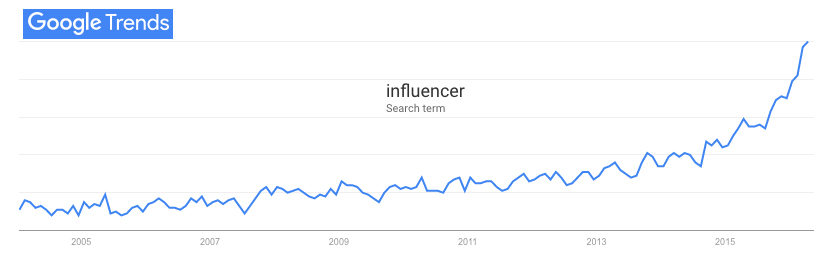
    Anyway, visiting the influence thing is a good idea right now because of this:

    googletrends-influencer

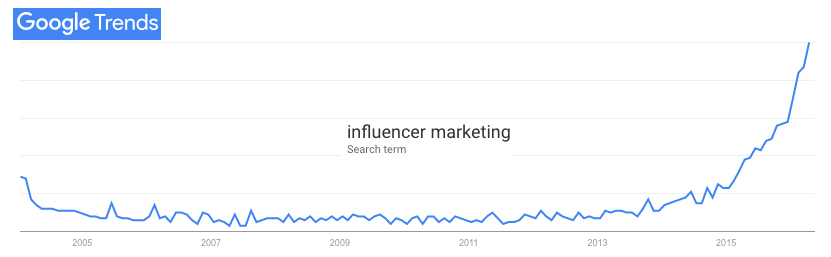
    And this:

    googletrends-influencer-marketing

    I call it a bubble and blame data. But that’s just to get the conversation started.

    See (some of) you there.

    (For a more positive spin, see this this bonus link and look for “We are all authors of each other.”)


  • An invitation to settle matters with @Forbes, @Wired and other publishers

    [Update: 29 June 2016 — Forbes has backed off, but Wired hasn’t yet. So the invitation stands. So does a path forward.]

    tracking-forbes

    A few days ago, I followed this link at Digg to Forbes, where I was met by the message above.

    Problem is, I don’t have an ad blocker installed. I have tracking protection. Three kinds, in fact. (Let me explain: my work requires experimenting with many different privacy protection tools. It just happens that right now I have these three working in Firefox, my default browser.) Here is what Ghostery sees:

    ghostery-on-forbes

    Here is what Disconnect sees:

    disconnect-on-forbes

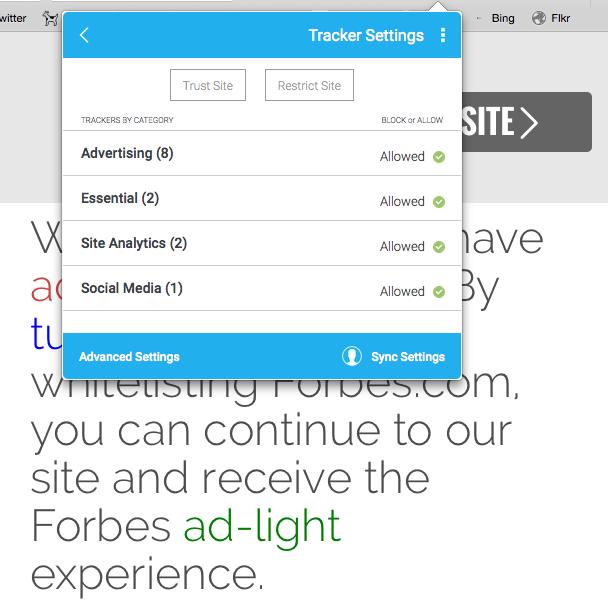
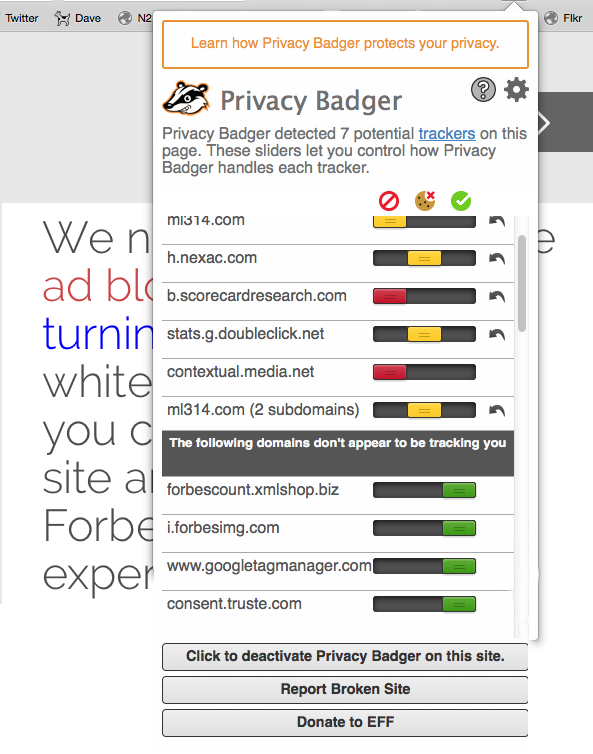
    And here is what Privacy Badger sees:

    privacybadger-on-forbes

    So I’m guessing what blocked the ad was one of the two red sliders in Privacy Badger. I slid the b.scorecardresearch.com one to yellow and it seemed to load the desired page without a problem, but I don’t know if Forbes would have let me though anyway or not . I dunno how to tell what did what.

    Then today I ran into the same thing at Wired, looking for some of my own words there. Here’s the roadblock Wired put in my path:

    wired-vs-ad-blockers

    Again, I’m not blocking ads. I’m just trying to block tracking. I also just checked, and Disconnect, Ghostery and Privacy Badger are each doing nothing, far as I can tell, to block anything on Wired. They’re all green-lighting everything. That means they’ve already whitelisted it. Yet Wired thinks I’m blocking ads.

    As it happens I‘ve been a Wired subscriber for the duration. But, when I log in (by clicking on the link above), it takes me to a billing page. There it wants to charge me $3.99 every four weeks, which comes to about $52 a year, on top of what I’m already paying for the print publication, which (I would hope) ought to give me access to the same thing online. Very confusing.

    Thing is, I don’t mind ads. I even like some of them. Back in the last millennium, I was a partner in Hodskins Simone & Searls, one of Silicon Valley’s top advertising agencies.

    And, like most readers, I want publishers to make money.

    But I also believe publishers don’t need to do that by tracking me in ways I neither like nor approve. They can give me ads on their pages that are perfectly safe, just like the ads that have funded print magazines for the duration. Those were always respectful of people’s privacy, and don’t rely on a herd of third parties following people around while they go about their lives. They were also more valuable, because they sent clear creative and economic signals, both uncompromised by suspicions of surveillance and other forms of bad acting.

    Here is what Joshua Bernstein (@JoshuaBernstein), sourcing Wired‘s Mark McClusky (@markmcc), reported in Bloomberg about what the magazine is trying to do here:

    More than 1 in 5 people who visit Wired Magazine’s website use ad-blocking software. Starting in the next few weeks, the magazine will give those readers a choice: stop blocking ads, pay to look at a version of the site that is unsullied by advertisements, or go away…

    Wired plans to charge $3.99 for four weeks of ad-free access to its website. In many places where ads appear, the site will simply feature more articles, said Mark McClusky, the magazine’s head of product and business development. The portion of his readership that uses ad blockers are likely to be receptive to a discussion about their responsibility to support the businesses they rely on for information online, McClusky said.

    There are legitimate reasons that people use ad blockers, according to McClusky, like a desire to speed up web browsing or not wanting to be tracked online. But Wired has bills to pay. “I think people are ready to have that conversation in a straightforward way,” he said.

    This post is part of that conversation. So is what I’ve been writing over the last eight years on what we’ve recently come to call the “adblock war.”

    The reason this is a “war,” and it’s impossible for publishers on their own to make peace, is that the only solutions that can scale are the individual reader’s. Ad blockers and tracking protection in browsers all work for the individual, giving everybody scale. Roadblocks and tollbooths like Forbes’ and Wired’s piss readers off, drive them away, or both. Worse, every one of them is different, which is kind of an anti-scale way of doing things.

    At this early stage, however, none of the solutions that scale for individuals also work in ways that are friendly to publishers. (Nor do what the browser makers are doing on their own—each differently, which is also anti-scale.)

    So we need to take another step, again from the individual’s side, this time with an olive branch.

    And that’s what we’ll do at VRM Day (25 April) and IIW(26–28 April), both at the Computer History Museum in Silicon Valley. I invite Forbes, Wired, and all publishers, advertisers, agencies, browser makers and other parties interested in peace to come join us there.

    On the table is an easy solution: simple publisher-friendly preference a reader can assert and a publisher can agree to. It says, “Just show me ads not based on tracking me” — or words to that effect, which we’ll work out. (Update: we’ve dubbed this the #NoStalking offer.)

    This term will be standard and enabled by code on both the client and server side. The standard and code will live at Customer Commons, which is built for that purpose, on the Creative Commons mode, which has worked well for many years. (And, like ProjectVRM, was hatched at the Berkman Center.) Some of the code already exists. We’ll start writing the rest at IIW next week.

    Both VRM Day and IIW are unconferences. No keynotes, no panels, no sponsor exhibits. Everything happens at breakouts, all of which are topics chosen and led by participants. VRM Day is for presenting and planning the work we’ll be doing over the next three days at IIW. We do two IIWs per year, and this is our 22nd. I don’t know any gathering that is more leveraged for getting stuff done. Register here.

    For more background on the peace we can forge together, see here and here.


  • TV Viewers to Madison Avenue: Please quit driving drunk on digital

    drunk-driving

    Today AdAge gives us Clinton and Sanders Using Addressable Advertising in New York Market: Precision Targeting Is Especially Relevant in NYC, Say Political Media Observers, by @LowBrowKate. Here’s how it works:

    In order to aim addressable TV spots to those voters, the campaigns provide a list of the individual voters they want to target to Cablevision or satellite providers DirecTV and Dish. That list is matched against each provider’s customer database and ads are served to the matching households. Because voter data includes actual names and addresses, the same information the TV providers have for billing purposes, they readily can match up the lists.

    Speaking as a Dish Network customer—and as a sovereign human being—I don’t want to be an “addressable target” of any advertising—and I already feel betrayed.

    I don’t care what measurable results “addressable” or “precision” targeting gets for those who practice it. The result that matters is that I’m pissed to know that my provider has sold me out to advertisers putting crosshairs on me and my family. Same goes for other viewers who get creeped out when they see that an ad on TV is just for them and not for everybody watching the show.

    It should be obvious by now that people hate being tracked like animals and shot with digital blow-guns by advertisers. The feedback has been loud and clear.

    First the market responded with Do Not Track, which the ad industry mocked and ignored. Then the market installed ad blockers and tracking protection in numbers massive enough to comprise the largest boycott in human history. (More than 200 million doing ad blocking alone, by last June.) Again, the industry didn’t listen, and instead went to war with its own consumers and mocked the their choice as a “fad.”

    Here is a fact: people value their privacy, safety and time infinitely more than whatever they might get from commercial messages packed around the content they actually demand.

    Here is another: anonymity is a form of privacy. One of the graces of watching TV is being anonymous, as both a private individual and part of a crowd.

    Advertising respected both those facts before it got body-snatched by direct marketing. Now is the time to respect the difference again, and separate the wheat of respectful advertising from the chaff of disrespectful “addressable targeting” and other junk mail methods that were alien to Madison Avenue before it got drunk on “digital.”

    Make no mistake: addressable targeting is disrespectful to both its targets and the very media respectful advertising has supported for the duration. For a gut-check on that, ask if anybody wants it. Make it opt-in. Don’t just take advantage of whatever data collection has been done, surely without express permission from individual customers.

    Here is another fact the industry needs to face: people have tools for safeguarding their privacy now, and they’ll get more, whether the industry likes it or not. In fact, the more precisely advertising invades and violates people’s personal spaces, the faster people will acquire the protections they need.

    What’s at stake now for the industry is the survival of whatever remains of advertising’s value as a contribution to business and culture. The only reason the industry can’t see that fact, which ought to be obvious, is that it’s driving drunk on digital kool-aid.

    Time to sober up.

    Bonus reading: Bob Hoffman, Don Marti, Jason Kint, Dave Carroll, yours truly.

    Bonus opportunity to participate in moving from blocking all advertising to welcoming the respectful kind: VRM Day and IIW, the week after next, at the Computer History Museum in Silicon Valley.

    The original draft of this post was my comment under the AdAge piece.

  • The Data Bubble redux

    It didn't happen in 2010, but it will in 2016.
    It didn’t happen in 2010, but it will in 2016.
    This Post ran on my blog almost six years ago. I was wrong about the timing, but not about the turning: because it’s about to happen this month at the Computer History Museum in Silicon Valley. More about that below the post.
    _________________

    The tide turned today. Mark it: 31 July 2010.

    That’s when The Wall Street Journal published The Web’s Gold Mine: Your Secrets, subtitled A Journal investigation finds that one of the fastest-growing businesses on the Internet is the business of spying on consumers. First in a series. It has ten links to other sections of today’s report.

    It’s pretty freaking amazing — and amazingly freaky, when you dig down to the business assumptions behind it. Here’s the gist:

    The Journal conducted a comprehensive study that assesses and analyzes the broad array of cookies and other surveillance technology that companies are deploying on Internet users. It reveals that the tracking of consumers has grown both far more pervasive and far more intrusive than is realized by all but a handful of people in the vanguard of the industry.

    It gets worse:

    In between the Internet user and the advertiser, the Journal identified more than 100 middlemen — tracking companies, data brokers and advertising networks — competing to meet the growing demand for data on individual behavior and interests.The data on Ms. Hayes-Beaty’s film-watching habits, for instance, is being offered to advertisers on BlueKai Inc., one of the new data exchanges. “It is a sea change in the way the industry works,” says Omar Tawakol, CEO of BlueKai. “Advertisers want to buy access to people, not Web pages.” The Journal examined the 50 most popular U.S. websites, which account for about 40% of the Web pages viewed by Americans. (The Journal also tested its own site, WSJ.com.) It then analyzed the tracking files and programs these sites downloaded onto a test computer. As a group, the top 50 sites placed 3,180 tracking files in total on the Journal’s test computer. Nearly a third of these were innocuous, deployed to remember the password to a favorite site or tally most-popular articles. But over two-thirds — 2,224 — were installed by 131 companies, many of which are in the business of tracking Web users to create rich databases of consumer profiles that can be sold.

    Here’s what’s delusional about all this: There is no demand for tracking by individual customers. All the demand comes from advertisers — or from companies selling to advertisers. For now.

    Here is the difference between an advertiser and an ordinary company just trying to sell stuff to customers: nothing. If a better way to sell stuff comes along — especially if customers like it better than this crap the Journal is reporting on — advertising is in trouble.

    Here is the difference between an active customer who wants to buy stuff and a consumer targeted by secretive tracking bullshit: everything.

    Two things are going to happen here. One is that we’ll stop putting up with it. The other is that we’ll find better ways for demand and supply to meet — ways that don’t involve tracking or the guesswork called advertising.

    Improving a pain in the ass doesn’t make it a kiss. The frontier here is on the demand side, not the supply side.

    Advertising may pay for lots of great stuff (such as search) that we take for granted, but advertising even at its best is guesswork. It flourishes in the absence of more efficient and direct demand-supply interactions.

    The idea of making advertising perfectly personal has been a holy grail of the business since Day Alpha. Now that Day Omega is approaching, thanks to creepy shit like this, the advertsing business is going to crash up against a harsh fact: “consumers” are real people, and most real people are creeped out by this stuff.

    Rough impersonal guesswork is tolerable. Totally personalized guesswork is not.

    Trust me, if I had exposed every possible action in my life this past week, including every word I wrote, every click I made, everything I ate and smelled and heard and looked at, the guesswork engine has not been built that can tell any seller the next thing I’ll actually want. (Even Amazon, widely regarded as the best at this stuff, sucks to some degree.)

    Meanwhile I have money ready to spend on about eight things, right now, that I’d be glad to let the right sellers know, provided that information is confined to my relationship with those sellers, and that it doesn’t feed into anybody’s guesswork mill. I’m ready to share that information on exactly those conditions.

    Tools to do that will be far more leveraged in the ready-to-spend economy than any guesswork system. (And we’re working on those tools.) Chris Locke put it best in Cluetrain eleven years ago. He said, if you only have time for one clue this year, this is the one to get…

    Thanks to the Wall Street Journal, that dealing may finally come in 2010.

    [Later…] Jeff Jarvis thinks the Journal is being silly. I love Jeff, and I agree that the Journal may be blurring some concerns, off-base on some of the tech and even a bit breathless; but I also think they’re on to something, and I’m glad they’re on it.

    Most people don’t know how much they’re being followed, and I think what the Journal’s doing here really does mark a turning point.

    I also think, as I said, that the deeper story is the market for advertising, which is actually threatened by absolute personalization. (The future market for real engagement, however, is enormous. But that’s a different business than advertising — and it’s no less thick with data… just data that’s voluntarily shared with trusted limits to use by others.)

    [Later still…] TechCrunch had some fun throwing Eric Clemons and Danny Sullivan together. Steel Cage Debate On The Future Of Online Advertising: Danny Sullivan Vs. Eric Clemons, says the headline. Eric’s original is Why Advertising is Failing on the Internet. Danny’s reply is at that first link. As you might guess, I lean toward Eric on this one. But this post is a kind of corollary to Eric’s case, which is compressed here (at the first link again):

    I stand by my earlier points:

    • Users don’t trust ads
    • Users don’t want to view ads
    • Users don’t need ads
    • Ads cannot be the sole source of funding for the internet
    • Ad revenue will diminish because of brutal competition brought on by an oversupply of inventory, and it will be replaced in many instances by micropayments and subscription payments for content.
    • There are numerous other business models that will work on the net, that will be tried, and that will succeed.

    The last point, actually, seemed to be the most important. It was really the intent of the article, and the original title was “Business Models for Monetizing the Internet: Surely There Must Be Something Other Than Advertising.” This point got lost in the fury over the title of the article and in rage over the idea that online advertising might lose its importance.

    My case is that advertisers themselves will tire of the guesswork business when something better comes along. Whether or not that “something better” funds Web sites and services is beside the points I am making, though it could hardly be a more important topic.

    For what it’s worth, I believe that the Googles of the world are well positioned to take advantage of a new economy in which demand drives supply at least as well as supply drives demand. So, in fact, are some of those back-end data companies. (Disclosure: I currently consult one of them.)

    Look at it this way…

    • What if all that collected data were yours and not just theirs?
    • What if you could improve that data voluntarily?
    • What if there were standard ways you could get that data back, and use it in your own ways?
    • What if those same companies were in the business of helping you buy stuff, and not just helping sellers target you?

    Those questions are all on the table now.

    ___________________

    9 April 2016 — The What They Know series ran in The Wall Street Journal until 2012. Since then the tracking economy has grown into a monster that Shoshana Zuboff calls The Big Other, and Surveillance Capitalism.

    The tide against surveillance began to turn with the adoption of ad blockers and tracking blockers. But, while those provide a measure of relief, they don’t fix the problem. For that we need tools that engage the publishers and advertisers of the world, in ways that work for them as well.

    They might think it’s working for them today; but it’s clearly not, and this has been apparent for a long time.

    In Identity and the Independent Web, published in October 2010, John Battelle said “the fact is, the choices provided to us as we navigate are increasingly driven by algorithms modeled on the service’s understanding of our identity. We know this, and we’re cool with the deal.”

    In The Data Bubble II (also in October 2010) I replied,

    In fact we don’t know, we’re not cool with it, and it isn’t a deal.

    If we knew, The Wall Street Journal wouldn’t have a reason to clue us in at such length.

    We’re cool with it only to the degree that we are uncomplaining about it — so far.

    And it isn’t a “deal” because nothing was ever negotiated.

    To have a deal, both parties need to come to the table with terms the other can understand and accept. For example, we could come with a term that says, Just show me ads that aren’t based on tracking me. (In other words, Just show me the kind of advertising we’ve always had in the offline world — and in the online one before the surveillance-based “interactive” kind gave brain cancer to Madison Avenue.)

    And that’s how we turn the tide. This month. We’ll prepare the work on VRM Day (25 April), and then hammer it into code at IIW (26–28 April). By the end of that week we’ll post the term and the code at Customer Commons (which was designed for that purpose, on the Creative Commons model).

    Having this term (which needs a name — help us think of one) is a good deal for advertisers because non-tracking based ads are not only perfectly understood and good at doing what they’ve always done, but because they are actually worth more (thank you, Don Marti) than the tracking-based kind.

    It’s a good deal for high-reputation publishers, because it gets them out of a shitty business that tracks their readers to low reputation sites where placing ads is cheaper. And it lets them keep publishing ads that readers can appreciate because the ads clearly support the publication. (Bet they can charge more for the ads too, simply because they are worth more.)

    It’s even good for the “interactive” advertising business because it allows the next round of terms to support advertising based on tracking that the reader actually welcomes. If there is such a thing, however, it needs to be on terms the reader asserts, and not on labor-intensive industry-run opt-out systems such as Ad Choices.

    If you have a stake in these outcomes, come to VRM Day and IIW and help us make it happen. VRM Day is free, and IIW is very cheap compared to most other conferences. It is also an unconference. That means it has no keynotes or panels. Instead it’s about getting stuff done, over three days of breakouts, all on topics chosen by you, me and anybody else who shows up.

    When we’re done, the Data Bubble will start bursting for real. It won’t mean that data goes away, however. It will just mean that data gets put to better uses than the icky ones we’ve put up with for at least six years too long.

    _________________

    This post also appears in Medium.

  • Thought: mobile apps are just hors d’oeuvres

    horsdoeuvres

    Yesterday morning, while I was making curtados in the kitchen, I was also trying to listen to the radio. The station was WNYC, New York’s main public radio station. The program at the time was This American Life. Since the espresso machine is noisy when extracting coffee or steaming milk, I kept looking for the pause button on the radio—out of habit. That’s because pausing is a feature present on the radio and podcasting apps on my phone and other mobile devices scattered around the house, all of which I tend to use for radio listening more than I use an actual radio.

    So I decided to open TuneIn on my phone. TuneIn has been around for almost as long as we’ve had iPhones and Androids. It started as a way to play radio stations from all over the world, but has since broadened into “100,000+ live radio stations, plus on-demand content like podcasts & shows.” These are listed on its home screen in what I gather is something between a reverse chronological order list of stations I’ve listened to in the past, and the app’s best (yet wrong) guess of what I might want, or what that they want to promote… or I dunno. It’s hard to tell.

    In other words, the app is now something of a pain, because if you want to listen to a radio station that’s not on its home page list, your easiest choice is to look it up, which takes time. Even if you “favorite” it, the best-guesswork (or whatever it is) system on the Home page buries what you want down the list somewhere among on-demand shows and podcasts (I’m guessing that’s what it is), none of which I have listened to once through the app.

    Anyway, I found WNYC after awhile, and continued listening on the phone’s little speaker, hitting pause with my wet fingers while going through cutado-making routines.

    While I was doing that, and thinking about how TuneIn is still the best of its breed (of tunes-every-station apps), and how all apps are works-in-progress, changing countless times over their life spans—and nearly all seem to be trying to do too much—this metaphor came to mind:

    Mobile devices are just hors d’oeuvre trays, and apps are just hors d’oeuvres. Appetizers, not dinner. And nobody knows how to make dinner yet. Or even a dining room table.

    So the kitchen just keeps serving up variations on the same old things. With radio it’s a mix of live stations, shows on their own, “on demand” shows or segments, podcasts and appeals to subscribe to a premium service. Weather, transit, fitness, news, photography, social… most of them evolve along similar broadening paths, trying along the way to lock you into their system.

    The competition is good to have, and lots of good things happen on the platforms (or we wouldn’t use them so much), but the whole mess is also getting stale. Walled-garden platforms and apps from garden-run stores are now the box nobody seems to be thinking outside of.

    We need something else for dinner. We also need a table to set it on, and utensils to eat it with. And none of those, I sense, are more than barely implicit in the hors d’oeuvres we’re chowing down now, or the trays they come on.

    Bonus link.

  • BYSMD

    4-1-06 detroit & ccs 005 web

    Once, in the early ’80s, on a trip from Durham to some beach in North Carolina, we stopped to use the toilets at a roadhouse in the middle of nowhere. In the stall where I sat was a long conversation, in writing, between two squatters debating some major issue of the time. Think of the best back-and-forth you’ve ever read in a comment thread and you’ll get a rough picture of what this was like.

    So I sat there, becoming engrossed and amazed at the high quality of the dialog — and the unlikelihood of it happening where it was.

    Until I got to the bottom. There, ending the conversation, were the penultimate and ultimate summaries, posed as a question and answer:

    Q: Why do people feel compelled to settle their differences on bathroom walls?

    A. Because you suck my dick.

    That story became legendary in our family and social network, to such a degree that my then-teenage daughter and her girlfriends developed a convention of saying “Because you suck my dick” whenever an argument went on too long and wasn’t going anywhere. This was roughly the same as dropping a cow: a way to end a conversation with an absurdity.

    The whole thing came back to me when I read Pro-Trump Chalk Messages Cause Conflicts on College Campuses in the NYTimes today. The story it suggests is that this kind of thing regresses toward a mean that is simply mean. Or stupid. For example,

    Wesleyan University issued a moratorium in 2003, after members of the faculty complained that they were being written about in sexually explicit chalk messages.

    So I’m thinking we need a name for this, or at least an initialism. So I suggest BYSMD.

    You’re welcome.


  • Watch Jesus this weekend

    To me the best movie ever made about Jesus is Franco Zeferelli's, now in HD on YouTube.
    To me the best movie ever made about Jesus is Franco Zeferelli’s, now in HD on YouTube.

    Every year about this time I lament the absence of a good copy of Franco Zefferelli‘s Jesus of Nazareth, which aired as a mini-series on low-def TV in 1977, though it was surely filmed in at least 35mm stock.

    But this year, to my amazement, there is an HD version on YouTube. It seems to be 3 x 4 stretched sideways to 16 x 9, but still looks better than the awful VHS version that had previously been (to my knowledge) the only copy available, in stores or online.

    It is reverently directed, and features an all-star cast, most of which do an excellent job:

    “Starring”

    “Guest Stars”

    “and”

    “Also Starring”

    The script is by Anthony Burgess and the (truly fabulous) music by Maurice Jarre. While considered mildly controversial at the time (mostly by prickly Christian fundamentalists), it mostly combines and compresses the biblical accounts of Jesus’ life, which (lets admit) is a heck of a story. (Perhaps it matters that Zefferelli is a devout Roman Catholic, and the Pope liked it.)

    Some bonus facts:

    • Robert Powell, as Jesus, almost never blinks in the film. This is by Zefferelli’s intent. So was casting a dude with big blue eyes. Zefferelli wanted Jesus to look like people are accustomed to visualizing him, rather than how he likely looked in reality. For cinematic effect, it works.
    • Zefferelli, a lifelong smoker, is still around, at 93 years old. Most of the stars in the movie are dead.
    • There are a few goofs. One is Jesus’ Bar Mitzvah. That Jewish tradition was more than a millennium off in the future.
    • Rotten Tomatoes actually rates it (85%).