I can’t call mine on Father’s Day. Pop died in 1979, eight years younger than I am now. Were he alive today, he’d be 117 years old. I only knew him for 32 years, but I can still hear his voice clearly, and would know it anywhere. Mom‘s too. And Grandma’s. Maybe I’ll hear them all before my end comes. That possibility is suggested by The profound meaning and mystery of deathbed visions, in Friday’s Washington Post. If you can get past the paywall, it’s a good read. Also, call a dad today.
So now’s the time
Buying a Used iPhone Makes More Sense Than Ever, Wired says. New ones are going to be more expensive soon (says The Wall Street Journal, and old ones are mostly just fine. Unless you’re doing fine-art photography or video, the differences between an iPhone 13 and everything since are not huge. I stuck with an iPhone 11 until the battery was crap and I got a 16. My wife got her iPhone 16 after her iPhone 6 finally died. The next iOS version, 27, will work on every iPhone going back to the 11. Naturally, markets being what they are, used iPhone prices will soon start going up too.
The message in the medium called AI is in its first name
Worse, Big AI is a giant digestive tract, extracting value from all the stuff in the world, hoovered up so its giant brain can make faked-up answers to anyone’s questions, make faked-up writing, faked-up code, faked-up music, faked-up art. It can fake all kinds of human output that does not require a human body. Lots of that shit is useful, helpful, and hell, amazing. (I use it every day.) But it’s not our shit, even though it can serve a zillion prosthetic purposes.
That leveraged what we might call the Carlin Paradox: “Ever notice that all your shit is stuff and everyone else’s stuff is shit?” I thought that paragraph veered away from the thrust of the post, so I relocated it here, so I could tee up the headline of this post within a post.
Listen to what George says, if you haven’t already. You can stop about two and a half minutes in, after he talks about how all your shit is stuff and everyone else’s stuff is shit. Because that’s the reason Big AI will never be personal AI. Big AI is not a place for your stuff. It’s a place that’s full of everyone’ else’s stuff. And yours too, probably.
But it should be clear by now that we need AI. It’s too useful not to use, especially to make sense of our stuff. Which is what?
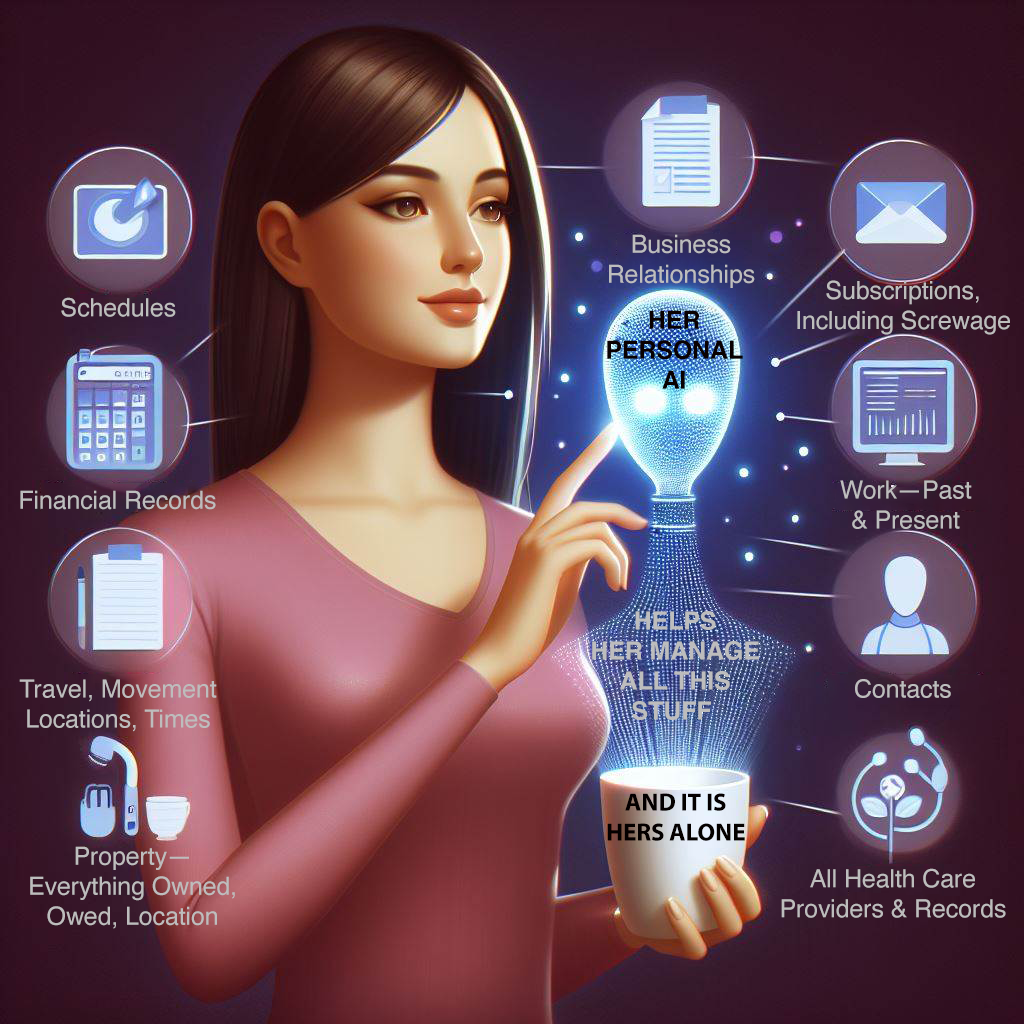
A couple of years ago, I asked ChatGPT to generate an image of a woman having her own AI for her collection of stuff. I gave ChatGPT some categories for that stuff. The result was the image below. This was in the Olde Days of AI, when ChatGPT hadn’t yet learned to spell. So I added the words using Photoshop:
Interesting that ChatGPT thought the place for her stuff was a coffee cup. But at least it was a physical thing. In reality, what would that physical thing be?
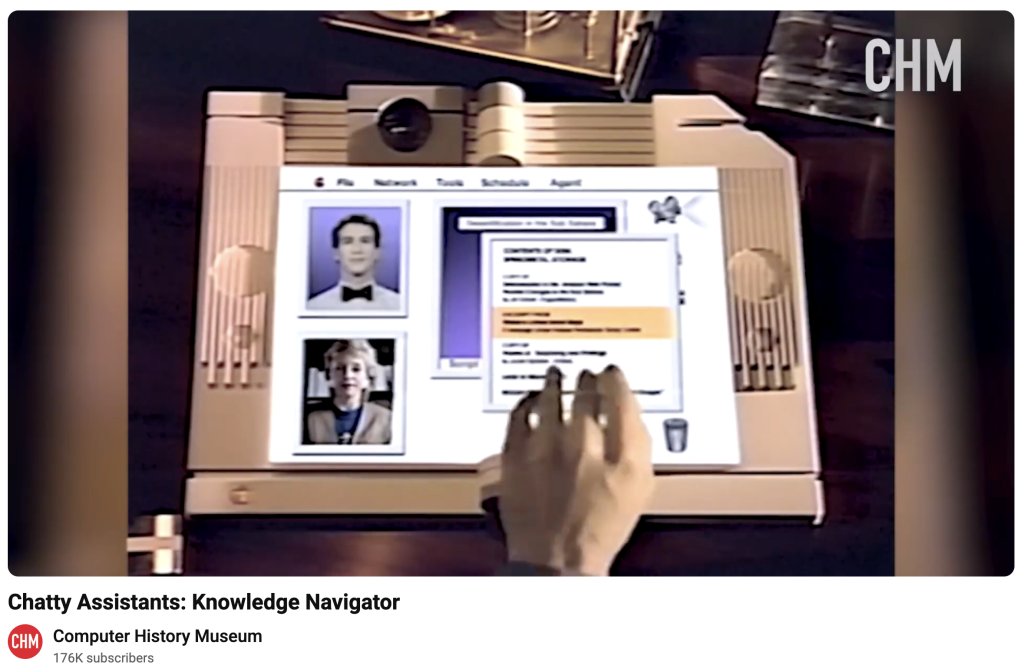
Apple gave us the first model for one, back in the late ’80s. It was called the Knowledge Navigator:
Hats off to Tor Hagemann for pointing us to it. Really, check it out. The video is less than six minutes long and describes the kind of thing we need: A device, not just a service.
The place in that video is a professor’s study. For you and me, it might be a workshop or a cabin. Whatever the metaphor, we need a home on the Internet range: one as comfortable, safe, secure, familiar, and as much ours as our home in the natural world.
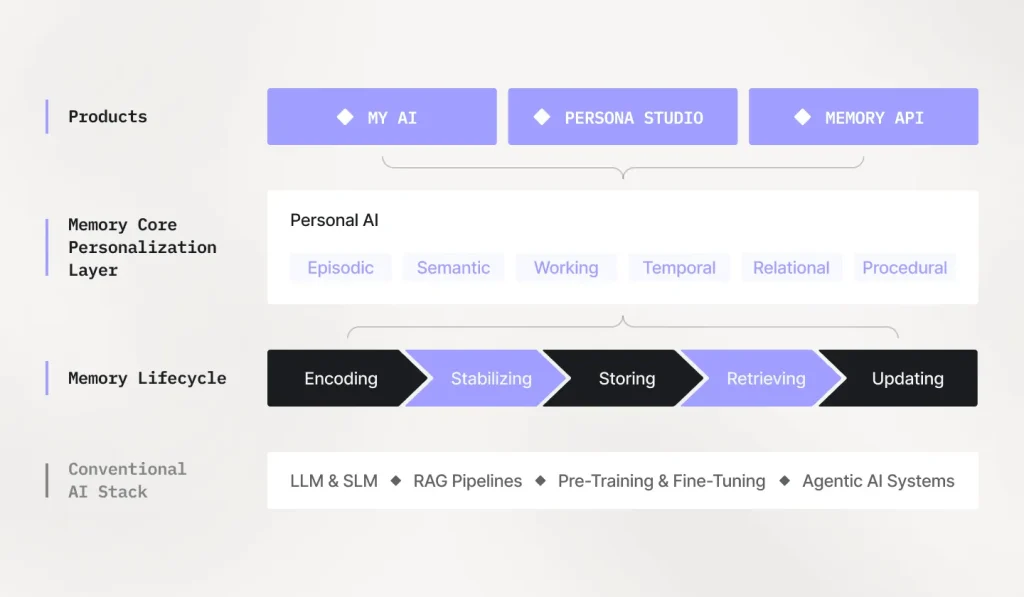
Our digital stuff (such as in the graphic above) is what techies call “unstructured.” It’s many different kinds of data, organized in many different ways. AI is good at dealing with unstructured digital stuff. We just don’t have AIs of our own yet, or a place for our digital stuff. But work is going on. Let’s review some.
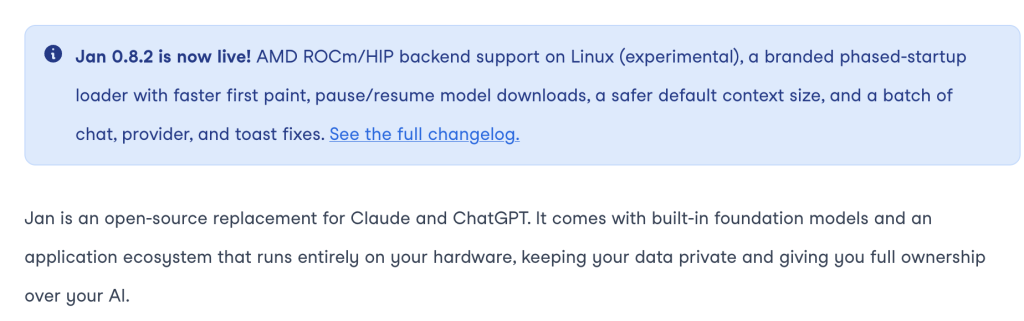
“Personal Intelligence that answers only to you.” It runs on one’s own machine, with local models of your own choice, privacy by default, and a cloud option. Here’s a grab from the website today:
OpenClaw is a personal AI assistant you run on your own devices. It answers you on the channels you already use. It can speak and listen on macOS/iOS/Android, and can render a live Canvas you control. The Gateway is just the control plane — the product is the assistant.
If you want a personal, single-user assistant that feels local, fast, and always-on, this is it.
Kwaai is an nonprofit open source personal AI R&D shop with a large and active community. I volunteer there as Chief Intention Officer—a title that plays off The Intention Economy, which at least partly inspired the company. Kwaai’s main work these days is KwaaiNet, which its Github page describes this way:
KwaaiNet is a decentralized AI node architecture for Layer 8 — the trust and intelligence layer above the traditional network stack — built by the Kwaai Foundation, a 501(c)(3) nonprofit AI lab focused on democratizing AI.
Each KwaaiNet node combines:
A decentralized trust graph (cryptographic identity, verifiable credentials, local trust scores).
Shared, sharded LLM compute over heterogeneous CPUs/GPUs using Petals-style distributed inference. Apple Silicon Macs use llama.cpp with Metal for 30+ tok/s local inference; Linux nodes use CUDA-accelerated block sharding.
Secure multi-tenant knowledge storage via Virtual Private Knowledge (VPK) with encrypted vector search.
Intent-based, peer-to-peer networking that routes based on “what I need” (model, trust tier, latency), not just IP addresses.
From an app’s point of view, KwaaiNet looks like a familiar chat-completion style HTTP API. Under the hood, it is a person-anchored Layer 8 fabric where every node is tied to an accountable human or organization.
It’s just spread across documents, notes, meetings, messages, and old decisions. Companion Intelligence brings that context together, so your agent can find what matters and help, more effectively, from where you left off.
Most AI tools are temporary, and interchangeable. They answer a question, finish a task, and forget the larger story. Companion Intelligence gives AI a private home base: a place to understand your files, projects, routines, decisions, and history without making someone else’s cloud the center of your life.
Agents for Companion Intelligence can come from elsewhere. They note two so far: Hermes and OpenClaw. They also promise “universal MCP Support for OpenCode, NanoClaw, Claude, Codex, VSCode & more.”
By offering you a server (actually a repurposed Mac Mini), Lovarys is similar to Companion Intelligence, but aiming for the professional market. Its tagline is “Professional Accounting and Legal Intelligence.” It’s a project of Tor Hagemann. Here’s his Github page.
Around all of those efforts is an emerging ecosystem that (to me) seems to be trying to turn AI into an operating-system layer. Examples include:
Rumors have it that Giannis Antetokounmpo is headed for the Boston Celtics in a complicated trade that will send Celtics stalwart Jaylen Brown to Milwaukee or elsewhere. I doubt this will happen, simply because at this stage in their careers, Jaylen is a far more reliable player than Giannis. Sure, Giannis—The Greek Freak—is one of the greatest players of all time, and a lot bigger than Jaylen. But Giannis hasn’t stayed healthy for years, and is unlikely to ever return to peak form. Meanwhile, Jaylen is ridiculously well-conditioned, improves his strength and skills every year, and is two years younger than Giannis. The only thing arguing for a trade is that Boston has two very expensive players on max contracts: Jaylen Brown and Jayson Tatum, and Tatum is slightly better. This means the best the Celtics can do with those two players on the team is pack small contracts around them. The new model, thanks to the salary limits and extreme “luxury taxes” for exceeding them, is to have just one player on a max contract, and a bunch of less expensive players surrounding him. This is the Knicks’ model with Karl-Anthony Towns. Jalen Brunson famously took less money to make room for Towns, Bridges, and others. That’s why I expect the Knicks to stay cool while the rest of the league heats up around trades.
Imagine a thick crowd coming at you. Also a soccer ball.
The only college sport I ever played was soccer, on the new club team my small college put together during my sophomore year. I only qualified because I showed up and didn’t suck at it. Two weeks after starting practice (which was fun and I loved), I got kicked off the team because the coach discovered I was on academic probation.
But some skills don’t go away entirely, and that’s what mattered on an August day in 2015, at age 68, when I was limping slowly down the 184th Street tunnel (above) to the A train’s 181st Street station in New York. That’s the tunnel, above. At the far end, two guys were kicking a soccer ball back and forth, and didn’t stop when a thick crowd, fresh off a train headed uptown, filled the tunnel, moving in my direction.
A few weeks earlier, I’d had my right hip replaced, and I was just beginning to become fully ambulatory. So I was hoping not to collide with the crowd—and that the ball would not find me. But it did. By reflex, I trapped it with my right (bad) foot, and then shot a perfect pass through the crowd to one of the two guys. After the crowd passed, the two guys came over and enthusiastically began talking to me in Spanish.
I smiled, said “Muchas gracias,” and continued limping toward the train. But it felt good to enjoy a moment of apparent competence in a sport at which I was not yet entirely lame.
Adrian Gropper in the AI corner of the New England Journal of Medicine:The Medical AI Assistant as Publication, Not Device — Why Peer-Reviewed, Open-Source AI Belongs in the Standard of Care. From the abstract: "I argue that when a physician publishes a MAIA’s architecture, retrieval methodology, and validation results in a peer-reviewed journal, the published MAIA enters the medical literature as any other clinical methodology would. Physicians who subsequently adopt this methodology are not operating a medical device — they are practicing medicine informed by the published literature."
This Knicks NBA championship run is the greatest of all time. Reasons:
They won sixteen of nineteen games through the playoffs, including two sweeps. They only lost the first two games in the first round, each by one point, and then one game in the Finals by not much, and their city blames Trump for jinxing them for that last loss—one where his presence was hugely inconvenient and distracting, for which he was clearly not interested (except in self-aggrandizement), and during which he fell asleep.
They are The Formerlies. Except for Mitchell Robinson and some benchwarmers, they were all acquired off the Used Player market.
They played in the East, considered the weaker conference, and won only 53 games in the regular season. Detroit, Boston, and Cleveland all won more. But the playoffs are clutch time, and nobody has ever been more clutch when it mattered most than these Knicks.
They have no top-tier stars. Only Jalen Brunson is all-NBA, and he’s on the second team. They also have no “big two,” or “big three.” They have a big ten: Jalen Brunson, OG Anunoby, Josh Hart, Mikal Bridges. Karl-Anthony Towns, Miles McBride, Landry Shamet, Mitchell Robinson. Jordan Clarkson, and Jose Alvarado (in declining order of minutes played in the playoffs).
They are best team of the modern era, exemplifying what Bill Simmons calls “the secret.” Specifically, “The secret of basketball is that it’s not about basketball.” It’s about players caring more for each other, and for the team, than for themselves. It helps that three players (Brunson, Hart, Bridges) won championships (plural!) at Villanova, and call each other “Brothers for life.” Watch them for a while, and it becomes clear that the team is like a family. It also helps that Rick Brunson, Jalen’s dad, is an assistant coach with the team, and that the coach, Mike Brown (another Formerly) seems more like an uncle.
In the playoffs, they became all but unbeatable. Losing is out of character for them. They could fall behind by any number of points, and their eventual victory still seemed inevitable. In the final game, when the Knicks were within seven points, it looked to me like the game was over already: the Knicks would close the gap, take the lead, and win. They know how to do that, over and over. They are glued, experienced, determined, and locked in. You can see the other team start to melt.
Jalen Brunson, Captain Clutch, proved he was the real league MVP. By miles. None of his moves look especially slick or athletic, but he is so good at getting open, slipping past defenders, shooting fallbacks, and getting layups no matter what, that it’s crazy to think the guy is just 6’1″ (okay, with a 6’4″ wingspan) with no shoes on. He is a great leader, an unselfish teammate, and very dependable in the clutch. OMG, and tough. I just heard Bill Simmons call Brunson the toughest guy in the league. Who’s tougher?
In the Finals, they beat the best collection of players in the league, starting with Victor Wembanyama, who will likely go down as the greatest player of all time if he stays healthy, learns from his failings, and wins a bunch of rings.
New York showed it’s the Greatest City in the World. You could feel the love the team and the city have for each other. I grew up a Knicks fan in New Jersey, across the river from New York. Used to go to Knicks games for $5 a ticket, many decades ago. But I’ve also spent a lot of time in Boston, San Francisco (where I had season tickets to the Warriors), and Los Angeles. Among major cities, only Boston compares to New York for the level of civic devotion to the team. Both also share a subway culture, which heats up fandom, heart-to-heart, despite all other differences. But New York is a lot bigger. (And yes, San Antonio is a great basketball town too. But it’s a town. A great town. But not New Yawk.)
The Knicks victory was great for basketball. This year’s Finals was hugely popular. Ratings across the four-game series averaged 19.6 million viewers, +116% over 9.1 million for last year’s Thunder-Pacers series. This was the most-watched Finals in the current millennium. There was also a spike in younger demographics. Viewing among teens (12-17) jumped by 138%, and young adults (18-24) spiked with 147% compared to last year.
All this is debatable, of course. Just not right now.
I started to write something here, but turned it in to a whole post on its own: Customer Service Sample of One. In response to that, Don Marti pointed to Skylabs Audio and its YouTube channel. As it happens I was an audiophile many decades ago. Worked weekends at an audio salon in Chapel Hill. Had some good gear, all bought cheap or built from a kit. Anyway, I got over all that stuff long ago, but I still care a little.
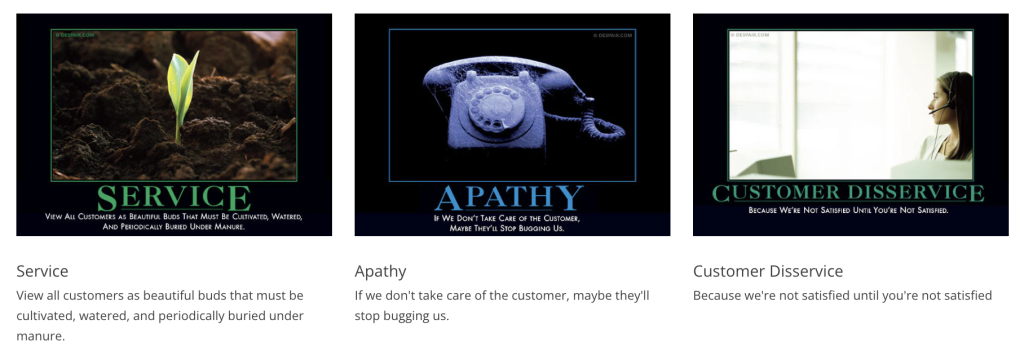
But mainly I live in the now, when things are a lot more complicated, and customer service is kind of a ballet in which both customers and companies dance with a character named Murphy.
Edit
I moved my Knicks post to its own page, titled The Formerlies.
Our Samsung TV* and our Samsung soundbar/woofer no longer connect over bluetooth. Well, they do connect—both displays say they are connected—but the TV only plays through its own speakers. I called Samsung for help with this, but the phone maze robot said only texts would work at that time. Here’s the text monologue from Samsung:
We will get you to the next agent as soon as possible. Your wait time is 27 Minutes and there are 90 customers ahead of you.
Apologies, due to abnormally high volumes, it is taking longer than expected to connect you to an agent. As soon as someone is available, we will connect you.
Thank you. You are connected with Theo James S from Samsung Care
Hello! Welcome to Samsung Technical support, This is Theo and I’m here to assist you. What can I do for you today?
It looks like you may be away. If you’d like to continue, simply send me a message, and I’ll be here to help.
Hello! Your support case is scheduled to close soon. If we have not resolved your issue yet, please respond to this message. Our Samsung Care Pros are available 24/7!
Survey has expired – Thank you for your feedback. Any time you need assistance, simply respond to this message. We’re here to support you, 24/7!
I gave up in the middle of that by getting help from ChatGPT that isolated the problem: The Bluetooth radios have successfully negotiated identity and relationship but failed to agree on purpose. In other words, they’re married but not speaking.
It suggested that I make an optical connection and give up on Bluetooth. Specifically, If optical works, I’d call the matter settled. If it doesn’t, then I would start suspecting the soundbar itself rather than the TV, because you’ve already done more systematic debugging than most first-line Samsung support agents would attempt.
*This is the only link online to the TV we have. We bought the TV from Amazon about a year ago, for less than the $849 Walmart is asking at that link. We got a slightly old (2024) model because for the space where we wanted it, 43″ was the right size, and for picture quality we wanted: 4K OLED. At the time, Samsung no longer offered 4K OLEDs in sizes under 55 inches. And it still doesn’t. (Here’s their current product spread.) Nor does anybody, I think. Wall-sized TVs are now The Thing.
†It doesn’t. The $6.29 optical cable bypasses the Bluetooth problem. The soundbar and the subwoofer both sound good, so that problem is solved.
Unless I write something new and provocative enough to generate fresh traffic, most visits to this blog come from searches on topics for which Google believes something I've written is relevant. Such is the case with a 2015 post called What are the balls on Prague’s spires called? I have a better answer now than my readers and I did then, and in the years since, mostly from Towers with Golden Orbs. Motif of CupolaedSpires with Spherical Supports, by Zygmunt Łuniewicz, of the Faculty of Architecture at Wrocław University of Science and Technology in Poland. I have not yet found evidence that any of the balls in question contain mercury, but I have found plenty of mercury glass finials (which contain no mercury) that resemble those on the spires of Baroque buildings in central and northern Europe. So I suspect that this may be where the claim that the architectural balls contain mercury may have originated. But I'm open to whatever.
Worth early rising
This Washington Post story lays out exactly why, in summertime, and year-round in tropical settings, it is best to fly in the morning. The simple reason is that thunderstorms are the enemy of commercial travel, and they typically build up during the day. By late afternoon and evening, flying becomes bumpy, delayed, and otherwise difficult. I call early morning flights "clear-eye," because that's when skies are clearest.
The Chicago skyline, shot through haze on approach to O’Hare, a couple of hours after I wrote the first item below.
Sigh high
Nearing the end of my current travels. Sitting at Logan, about to board for O’Hare, and then the hour flight to Indianapolis, during which we will be in the air for nineteen minutes. Looking out the windows at planes taxiing, landing, and taking off, while container ships slide in and out of the Bay: the many-hearted drummings of commerce and transport. Civilization’s thrum and hum. I love it. And it will be good to get home.
Thanks to her wise, literate, grounded, and funny videos (plus her music and much else), I have fallen in like with Elle Cordova. She's brilliant. Casually so, which makes her even more brilliant.
In The World has Moved On, Cory Doctorow offers a vigorous and well-sourced take-down of conservatives. I still prefer George Lakoff's take in Moral Politics: What Conservatives Know That Liberals Don't. It's not a stretch to say that George got Obama elected. I have many more thoughts about all this, but I won't go there, because algorithms.
Another pull quote: "The biggest risk of all is only talking about the risk."
In her lunch interview at ODR2026, Beth Noveck just used the term "expertocratic" to label the way culture elevates academics (such as the many who are gathered here in a nice new building at Harvard). She also reminds us that "democratize" refers less to the democratic electoral process than to empowering individuals. She also just quoted somebody calling social media "democracy's dumpster fire." Dunno what of this I might bring up when I talk later, but I don't want to forget them.
Beamforming, as introduced in WiFi 5, requires clients to broadcast observations of their channel characteristics. This introduces a new information source for WiFi sensing with privacy threats that have not been explored, so far. With WiFi networks being ubiquitous in our everyday lives, the impact of unknown privacy threats is likely severe. To investigate this concern, we introduce BFId, the first identity inference attack using BFI-based sensing and evaluate its efficacy on a novel dataset containing WiFi recordings of 197 individuals. We show that we can infer the identity of individuals with very high accuracy, across different walking styles and perspectives, even with large sample sizes.
This isn’t a fen, but it is an antenna growing in the wild.
Digressing we shall go
I find myself in Boston, home of Fenway Park, in the Fenway-Kenmore neighborhood, half-named after The Fenway, now a parkway that runs along the Back Bay Fens, which is a jewel in the Emerald Necklace of Boston parks. I arrived at this digression while thinking of a title for today’s bloglings while housed for the moment in a subterranean studio apartment in Boston’s North End. I can’t yet find a direct connection in all these writings, but I presume the Fens of Boston were somehow given that label by a person recalling the fens of England, which are a form of “transitional” wetland. (They transist into peat bogs, agricultural land, landfills, suburbs, or shopping centers.) Anyway, this all has me reading interesting shit rather than working on interesting shit. I shall now transist into working shit.
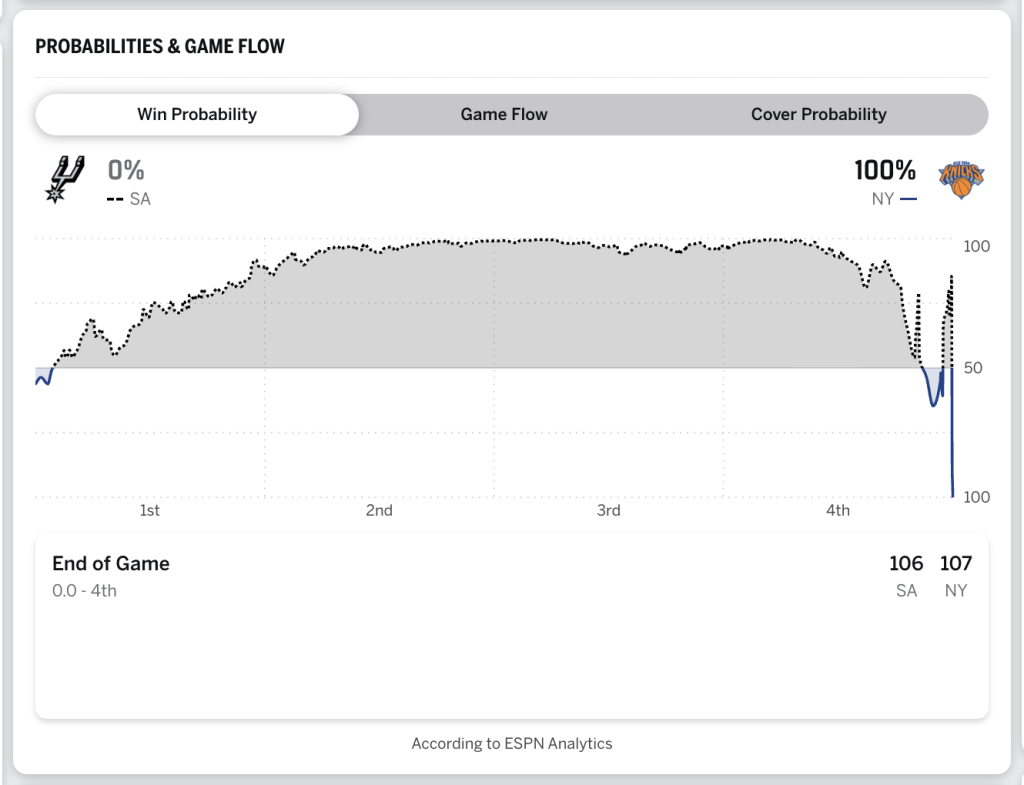
The Knicks, down 29, came back to win by one: The biggest comeback/choke job in playoff history. What an exciting game. They were getting creamed. Hugely creamed. They were buried, deeply buried, from the end of the first quarter to the start of the fourth. But they cannot be buried. Simple as that. They are all but unkillable. And now they lead the finals 3-1. Was there a hero? Yes: the team. The winning basket was an amazing from-nowhere put-back by OG Anonoby, the third, fourth, or fifth-best player on the team. And that was on a miss by their best player, Jalen Brunson. And the goat on San Antonio was their GOAT-in-the-making: Victor Wembanyama, missing two free throws that would have saved the game. But the unkillable Knicks came back.
The next game is in San Antonio. If the Knicks don’t win there, they will win Game 6 in New York. Count on it.
On the right, Starlink Group 17-43 Falcon 9 Block 5, burning toward space southbound out of Vandenberg SFB. On the left, the Beehive Cluster.
Still a wonder to watch
Just took in this Starlink launch from Vandenberg. Got a lot of pix. These things are common now, but I’m still a big kid, and space stuff excites me. I also seem to be here when launches aren’t happening, so it was great to catch this one. What you see above is the Starlink rocket, with the Beehive Cluster, ~600 light-years away, kinda faint, on the left. It contains over a thousand stars.
For a sense of how much this mattered to my eight-year-old son and me, twenty-one years ago, watch this video.
Also, a CME—a Coronal Mass Ejection—has been burped from the Sun, is headed our way, and is likely to cause auroras. More at SpaceWeather.com.
How a Big AI says, “That’s a good question.”
Actual dialog.
Me:
This thread will be about the Digital Omnibus proposal and 88b within it: https://eur-lex.europa.eu/legal-content/EN/TXT/HTML/?uri=CELEX:52025PC0837. For now I’ve parked work on my blog post at ProjectVRM, awaiting more input: https://projectvrm.org/2026/06/05/88b/ But that piece does express my thinking at this point in time. What I want now is a better understanding of the state of play with Digital Omnibus and the European Commission, and how we might get through to them how important MyTerms and contract as a lawful basis for processing personal data are to, well, everything. Our group here is also a bit torn about whether or not to blame consent (inferred and extracted) for what Shoshana Zuboff calls Surveillance Capitalism and I call the surveillance fecosystem. I’m on the side of making it as clear as possible to the EC that consent is the problem, and that trying to obtain personal privacy through improving consent still dismisses natural persons as mere data subjects: pinballs in as many pinball machines as there are companies presuming or extracting consent. So I am looking for guidance on both understanding the 88b situation and making our case.
Big AI Chatbot (which I pay):
• Connection interrupted. Waiting for the complete answer
The bullet (•) is still throbbing. To be fair, I’d throb too.
Later, I gave it another chance, and this time it gave me a good answer.
The odds went from shitty to certain, to toss-up, and then the better team won. Again.
They know it, and they won’t blow it. Knicks in four.
The Knicks take Game 2. In San Antonio. I only had a few very brief feelings of doubt. I was sure they were going to win, even when they fell behind, and even after the Spurs caught up and went ahead. Because the Knicks are more clutch than the Spurs.
A thought. The Spurs should use Kornet and Wemby together. Kornet is a good center, and a great shot-blocker. Wemby is a natural guard-forward who happens to be seven and a half feet tall, with an eight-foot wingspan. He’s got a great handle, can shoot from anywhere, and defends like there’s a tree in front of the basket.
The next two games are in the Garden, which is the best home floor in the world. The Knicks are a machine, and the Spurs are not. If the Knicks sweep, this will be one of the greatest stories in the history of sports, and not just basketball. They’ve won thirteen straight in the playoffs, which are the most difficult and competitive games of the year. They’ve swept the last two series, and are perfectly positioned to sweep this one. At home.
New York will go nuts. Wish I was still there.
Check it out
Watching a presentation by SwissVault right now. Looks cool.
Both the Travel and the Retail sectors face an advanced bot problem, with bad bots making up 41% and 59% of their traffic respectively. In 2024, the travel industry became the most attacked sector, accounting for 27% of all bot attacks, up from 21% in 2023. The most notable shift in 2024 is the decline in advanced bot attacks targeting the travel industry (41%, down from 61% in 2023) and the sharp increase in simple bot attacks (52%, up from 34%)
BBC will be shutting off its Radio 4 service at 198 kHz longwave (LW) on 27 June. Being old in age and fashion, I travel with a radio and have always loved listening on the LW band, especially to hear Radio 4 on 198. (For example, here. In that post, I pointed to a Guardian piece saying the signal would continue until they burned out the last vacuum tube required to produce the signal—a kind no longer made. That was in 2014.)
A gigantic advantage of LW is its extreme range across the ground, day and night. Radio 4 on 198 covers all of the UK, Ireland, and the northwest coast of mainland Europe. I just checked on a bunch of scattered SDRs (software-defined radios). You can too, here. I’m even listening right now to Radio 4 on 198 across the pond in Prince Edward Island.
But the band is being abandoned. So is mediumwave (MW), called AM in North America, though more slowly. I also just learned that Canada’s CHU, the shortwave time signal station to which I set clocks for much of my life, will also shut down. CHU will go away on 26 June, a day before Radio 4 on 198 vanishes forever.
I expected the Knicks to win tonight. I also expect them to win the NBA championship. Two reasons.
One is what I said about the Cavaliers ten years ago: they’re a better story. And something I said about the Warriors in that post applies to the Spurs now: they feel entitled. They just beat the reigning (and favored) champs in the Western Series finals—a series most NBA watchers considered the real finals, because the West is so much better than the East.
The other reason is that the Knicks are a better team. They may be the best basketball team to come along in many years. Their chemistry is epoxy. The cliché they keep repeating is “We play for each other.” This is what Bill Simmons calls The Secret. The Knicks have it. So do the Spurs, but not to the same degree. Three of the Knicks—Brunson, Hart, and Bridges—won college championships together at Villanova and have a real brotherhood: one with a gravity that pulls in the rest of the team.
They also have the real MVP: Jalen Brunson, Captain Clutch, who is historically great under pressure at the ends of games. Karl-Anthony Towns is finally turning into what he promised to be when he went first in the NBA draft, eleven years ago. Once regarded as a weak defender, he all but owned Victor Wembanyama tonight. He’s also a great shooter and passer. Josh Hart couldn’t shoot for shit tonight but had fifteen rebounds.
I could go on about the other players, but that would be beside the point, which is that the Knicks are the best team in the game, and not just a great collection of players.
If Wemby stays healthy for the next decade or more, he will go down as the greatest player of all time. He’s that good—and that tall. He will also come back with a vengeance in the next finals game, and maybe the ones that follow. But that may not be enough. The Knicks are the better team.
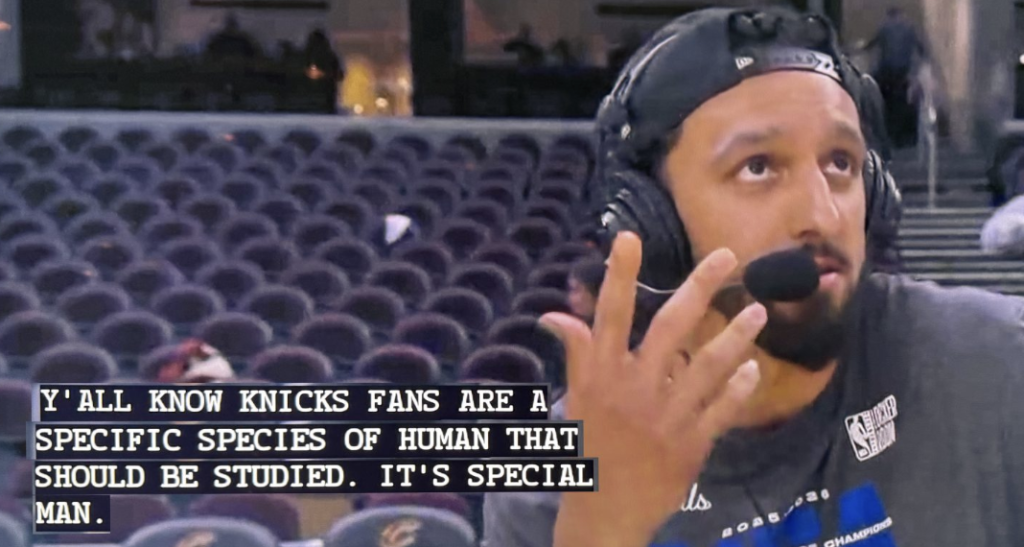
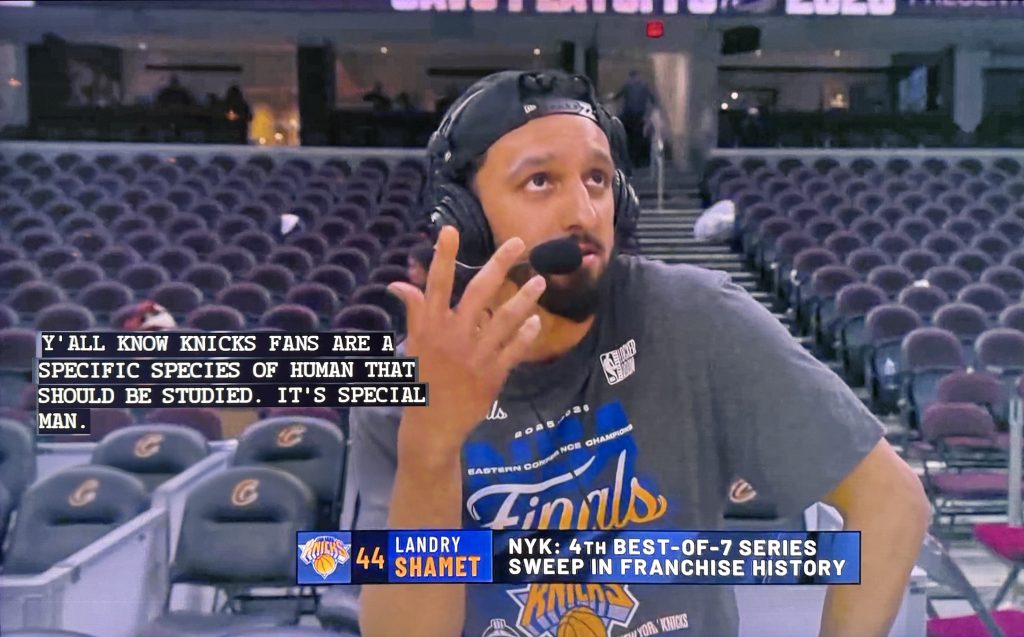
As for Knicks fans, what Landry Shamet says above. Also this.
I spent the last 12 hours talking to 10 different law firms, to evaluate who should handle our day-to-day legal work. I walked away with a strange realization ➙ Legal AI may be one of the most overfunded and underfelt categories in tech right now.
Read the whole thing.
Now, a word from the blogosphere: Writers, please don’t post your good stuff only on Linkedin. Yes, I know there are good reasons for posting on Linkedin. But if you do, make it a duplicate of what you put on your blog, your Substack (also a blog, really), like Jamie Smith does. Here’s his blog. Here’s the same on Linkedin. I never point to his Linkedin, because the former is his, and he latter isn’t.
While trying to do actual work, I got distracted by an email from a sane friend who is co-trying to understand wtf this is about, guided by this. An excerpt from the latter:
The National Design Studio is not a successor to DOGE. It is DOGE with a better logo and a design philosophy.
Now, back to TrumpRx looking at you.
Every webpage you load is making phone calls. Not to people, but to servers around the internet, dozens per second, all invisible to you. When I opened TrumpRx, I right-clicked the page, opened the browser’s built-in inspector, and started reading the list. Mixed in with the routine traffic was a name I recognized: PostHog. PostHog is a Silicon Valley analytics company whose entire business model is recording what visitors do on a website and reporting it back to whoever owns the site. Mouse movements, clicks, scrolls, keystrokes. I had not typed anything. I had not clicked anything. I had just opened the page, and it was already on the phone with PostHog telling them about me.
The recordings are not anonymized. IP addresses are not stripped. And the way it is configured, the data looks to your browser like it is going back to TrumpRx, but it is actually being forwarded behind the scenes to PostHog. That is a technique used to slip past ad blockers by disguising where the data is really going, and it is not something I expected to find on a federal health website. So I went and looked at the other sites the studio had built. Real Food, the federal food policy site. Trump Accounts, the children’s savings program. The studio’s own homepage, ndstudio.gov. All of them had the same vendor, the same setup, IP addresses not stripped, the same forwarding trick. And on ndstudio.gov alone, running alongside PostHog, was something someone had built entirely by hand. Five hundred and forty lines of custom JavaScript with a name embedded directly in the code: AutoMonitor. What it appears to do is rewire the part of the browser that handles how a page talks to the outside world, so that every conversation the page has with any server gets copied and forwarded to a private backend with no public presence. The studio has the structural ability to keep a copy of every recording as it passes through their infrastructure. I cannot prove they are keeping one. The pipe is built that way on purpose, and that is the part that matters.
When the federal government collects information about citizens, the law requires specific things first. Privacy disclosures. Notices in the Federal Register. Published contracts with outside vendors. I went looking for all of it across twelve National Design Studio programs and found none of it, not a single required document filed across any of the twelve. Every missing document is, by itself, a violation of federal law, and these are the laws Congress wrote after Watergate to make sure the federal government could not run secret surveillance programs on its own citizens. The only document they did publish is a privacy policy on TrumpRx, and it contradicts itself two paragraphs apart. The first paragraph says PostHog records the pages users visit and the medications they view. Two paragraphs later, it says they do not collect health or medical information. A federal health website is lying to the people using it and cannot even keep the lie consistent.
In other words, it’s just like surveillance-based adtech, against which I have been inveighing since the last millennium, through at least 161 posted utterings compiled here. To little effect so far, but I won’t stop.
Wandering about geology
In the vastness of John McPhee‘s writings on geology (within which he is the field’s Shakespeare), he writes (in Annals of the Former World and earlier works),
If by some fiat I had to restrict all this writing to one sentence, this is the one I would choose: The summit of Mt. Everest is marine limestone.
Elsewhere, he writes:
“For another example, the last Pleistocene ice sheet loaded two miles of ice onto Scotland, and that dunked Scotland in the mantle. After the ice melted, Scotland came up again, lifting its beaches high into the air. Isostatic adjustment.”
Then,
“Let go a block of wood that you hold underwater and it adjusts itself to the surface isostatically. A frog sits on the wood. It goes down. He vomits. It goes up a little. He jumps. It adjusts.”
Look at how McPhee turns glacial isostatic adjustment into a story simple enough for Sesame Street. Scotland isn’t “depressed by glacial loading”; it is dunked. The crust isn’t warped by viscoelastic compensation; it floats like block of wood with a barfing frog on top. Great stuff.
This whole digression began when I wondered to myself about the exact elevation of Loch Ness above the sea at Inverness. Because that’s how far (or high) the land under the Scottish Highlands has rebounded since the ice melted. While the ice was melting, Loch Ness was a fjord dug by glacial ice scraping out the Great Glen Fault, and at sea level. Or something like that. The Loch Ness Projecthas thoughts about it.