intention economy
-
Everwhat
Um… Shanaka Anslem Perera: The Megawatt Mirage: NVIDIA’s $4.5 Trillion Valuation Depends on a Grid That Cannot Deliver. Chips Ready. Software Ready. Power Infrastructure? Eight-Year Queue. Credit Markets? Flashing Red. The tweet version: “Microsoft’s CEO admitted GPUs are sitting in warehouses unplugged. Not demand. Not defects. Power. Transformer lead times: 4 years Grid interconnection queues: Continue reading
-
Holiday Findings
Literally Rocks in Canada that are older than dirt. About half the cover price The Intention Economy is now just $13 on Amazon in hardcover. I can't think of a better metaphor Christmas is foreplay. See if you can ace this A list of sixteen contractions a good mind can hold at the same time. HT to Continue reading
-
Time to Why
What he says Jamie Burke: Why the Intention Economy might finally be near. He predicts what I predicted (in the book above), with a DLT (distributed ledger technology) spin. Note that credit for the original portrait used in the piece should go to Peter Adams and his Faces of Open Source project. What I said My Big Continue reading
-
How to Civilize Digital Life

The Right to Privacy is a brief written by Louis Brandeis and Samuel Warren and published in the Harvard Law Review in 1890. It has not been improved upon since, because what it says is so damn obvious and simple: that the right to privacy is “the right to be let alone.” Those six words Continue reading
-
Nice, I hope
That "intention economy" appears (in a positive way) in this story from South Africa, in IOL. Continue reading
-
Fry Day
Subscription economy suckage. Just made my annual call to The New Yorker, to get a better subscription deal than what they offer with automatic renewal. So, instead of paying $169.99, I'm getting a new subscriber promotional rate of $99.99. I've been a new subscriber every year since the 1960s. Bonus link from 10 years ago. Continue reading
-
The Real Intention Economy

As a noun phrase, “The intention economy” first appeared in a Linux Journal column by that title, written by me in March 2006. A few months later, when I became a fellow at Harvard’s Berkman Klein Center, I started ProjectVRM for the purpose of making that economy happen. Six years after that, I wrote this book, Continue reading
-
Personal vs. Personalized AI

Personal AI is personal. It isn’t personalized. Context: There is a war going on. Humanity and nature are on one side, and Big Tech is on the other. The two sides are not opposed. They are orthogonal. The human side is horizontal, and the Big Tech side is vertical.* The human side is personal, social, Continue reading
-
Why selling personal data is a bad idea
This post is for the benefit of anyone wondering about, researching, or going into business on the proposition that selling one’s own personal data is a good idea. Here are some of my learnings from studying this proposition for the last twenty years or more. The business does exist. See eleven companies in Markets for Continue reading
-
The New News Business
Eigth in the News Commons series. Back when I was on the board of my regional Red Cross chapter (this one), I learned four lessons about fund raising: People are glad to pay value for value. People are most willing to pay when they perceive and appreciate the value they get from a product or Continue reading
-
The most important standard in development today
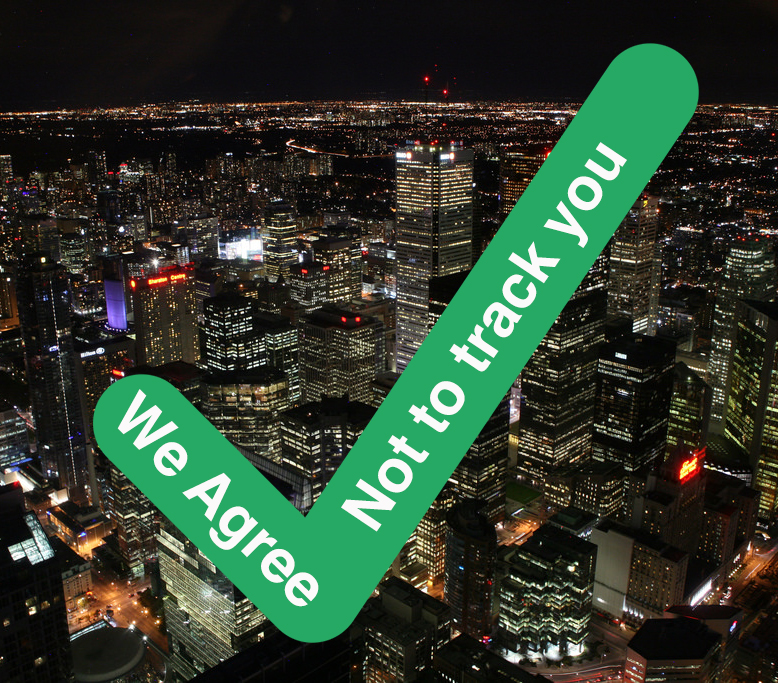
Update on 31 October 2025: P7012 is now nicknamed MyTerms (much as IEEE 802.11 is nicknamed Wi-Fi), and is on track for publication in January 2026. The standard is IEEE P7012: Standard for Machine Readable Personal Privacy Terms, which “identifies/addresses the manner in which personal privacy terms are proffered and how they can be read Continue reading
-
The Empire Strikes On
Twelve years ago, I posted The Data Bubble. It began, The tide turned today. Mark it: 31 July 2010. That’s when The Wall Street Journal published The Web’s Gold Mine: Your Secrets, subtitled A Journal investigation finds that one of the fastest-growing businesses on the Internet is the business of spying on consumers. First in a series. It has ten Continue reading
-
Building a Relationship Economy
In faith that nothing lasts forever, and that an institution that’s been around since 1636 is more likely to keep something published online for longer than one that was born in 1994 and isn’t quite dead yet (and with full appreciation to the latter for its continued existence), I’ve decided to re-publish some of my Continue reading
-
Where the Intention Economy Beats the Attention Economy
There’s an economic theory here: Free customers are more valuable than captive ones—to themselves, to the companies they deal with, and to the marketplace. If that’s true, the intention economy will prove it. If not, we’ll stay stuck in the attention economy, where the belief that captive customers are more valuable than free ones prevails. Let Continue reading