• Home
  • About
  • MyTerms
  • News Commons
  • People vs. Adtech
  • Personal AI

Doc Searls Weblog

Just trying to make stuff happen


  • August 21, 2013

    Remembering paradise

    Mom died ten years ago yesterday, just as I was putting up the post below. I learned a short while later that she was gone. It was a good post then, and still is now. So I thought I’d run it again. — Doc

    1953 Wanigan:
    Except for school, I had a happy childhood. That means my summers were idylls.
    In the summer of 1949, a couple months after my sister was born and while I was turning two, my parents bought an acre and a half of land near Cedarwood Park on the edge of the pine barrens in South Jersey (near The Shore, pronounced Da Shaw), bought a small wooden building, towed it on a flat-bed truck to a clearing at the end of a sand road, sat it on a shallow foundation, built a kitchen out of cast-off boards and windows, erected an ourdoor privy over a pit, pounded a pipe into the ground for well water, screwed a hand-pump on the top of the pipe, furnished the place with goods from dumps and rummage sales, hung a pair of Navy surplus canvas hammocks between scrub oak trees, and called our new summer home “The Wanigan,” which my parents said was “Eskimo” for “house that moves.” (Apparently the derivation is Ojibwa, but so what.)
    It was paradise. Grandma and Aunt Ethel had a place nearby. So did my great aunt Florence and Uncle Jack. Aunt Grace, Uncle Arch and my cousins Ron, George and Sue all lived in Marlboro, not too far away. They’d bunk in Grandma’s garage. Other friends and relatives summered nearby, or would come visiting from near and far, sometimes staying for weeks. Over the next thirteen years the Wanigan got an additional room and indoor plumbing, but was otherwise blissfully unimproved. We never had a TV. For years our only phone ran on DC batteries and connected only to Grandma’s house.
    We went to Mantoloking Beach almost every day. For a change we swam the beaches and lagoons of Kettle Creek (we had a little land with a dock on Cherry Quay Cove) or the Metedeconk River on Barnegat Bay. We fished and crabbed in small boats. On the way home we stopped at roadside farm stands, bought tomatoes and corn, and enjoyed perfect suppers. We rode our bikes through the woods to the little general store about a mile away, bought comic books and came home to read them on our bunk beds. We grazed on blueberries, three varieties of which comprised the entire forest floor. We built platforms in the oak trees, collected pine cones and played hide-and-seek in the woods. Bedtime came when the whip-poor-wills started calling. We fell asleep to a cacaphony of tree frogs and crickets.
    The picture above was shot in the summer of 1953, when I was turning six (that’s me with the beer in the front row), behind “Bayberry,” the house Grandma Searls shared with her daughter, our Aunt Ethel. That’s Grandma at the top left. Aunt Ethel is in the next row down next to Mom. Behind both are Aunt Grace Apgar and my great Aunt Florence Dwyer (Grandma’s sister). Then Aunt Catherine Burns, cousin Sue Apgar, Mary Ellen Wigglesworth (a neighbor visiting from back in Maywood, our home town), then Uncle Arch Apgar. In front of Arch is George Apgar. Pop (Allen H. Searls) is in the middle. In the front row are my sister Jan Searls, Kevin Burns, myself, Uncle Donald Burns and Martin Burns (who today remembers being scratched by that cat).
    Grandma lived to 107. Aunt Florence made it to her 90s too, as I recall. Aunt Grace is now 91 and in great health. (Here we are at Mom’s 90th birthday party last April.) Aunt Katherine is still with us too, as is everybody from my generation (now all in their 50s and 60s).
    I’m waxing nostalgic as I plan a return visit this weekend to North Carolina, probably for the last time in Mom’s life.
    I’m also remembering what late August was like back then, as we prepared to end another perfect summer. It was wanting paradise never to end — and knowing, surely, that it would.

    Among those in the photo who were alive when this post went up, we’ve lost two: aunt Katherine passed several years ago, in her late 90s; and cousin Ron Apgar, who was shy of photos when this shot was taken, died at 70 last year. The rest of us are all still doing fine — especially Aunt Grace, now 101 years old.

    Family, Geography, Past, Personal
  • August 20, 2013

    Breaking news: Al Jazeera kills its live stream

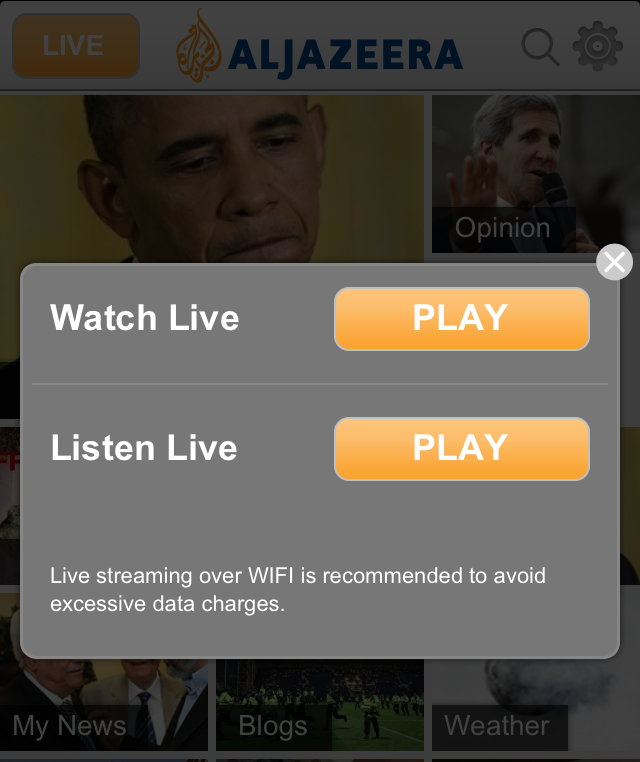
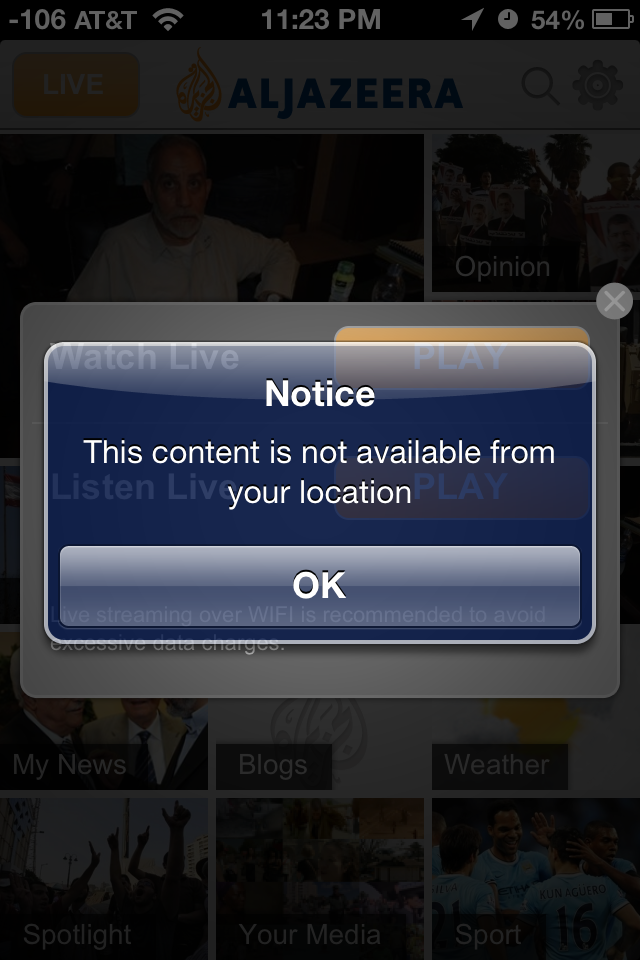
    If you have an Al Jazeera app on your U.S. mobile device you can no longer watch or listen to live streams. Click on the yellow LIVE button and then on “PLAY” next to “Watch Live” or “Listen Live” and here is what happens:

    Go to the Al Jazeera website, click on “watch now” and you get to a page that says this:

    The Al Jazeera English live stream is no longer available in the U.S.

    Starting tomorrow, August 20th, you’ll be able to watch more of the in-depth reporting and great content you love on the new Al Jazeera America television channel.

    Click here to see if your local television provider will be carrying Al Jazeera America. If not, let your voice be heard and please request it today.

    Here’s how you can keep in touch with us and get all the latest updates about Al Jazeera America’s launch:

    • Visit the website
    • Subscribe to our email list
    • Follow @AJAM on Twitter
    • “Like” our page on Facebook

    For the latest news and in-depth coverage from Al Jazeera English:

    • Read our live blogs
    • Download our mobile apps
    • Follow @AJELive on Twitter
    • Follow @AJEnglish on Twitter

    Nice choices, but no substitute for live streams.

    And no explanation of why. I assume it’s “due to copyright and distribution restrictions,” which are mentioned here. But a value-subtract of this magnitude deserves a full explanation. As a news organization Al Jazeera should report on exactly why it killed its streams.

    Personally, I assume that the big cable companies insist that the streams be killed as a precondition for carrying the new Al Jazeera America cable channel. But, as I said back on 9 August, I don’t know.

    Want to see a good model of a news organization covering news about itself? Look at what NPR is doing with news that its CEO is leaving. They (notably @davidfolkenflik) expose the whole thing, cover it as a news event, and open it up for discussion in comments.

    Credit where due: Al Jazeera America’s Facebook page has comments and replies. People like me (a veteran watcher of Al Jazeera English on mobile devices who rarely watches cable) are not happy. Examples:

    Ruth Arhelger No, I won’t be watching any AJ programs anymore no matter how much I wish I could because I have no way to access it. I refuse to pay more for television than I do for electricity and killing live stream is the worst idea anyone at your network has ever had. I hope at some point in the future you decide not to alienate people who can’t afford cable tv.

    John Waddington where is the live stream ? what idiot turned off the live stream ?

    Adey Imru Makonnen Shame that AJ English will disappear – goodbye objectivity

    Jimbaux’s Journal No, because I don’t have cable and am unwilling to pay for it, partly because I just don’t like spending much time in front of the television, but I have your live feed that you posted in another comment bookmarked and will see posts that you make here on this page. Thanks for giving us options.

    Al Jazeera America Jimbaux’s Journal – We encourage you to continue following us and stay tuned for updates:http://america.aljazeera.com/

    Thomas Chupein No, I won’t and I am really sad. I don’t have a TV and I refuse to waste money on cable when there is almost nothing that I would watch. It was so hard to lose all the live streaming these past two days – I don’t blame AJAM but I am really sad – I can’t stomach even five minutes of U.S. news programs, and I was really looking forward to this.<

    Al Jazeera America Thomas Chupein– We understand your concerns but we encourage you to join us online for Al Jazeera America news coverage to access articles and video content:www.aljazeera.com/america. Also, please continue to follow us for updates!

    There are also lots of positive replies from people who like their cable news on TV and won’t miss the AJE live feed on computing devices. Those are the people Al Jazeera is after, obviously. Not cord-cutters like me and a few million others.

    But it’s a retro move. And, I suspect, a costly one.

    [Later…] Riyaad Minty ‏@Riy tweets,

    and to those, our most loyal #AlJazeera viewers in the US, who have lost the live streams. We hear you. We’re working on it.

    Thanks, Riyaad. Please make the new streams live and not just a collection of clips and pre-recorded programs. The latter is what the competition does, and you should do better than that.

    Here’s more from Janko Roettgers on Gigaom.

    Broadcasting, Business, infrastructure, Internet, Journalism, News
  • August 13, 2013

    Daily Outline

    Media

    • The Natives Are Feckless, Part 2. By Bob Garfield in MediaPost. Pull quote: “For the sake of their audiences and for the sake of their own reputations, publishers must not let the content in any way disguise itself as editorial matter. Period.”
    • How YouTube changes everything. By Miguel Helft @FortuneMagazine
    • Designs for a networked beat. By Jay Rosen in Pressthink. Also What I think I know about journalism.
    • Why Al Jazeera is ending its U.S. stream, and how you can keep watching. By Matthew Keys in The Desk

    Surveillance

    • The low road to a stack of needles. By Dan Blum. His bottom lines: “But if more and more users go underground, the trend will feed on itself as the market for successor services to Lavabit and Silent Circle grows and their functionality improves. Law enforcement will no longer be able to find the needles in the haystack because more of the haystack will be a stack of needles. And then we’ll see the old debates of PGP, encryption escrow and the Clipper chip reprised – this time with a much more powerful national security establishment at the helm and significantly more real threats on the horizon. It could end up being the law of the jungle on the Internet…”
    • That cookie-killing student? An ad agency just hired her. By Kate Kaye in AdAge.
    Journalism, Links
  • August 12, 2013

    News isn’t about cable. Or newspapers. It’s about us.

    Read Dave’s Cable News is Ripe for Disruption. Then Jay Rosen’s Edward Snowden, Meet Jeff Bezos. Then everything Jeff Jarvis has been writing about lately.

    Then listen to the August 9 edition of On The Media. Pay special attention to the history of New York’s newspapers, and the strike of 1962-3. Note how vitally important papers back then were to the culture back then, how the strike (by a union tragically committed to preserving a dying technology that employed >100k people) killed off three of the seven papers while wounding the rest, and how that event gave birth to TV news and launched many young journalists (Nora Ephron, Tom Wolfe, Gay Talese, et. al.). Listen to other interviews in the show about the history of media, from telegraph to telephony to radio and beyond.  Note also how structural separation assures that the past will have minimal drag on the future, and how laws (e.g. antitrust) learn from bad experiences in the marketplace and society. There’s a lot of other meat to chew on there.

    Then, if you’re up for it again (I’ve improved it a bit), read what I wrote here about Al Jazeera giving up on the Net while it goes after CNN, et. al. on cable.

    I have only one complete, though provisional, thought about all of it:  TV news is ripe for complete replacement and not just disruption. What will replace it is up to us. (Note: radio is different. I’ll explain why in a later post. On the road right now, so no time.)

    Bonus link.

    Blogging, Broadcasting, Future, Internet, Journalism, News, problems, radio
  • August 9, 2013

    Al Jazeera isn’t covering some big news about itself

    Right now if you want live streaming of TV news, 24/7, on the Net, here in the U.S., from a major global news organization, you have just two choices: Al Jazeera and France24.

    Soon you’ll have just one, because Al Jazeera’s stream is going away. That’s because the company will turn its stream off when it fires up its new cable channel, Al Jazeera America, on August 20.

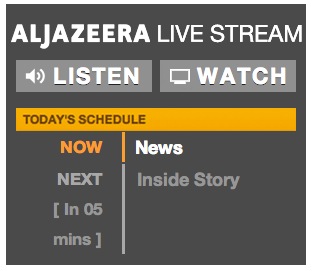
    Which means this will go away from the Al Jazeera website…

    … along with this option when you open up your mobile app:

    … and you’ll get no more live video like this:

    Or so I gather.

    Everything I just wrote is a provisional understanding: the best I can do so far. Some or all of it might be wrong.

    Here’s what I do know for sure.

    First, Al Jazeera bought Current TV from Al Gore and is re-branding it Al Jazeera America. In Al Jazeera America: A Unicorn Is Born, Joe Pompeo of New York Magazine calls this move “arguably the biggest American TV-news launch since Fox News and MSNBC more than a decade ago.”

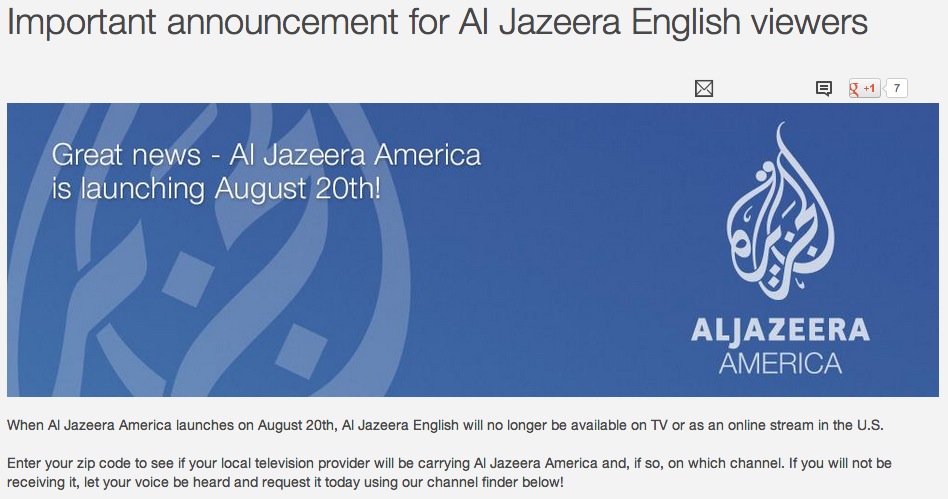
    Second, if you go to http://america.aljazeera.com/get-aljazeera-america, you’ll see this:

    In case you can’t make out the small print, it says “When Al Jazeera America launches on August 20th, Al Jazeera English will no longer be available on TV or as an online stream in the U.S.” That means gone completely, right?

    Maybe not. Al Jazeera English isn’t all of Al Jazeera. If you click on the “Watch Live” button here…

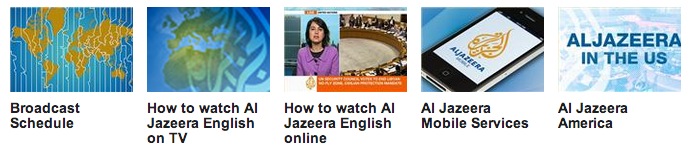
    … you’ll get a page with the URL http://www.aljazeera.com/watch_now/, where there is this set of choices:

    Click on “Al Jazeera Mobile Services” and it lists apps for a variety of mobile devices. All talk up “free access to the live stream” (or equivalent copy) as a main feature. Are they just late to removing or qualifying that copy? Or will the live stream be gone only from the website?

    Click on “How to watch Al Jazeera English online” and you get this copy:

    How to watch Al Jazeera English online

    View our network through the internet via websites, online TV providers and mobile apps.

    Last Modified: 12 Jul 2013 14:50
    Watching Al Jazeera English via the internet is now easier than ever. The network is broadcast around the world to over 220 million households, but don’t worry if you can’t find us on your television.A range of websites, online TV providers, and mobile apps now offer a live stream of our channel. Browse the list below to discover the best way for you to watch and click the links on the left for specifics.

    Websites
    Al Jazeera English Watch the broadcast on our website.
    Livestation Our UK-based partner streams AJE live.
    YouTube See our live stream, programmes and news clips.
    Facebook On the social networking site, stay tuned with AJE.
    Dailymotion Watch programmes and news clips on AJE’s channel.
    Connected TV 
    Samsung Smart TV Watch the live stream and video-on-demand from the app.
    LG Smart TV Watch the live stream and video-on-demand from the app.
    Roku In the channel store, access the Newscaster.
    Google TV See the AJE feed through the Google play app.
    Boxee Watch AJE on your box through the Livestation app.
    PlayStation 3 Open up the Livestation AJE feed through your console’s browser.
    Mobile
    iPhone/iPad/iPod View live news from AJE on Apple devices through the iTunes app.
    Blackberry Open your internet browswer and watch Al Jazeera live.
    Android Use our new app to watch AJE on your smart phone.
    Symbian/Windows Live stream Al Jazeera English on your mobile through Mobiclip.

    Due to copyright and distribution restrictions, not all viewers will be able to access all of our streaming video services.

    Are they killing off all of that stuff in the U.S. or just some of it? What exactly are those copyright and distribution restrictions, and how are they involved in this new move? They surely aren’t killing off the live Net streams for no reason, so obviously they were forced to make trade-offs. What were they?

    Hey, they’re a news organization. What they’re doing by going all-cable with no-Net, is sacrificing the future for the past, seems to me. At the very least they should be transparent about what they’re doing and why .

    I’ve been trying to get answers out of @ajam (Al Jazeera America), @aljazeera (Al Jazeera PR), @ajenglish and facebook.com/aljazeera. Here’s one Twitter conversation that began with an @ajam tweet:

    1. Al Jazeera America ‏@ajam8 Aug

      Attention Al Jazeera fans in the US: Al Jazeera America launches on August 20. Find out how to get it here: http://aljazeera.com/getajam 

      Details
    Doc Searls‏@dsearls

    @ajam It says “Al Jazeera English will no longer be available on TV or as an online stream in the U.S.” That mean no phone or tablet too?

    1. Michael Wiik ‏@mwiik8 Aug

      @dsearls @ajam imho, AJAM will lose credibility if AJE no longer available in US after AJAM launch.

      Details
    2. Kevin ‏@MorningVent8 Aug

      @dsearls @ajam The streets will run with the blood of the infidel.

      Details
    3. Kevin ‏@MorningVent8 Aug

      Credibility a must for terrorists. RT@mwiik: imho, AJAM will lose credibility if AJE no longer available in US after AJAM launch.

      Details
    4. cate ‏@ceebeth23h

      @dsearls @ajam have you received an answer yet? I don’t see a reply and I’m wondering same thing

      Details
    5. Doc Searls ‏@dsearls22h

      @ajam Let me put the Q another way: does AJAM’s debut on cable turn off all AJ streams in the U.S? Or just some? Please be clear.

      Details
    6. Al Jazeera America ‏@ajam21h

      @dsearls Al Jazeera English online videos will not be available in the U.S. You will still be able to read articles on their site.

      Details
    7. Al Jazeera America ‏@ajam21h

      @dsearls Al Jazeera America follows in the same tradition of hard-hitting unbiased journalism so be sure to check us out when we launch.

      Details
    8. Kimberly Warne ‏@kcwarne21h

      @ajam Please don’t succumb to corporate/gov pressure and fade into MSM inanity. We need a real adversarial truth2power option. @dsearls

      Details
    9. Doc Searls ‏@dsearls20h

      @ajam Does this mean no Al Jazeera streams of any kind in the U.S. except via cable or satellite?

      Details
    10. Chris Meredith ‏@tallin3216h

      @ajam @dsearls Does this similarly apply to their YouTube channel? iOS apps?

      Details
    11. Chris Meredith ‏@tallin3216h

      @ajam Am looking forward to the AJAM launch, but was hoping to still have access to both services.

      Details
    12. Doc Searls ‏@dsearls12h

      @ceebeth @ajam Asked the same question at http://facebook.com/aljazeera  and it got erased. Guess AJ killing live streams isn’t news. #journalism

      Details
    13. Doc Searls ‏@dsearls8h

      @ajam Will Al Jazeera apps for US users on iOS and Android still have the “LIVE” button after 20 August? #VRM

      Details
    14. Michael Wiik ‏@mwiik8h

      @dsearls One might get the idea @ajam‘s lack of transparency on this first blow on its credibility, even before it launches.

    (I have no idea why WordPress puts a strike through the @ sign. I just copied the list out of Twitter and pasted it into the composing window here.)

    I also went to Al Jazeera’s Facebook page and politely asked what was going on. I’d quote what I wrote, but it’s gone. I don’t know why. Maybe they erased it somehow. Or maybe, not being as adept at Facebook as I should be, I just can’t find it.

    Whatever the story, Al Jazeera isn’t covering it — and, I am guessing, they don’t want it covered.

    But it is a story. The world’s most ambitious news organization is making a big move on the U.S. news marketplace by subtracting value from what it’s already doing — and none of its competition are doing.

    There is no bathwater in the live news streams Al Jazeera is tossing on the 20th. It’s all babies. Here are four of them:

    1. Leading edge early adopters. Cord-cutters. That’s the audience Al Jazeera already has online.
    2. Advocates. Friends. I was one. See here.
    3. Companions. Meaning everything else on the Net that isn’t on cable, such as YouTube.
    4. A platform for networked journalism. Cable ain’t it. The Internet is.

    Cable is still big, but it’s the past. The Net is the future. Hey, just ask James Dolan, the CEO of Cablevision. In The Future of TV Might Not Include TV, the Wall Street Journal begins,

    Predicting that transmission of TV will move to the Internet eventually,Cablevision Systems Corp. Chief Executive James Dolan says “there could come a day” when his company stops offering television service, making broadband its primary offering.

    But I guess Al Jazeera is a cable channel at heart. And less of a news organization than it aspires to be — or they’d come a lot cleaner about what they’re doing here. And why they’re stiffing their entire online audience in the U.S.

    Well, at least we still have France24.

    [Later…] According to Janko Roettgers in Gigaom, Al Jazeera is not only getting ready to block its English streams in the U.S., but is killing off access to news clips on YouTube as well.

    [19 Aug, 11:23pm Pacific time…] The deed is done:


    Broadcasting, Future, infrastructure, Internet, Journalism, Live Web, problems
  • August 8, 2013

    What’s CBS worth? How about just the programs?

    In MediaPost‘s TV Watch, West Coast Editor Wayne Friedman asks, Trick Question: What Would You Pay For Access To CBS For A Month? Here’s my  (lightly edited) answer from the comments below the post:

    This is interesting. We have always been consumers of TV channels more than customers of them. First they were free over the air. Then we paid cable for access to over-the-air channels. Then, once cable-only channels came along, we had bundles that masked actual costs. Then we had premium channels that cost an extra $12 or so per month. In the midst of all that the cable companies turned into retailers of bundled channels they bought wholesale. I gather from the news that CBS raising its wholesale price caused Time Warner Cable to opt out of carrying it.

    So, if we look at TWC’s NYC basic bundle channels, we see 61 channels, most of which are packing material. The price is $80/mo. There are 8 channels, including CBS, in the first 13. These are your top channels. Among them, the leading brands are the original occupants of those over-the-air channels (2,4,5,7,9,11,13). Of those the ones that matter are 2 (CBS), 4 (NBC), 5 (FOX), 7 (ABC), 11 (CW) and 13 (PBS). This is also Aereo’s main lineup. Aereo is today’s CATV (community antenna TV, the ancestor of cable). Here in NYC, its bottom price, including CBS, is $8/month. Let’s say CBS, as #1, is worth somewhat more than the rest. We would come up with a price between, say, $2 per month and the full $8 just for customers who want CBS and can’t get it from Time Warner Cable. That’s what people would, and do, pay.

    (Note that here in NYC, the new digital signals tend to work only if you can see the Empire State Building. If your apartment windows look elsewhere, good luck with the rabbit ears. Because of this fact, Aereo has a substantial market.)

    Here are Wayne’s bottom lines:

    While Time Warner says it’s thinking about not profiting from CBS, another senior executive at a big cable operator, Cablevision Systems, is thinking about the day cable operators might not carry TV programmers/networks as part of their product/service line.

    James Dolan, president/CEO of Cablevision, noticing how much time he and his children and are using the likes of Netflix — via broaband — for their TV consumption.

    Perhaps future generations won’t need TV networks, he says. Not just broadcast, but perhaps cable networks as well. Good news for TV networks, then, in this regard: No more discussions and fears about a la carte programming.

    Discussions, yes; fears, no. Because if we go full á la carte, we need to come up with prices for programs.

    The phone companies already meter usage, especially for mobile customers. The cable companies are less built for that than the phone companies, but at least keep track of data use. So why not just come up with a pricing scheme for programs? Customers would pay for what they use.

    I think that’s where TV is likely to end up, whether it’s over cable or over the top of it on the Net.

    Broadcasting, Technology
  • August 7, 2013

    A way to get CBS after all

    If you live in New York, Dallas, Los Angeles or one of the other cities where Time Warner has dropped the local CBS station, there may be a free work-around.

    Because over-the-air TV still exists. And, if you have a flat-screen TV, it likely has a TV tuner built in. If it does have its own tuner, you can bypass cable and watch old-fashioned over-the-air TV.

    Look on the back of the screen and see if there is a cable-like connection for an antenna, such as the one above. It will probably say “ANT” or have a little antenna symbol.  A cool hack: all you need for an antenna is a 4-5″ length of wire sticking out of the middle of the connector. I usually use a twist-tie that’s stripped at one end. Just shove the exposed end of the twist-tie in the little hole in the middle of the connector, use your remote to navigate the menu to over-the-air TV, and go through a SCAN or hunt down the actual channel. In Los Angeles, for example. KCBS/2 is actually on Channel 43 these days. So if you need to tune it manually, that’s the channel you’ll find it on. (For what it’s worth, KNBC is on 36, KABC is on 7, KTTV is on 11, KCOP is on 13, KTLA is on 31, KCET is on 28.) Usually the SCAN function won’t tell you what the real channel is, but rather how each is identified. But they all do it differently. Still, it’s do-able.

    If you have line-of-sight to the transmitter, you’re in luck. In New York, that’s the Empire State Building. In Los Angeles, it’s Mount Wilson. In Dallas, it’s the tower farm by Cedar Hill State Park. If you don’t have line-of-sight, it might still work.

    Let me know how it goes.


    Broadcasting
  • August 6, 2013

    Daily Outline

    Cool

    • Britt Blaser’s flying stories. The dude is a terrific writer who has lived to tell, and tell well. He should do that more often. Speaking of which, I interviewed him for this podcast.
    • How 24 Tiny Satellites Could Change Business Forever. By Nate Hindman and Joe Epstein. Subhead: “Skybox doesn’t want to see pictures of Earth from space just for kicks. It wants to scour the globe for information that will remake industries.” It’s about Skybox, to which I gave $100 in its Kickstarter campaign. Don’t have the t-shirts yet. (Not needing them either. I just noticed for the first time that t-shirts were a perk.) And I look forward to my fifteen minutes.
    • Libraries don’t have to be a thing of the past – just look at Melbourne’s. By Anita Sethi in The Guardian. Subhead: “Taking a close look at some of the most glorious of the world’s public libraries, from Australia to England, is a reminder of just how vital they are the world over.”
    • The New Yorker channels The Onion with Shouts & Murmurs:
      • Even More New Features of Your Gmail Inbox! By Ethan Kuperberg.
      • Amazon Founder Says He Clicked on Washington Post By Mistake. By Andy Borowitz. Also by Andy:  Boehner Urges Republicans To Rest Up for Meaningless Votes Ahead.

    Personal data and independence

    • The Independent Purchase Decision Support Test, by Adrian Gropper, M.D. Pull quote: ” What I need is an Agent that’s independent of my ‘provider’ institution EHR and communicates with that EHR using the Stage 2 guidelines without any interference from the EHR vendor or the ‘provider’. It’s my choice who gets the Direct messages, it’s my choice if I want to ask my doctor about the alternatives and it’s my doctor’s choice to open up or ignore the Direct messages I send.” (EHR is Electronic Health Record.)
    • Your data is your interface. By Jarno Mikael Koponen in Pando Daily. Pull quote: “Before solving the ‘Big Data’ we should figure out the ‘small’ personal part. Algorithms alone can’t make me whole. Different services need my continuous contribution to understand who I really am and what I want. And I believe that apps and services that openly share their data to provide me a better user experience are not far off.”
    • Jarno is also the father of Futureful (@futureful) which Zak Stone of Co.Exist (in Fast Company) in says “hopes to bring serendipitous browsing back to the web experience by providing a design-heavy platform for content discovery.” Just downloaded it.

    Media

    • The rebirth of OMNI — and its vibe. Subhead: Glenn Fleishman on the imminent reboot of the legendary science and science fiction magazine. In BoingBoing. Two bonus links on the OMNI topic:
      • Remembering the Future
      • The almost-complete OMNI archive
    • Jeff Bezos buys the Washington Post. This is either wonderful for journalism or horrifying. By Sarah Lacy in Pando Daily. Pull quote: “John Doerr…described an entrepreneur with uncommon focus and discipline around what the customer wants. I guess the future of the Post will ride on who Bezos sees as ‘the customer’ and what’s in his best interest.”
    • Donald Graham’s Choice, by David Remmick in The New Yorker.
    • Here’s Why I Think Jeff Bezos Bought The Washington Post. By Henry Blodget in Business Insider. Pull-quote:
      • First, I’d guess that Jeff Bezos thinks that owning the Washington Post will be fun, interesting, and cool. And my guess is that, if that is all it ever turns out to be, Jeff Bezos will be fine with that. This is a man who invests in rockets and atomic clocks, after all. He doesn’t necessarily make these investments for the money. Or bragging rights. Or strategic synergies.
      • Second, I’d guess that Jeff Bezos thinks that there are some similarities between the digital news business and his business (ecommerce) that no one in the news business has really capitalized on yet.
    • The Natives Are Feckless: Part One Of Three. By Bob Garfield in MediaPost. Pull-quotage:
      • Well done, media institutions. You have whored yourselves to a hustler. Your good name, such that it remains, is diminished accordingly, along with your trustworthiness, integrity and any serious claim to be serving the public. Indeed, by bending over for commercially motivated third parties who masquerade as bona fide editorial contributors, you evince almost as little respect for the public as you do for yourself.
      • There’s your native advertising for you. There’s the revenue savior being embraced by Forbes, the Atlantic, The Washington Post, The Guardian, Business Insider and each week more and more of the publishing world.
      • According to the Pew Research Center for the People and the Press, sponsored content of various kinds was a $1.56 billion category in 2012 and growing fast.
    • Future of TV might not include TV. By Shalini Ramachandran and Martin Peers in The Wall Street Journal. It begins, “Predicting that transmission of TV will move to the Internet eventually, Cablevision Systems Corp Chief Executive James Dolan says ‘there could come a day’ when his company stops offering television service, making broadband its primary offering.” And wow:
      • In a 90-minute interview on Friday, the usually media-shy 58-year-old executive also talked about his marriage, his relationship with his father Chuck and his after-hours role as a singer and songwriter. He said his rock band, JD & the Straight Shot, toured with the Eagles last month.
      • Mr. Dolan said that on the rare occasions he watches TV, it is often with his young children, who prefer to watch online video service Netflix, using Cablevision broadband.
      • He added that the cable-TV industry is in a ‘bubble’ with its emphasis on packages of channels that people are required to pay for, predicting it will mature ‘badly’ as young people opt to watch online video rather than pay for traditional TV services.
    • Making TVs smart: why Google and Netflix want to reinvent the remote control. By Janko Roettgers in Gigaom.
    • Hulu, HBO, Pandora coming to Chromecast. By Steve Smith in MediaPost. Pull-quote: “A battle over content clearly is brewing between Google and Apple. Apple TV has recently expanded its offerings of content providers to include HBO Go, Sky TV, ESPN and others. The two companies are pursuing different delivery models as they try to edge their way onto the TV. Apple TV is a set-top box with apps, while Chromecast relies on apps that are present on mobile devices to which the dongle connects.”
    • Setting TV Free. By yours truly in Linux Journal.

    Tech

    • Standards, Monopoly and the Quantified Self. In which Phil Windley unpacks Why the Quantified Self Needs A Monopoly, by Matt Asay in ReadWrite. I have a comment under Phil’s post.
    • We Need a New Church Committee: It’s time for a basic re-evaluation of intelligence operations. By Yochai Benkler in the New Republic.
    • World innovation clusters. In MIT Technology Review. Leaders are (in descending order by $ investment):
      • Silicon Valley
      • Boston
      • Paris-Saclay
      • Skolkovo/Innovation City
      • Beijing
      • Israel
      • Bangalore
      • Tech City London

    Retail

    • Amazon “Upends” Another Industry Sector: Grocery. Are You Next? By Alistair Barr in The River.
    • Mobile POS Systems More Popular WIth SMBs. By Mark Walsh in MediaPost.
    • The Mobile Wallets Flying Under the Radar. By Chuck Martin, in MediaPost.
    • Dear Hotels: Quit Being A-Holes. By yours truly in Linux Journal.

    Legal

    • A Tipping Point Against The Copyright Monopoly Regime Is A Lot Closer Than You Think. By Rick Falkvinge in TorrentFreak.

    Handbaskets to hell

    • Is Facebook a Public Utility? Yes, says Filmmaker Cullen Hoback. By Paul Detrick in Reason I like Cullen’s movie Terms and Conditions May Apply, but I think we dilute the meaning of Public Utility by calling Facebook one.
    • Other Agencies Clamor for Data N.S.A. Compiles. By Eric Lichtbau and Michael S. Schmidt in The New York Times.
    • Copyright, Click Wrap and the Fourth Circuit Court, by Raving Lunacy.
    Broadcasting, Business, infrastructure, Internet, Journalism, Links, Photography, Places, problems, Quote, Technology
  • August 2, 2013

    It’s 2013. Why are we still in login hell?

    So I get an email (yes, I subscribe to it)  from Ad Age pointing me to AT&T Ridding Some Retail Stores of Cash Register, Counters and Other Clutter ‘Warmer’ Shopping Experience Includes Orange Coloring, Wood Paneling, Demos, by John McDermott. I read it and decide to make a comment under it. I’ve done this before, so I don’t expect problems. I write it and go to log in. That gets me this:

    Note that it says “Welcome back, Doc” under “Login with your Social Identity.” So I click on that, get to a page with a “Sign in with Twitter” button, click on the button and then find myself on this popover window:

    Note that is says “we were unable to match the email address for your social network and AdAge.com accounts.” In fact I am logged in with Twitter, I receive emails from AdAge at the same address I have associated with Twitter, and I don’t feel like using a different “social identity.” So I fill the form out, and another little pink word balloon appears, truncated by the top of the window:
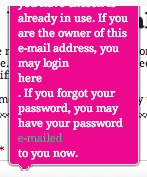
    When I click on the “here,” it sends me back to the first login page. There I fill out what two different browsers (deep in the prefs, where they keep this info) tell me is my login/password for AdAge.com. Then I get this:

    I think, wtf is that error doing over on the social side of this thing? Can’t think of an answer, so I click on “Forgot UserID/Password” enter my email address twice, as it requires, and get promised an email that will recall my login details.

    Many minutes later I get an email confirming my email address. Alas the password is a different link. So go to I click on that. (Using the present tense because I am doing this in real time.) But the session is lost. So I click on another link, go to an unwanted place at AdAge, click on the back button, and get this:
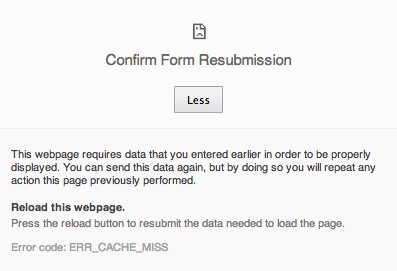
    Click on “less” and I get this:

    Click on “more” and I get the less thing again. Anyway, a dead end.

    So now I go back to https://adage.com/register, and start entering the fields again. This time I get a red pop-out balloon that says “This address is already taken. Forgot your password?” So I click on the link and get to a window where I have to enter my email address again. I do that and it tells me “Your password has been sent to your e-mail address”. It’s now 10:22. I first saved a draft of this post at 9:07. I’ve been doing other things (e.g. making breakfast and coffee), but you can see this is taking awhile.

    Okay, so now I have the email, which tells me my password. It’s one I don’t recognize at all. I’m guessing it’s a new one. So I go back to a login page, enter my email address and the password they gave me and: voila! I’m logged in. It is now 10:29.

    And now, at 10:36, I’ve finished putting up my comment, which I’ve expanded into this post at Customer Commons. Meanwhile, back to the title of this one. Why are we still in login hell?

    The answer is simple: we’ve given all responsibility for relationship to the server and left the client as a purely dependent variable. While the formal name for this model is client-server, I prefer calf-cow:
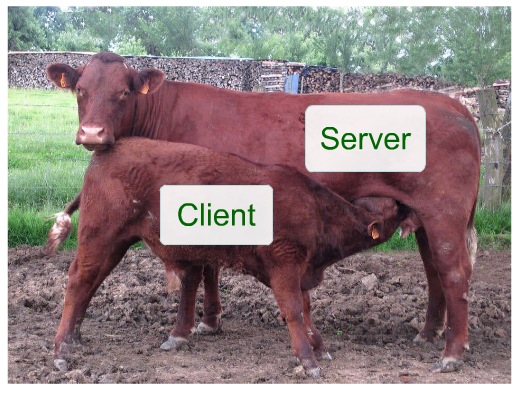
    The sites are the servers, and our browsers are the clients, suckling the servers’ teats for the milk of “content” and cookies to keep track of us.

    This blows.

    It has blown for eighteen years.

    The server side can’t fix it, as long as relationship is entirely their responsibility. What we get from that are:

    1. Awful gauntlets such as the one I just went through — and kluges such as “social login“, by which we trade security for convenience. Especially with Facebook. (The only reason I attempted to use Twitter in this case was that AdAge appeared to remember me that way. Turns out it barely remembered me at all.)
    2. Different kluges with every single website and Web service, each a silo. All of those silos think they get “scale” with their thousands or millions of users and customers. But you get the opposite, and it only gets worse with every site you add to your roster of logins and passwords.
    3. Huge burdens on servers and personnel who need to create and manage easily-broken systems such as AdAge’s.

    We can only fix this thing from the client side. It’s simple as that. We’re the ones that need scale. We’re the ones that need our own simple and singular ways of relating to others on the Web and the Net.

    Hint: we won’t be able to do it through any silo’d service. We can prototype with those, but they are not the full answer. They just answer the silo problem with yet another silo.

    Working one angle toward this simple goal-state (which, after all these years in the calf-cow corral, looks like nirvana) are Abine, Dashlane, MySocialCloud and Privowny, each of which provide ways not only to manage many passwords and logins, but (in some cases) to generate unique email addresses and passwords for different sites, if you like. Far as I know, all of them are also substitutable, meaning that you can pull all your data out and use it for yourself or with another service. (Many other companies offering related services are also listed here among VRM developers.)

    But, hey: if we’re leaving the corral,why should we need logins and passwords at all? If you and a site or service truly know each other, why should you both go through the rigamarole of logging in all the time?

    There are a zillion good security answers to that question, but  they are all coming from inside the same box (or corral) we’ve been in for the duration.

    It’s time to think and work outside that box.

     

    infrastructure, problems, Technology
  • August 1, 2013

    2013_08_01 Link Pile

    Tech

    • Targeted Advertising Considered Harmful. By Don Marti.
    • THE INSIDE STORY OF THE MOTO X: THE PHONE THAT REVEALS WHY GOOGLE BOUGHT MOTOROLA. By Steven Levy in Wired.
    • CW500: The rise of the machines — how devices are taking over the internet. By Bill Goodwin in ComputerWeekly.
    • Measuring the full impact of digital capital: Although largely uncounted, intangible digital assets may hold an important key to understanding competition and growth in the Internet era. By Jacques Bughin and James Manyika in McKinsey Quarterly.
    • Intel Drops Facial Recognition From TV Plans for Now. By Jeffrey Burt in eWeek.

    Handbasket to hell

    • Female genital mutilation: Still bleeding — A barbaric practice is becoming a bit rarer and less popular. In The Economist.
    • Projected climate change moves much faster than land vertebrates have evolved: Species that survive future warming probably won’t do it by evolving. By Scott K. Johnson in Ars Technica.
    • If not for clouds and nitrogen, Earth could be an uninhabitable hell right now: New model suggests a Venus-like planet is closer than we think. By John Timmer in Ars Technica.
    • Million-browser botnet, by Jeremiah Grossman and Matt Johansen in Blackhat Briefings.

    Etc.

    • Spike Lee Shares His NYU Teaching List of 87 Essential Films Every Aspiring Director Should See In Open Culture.
    • Tides control the geysers of Enceladus. In Physics World. A story based on An observed correlation between plume activity and tidal stresses on Enceladus, by M. M. Hedman, C. M. Gosmeyer, P. D. Nicholson, C. Sotin, R. H. Brown, R. N. Clark, K. H. Baines, B. J. Buratti and M. R. Showalter in Nature. Pretty cool. Enceladus is a moon of Saturn with an eliptical orbit that has cracks that look like tiger stripes that open up and spew geysers of water and ice out into space for hundreds of kilometers when the tide is right. Then the spew falls back as snow covering the moon’s craters.
    • Wikipedia Zero:
      • Mobile partnerships team at Wikimedia Foundation
      • Wikimedia partners for Wikipedia Zero
      • Wikimedia Aircell deal in India
      • Wikimedia Aircell deal Q&A
      • Wikimedia mobile partnerships Q&A
      • Amit Kapoor’s blog post on the topic
      • Wikipedia’s Jimmy Wales explains its mission to be mainstream: Wikipedians plan more outreach for teachers, better tools for developers and simpler editing tools to increase their audience. By Jemima Kiss in The Guardian
      • Wikipedia Zero arrives in India, dropping mobile data charges for 60m Aircel subscribers. By Paul Sawers in TNW.
      • Access Wikipedia for free on your mobiles, but only if you’re an Aircel customer. By Nishtha Kanal in Tech2.
    Links
  • July 29, 2013

    Getting kicks at 66

    Route 66A year ago I entered the final demographic. So far, so good.

    @Deanland texted earlier, asking if I had a new affinity with WFAN, the New Yawk sports station that radiates at 660 on what used to be the AM “dial.” Back when range mattered, WFAN was still called WNBC, and its status as a “clear channel” station was non-trivial. Clear channel stations were the biggest of the big. The maximum power allowed was 50,000 watts, but only a handful stations in the U.S. and Canada, by agreements that dated from the 1930s, operated on channels that were clear of other stations at night. So statoins on those channels could be heard across the continent and to some degree the oceans as well. This is why, as a kid in New Jersey, I often listened to KFI from Los Angeles in the wee hours and as an adult in California I sometimes got WBZ from Boston. Now even “clears” like WFAN are protected only to 750 miles away, which means any or all of these stations also on 660 splatter over each other. Reminds me of a fake ad I did once back when I was at WSUS: All the world’s most beautiful music—all at once. We overdubbed everything we could onto one track, so it sounded like a cocktail party in hell, where everybody speaks loudly and nobody is listening.

    Which brings me to something my 16-year old son asked about radio no long ago: What is the point of “range” and “coverage?” He’s a digital native who is used to being zero distance from everybody else on the Net, including every broadcaster, so by his frame range and coverage ar bugs, not features. His question wasn’t sarcastic, but it was meant to poke a point at my own frame of reference.

    He poked again last month when we were driving from Boston to New York on a Sunday afternoon, listening to the only radio show he actually cares about: All A Capella on WERS. While WERS is one of Boston’s smaller stations, it has a good signal toward the west, so we got it nearly to Worcester. So, when we lost the signal, the kid pulled out the family iPad, which has a Net connection over the cell system, got WERS’ stream going, jacked the iPad jacked into the car radio, and listened to the end of the show, somewhere in Connecticut.

    What he poked was the giant pile of obsolete trivia in my brain, about how AM and FM broadcasting works. It’s like knowing about steam engines.

    But mostly I keep living in the future. That’s why I’m jazzed that both VRM and personal cloud development is rocking away, in many places. Following developments took me on three trips to Europe in May and June, plus two to California and one to New Zealand and Australia. Lots of great stuff going on. It’s beyond awesome to have the opportunity to help move so much good stuff forward.

    Speaking of distance, the metaphor I like best, for the birthday at hand, is “(Get Your Kicks on) Route 66.” Composed in the ’40s by Bobby Troup, the jazz composer and actor, it has been covered by approximately everybody in the years since. The Nelson Riddle sound track for the TV show Route 66 was evocative in the extreme: one of the best road tunes ever written and performed. In addition to that one I have ten other versions:

    • Erich Kunzel
    • John Mayer
    • Chuck Berry
    • Nat King Cole
    • The Cramps
    • The Surfaris
    • Oscar Peterson & Manhattan Transfer
    • Andrews Sisters and Bing Crosby
    • Manhattan Transfer
    • Asleep at the Wheel

    My faves are the last two. I’ll also put in a vote for Danny Gatton‘s Cruisin’ Deuces, which runs Nelson Riddle’s beat and muted trumpet through a rockabilly template of Danny’s own, and just kicks it.

    Anyway, my birthday is happy, so far. Thanks for all the good wishes coming in.

    Broadcasting, Family, Friends, Fun, infrastructure, Internet, Life, Places, radio, Travel, VRM
  • July 29, 2013

    2013_07_29 Link Pile

    Marketing (public notes toward a piece I’ll be putting up in Linux Journal… also a podcast)

    • The agency holding company model is dead — welcome to the ‘marketing stack‘. By Jon Ebbert in Ad Exchanger.
    • This INSANE Graphic Shows How Ludicrously Complicated Social Media Marketing Is Now. By Charlie Menato in Business Insider.

    Folks

    • Halley’s successful kickstarter
    • Other stuff that happened on my birthday, including births

    Surveillance and stuff

    • Bunny hop with the NSA
    Links
  • July 28, 2013

    The Gospel According to ZZ Top

    In mass this morning only two words the priest said during the homily stuck in my mind: it’s alright.

    Because they called ZZ Top to mind. Specifically, the song Legs. It begins, She’s got legs. She knows how to use them. Then the boys sing a bunch of other stuff over this repetitive throbbing riff that sounds like it’s made by thousand-pound bees. At the end of the first verse they sum things up with this: yeah, it’s alright.

    A few months back I turned my sixteen year old son on to ZZ Top, starting with Legs, and he got a huge laugh out the alright thing. It might not be deep, but it’s still cool. Meaning: it’s alright.

    Here’s the original music video, just so ya’ll know what MTV looked like, back in the decade.

    Bonus link.

    Art, history, Links, music
  • July 28, 2013

    2013_07_28 Link Pile

    World going to hell

    • Edward Snowden’s not the story. The fate of the internet is. “The press has lost the plot over the Snowden revelations. The fact is that the net is finished as a global network and that US firms’ cloud services cannot be trusted.” By John Naughton in The Guardian.
    • The NSA Is Building the Country’s Biggest Spy Center (Watch What You Say). By James Bamford in Wired, published in March, 2012.
    • PRISM as a windfall for non-U.S. cloud providers, by Barb Darrow in Gigaom.
    • Feds tell Web firms to turn over user account passwords. “Secret demands mark escalation in Internet surveillance by the federal government through gaining access to user passwords, which are typically stored in encrypted form.” By Declan McCullagh in CNet.
    • Scientists discover what’s killing the bees and it’s worse than you thought. By Todd Woody in Quartz.
      As Feds Demand the Keys, Preparing for the Death of Public-Key Encryption. By Lauren Weinstein.
    • Everything wrong with America in one simple image. By Justin Rosario in Addictive Info.

    Tech

    • Forward motion with RSS, by Dave. The idea is to build new interop.
    • Pinterest Allows Users to Opt Out of Being Tracked. By Nick Bilton in The New York Times.
    • Almost half of Australians give false data to websites as a privacy precaution. By Steven Raeburn in The Drum.
    •  HAARP ionospheric research program set to continue. By Brian Dodson in Gizmag.
    • Cord Cutters: A first look at Google’s Chromecast video streaming adapter. By Janko Roettgers in GigaOm. Also, Why Chromecast is such a big deal for Google, and a threat to Apple.
    • The Expanding Irrelevance of Microsoft, by Barry Ritholtz in The Big Picture

    Marketing (public notes toward a piece I’ll be putting up in Linux Journal… also a podcast)

    • The agency holding company model is dead — welcome to the ‘marketing stack‘. By Jon Ebbert in Ad Exchanger.
    • This INSANE Graphic Shows How Ludicrously Complicated Social Media Marketing Is Now. By Charlie Menato in Business Insider.

    Etc.

    • Whales almost eat divers.
    Links
  • July 20, 2013

    A good word for a good cause

    @BlakeHunskicer has a kickstarter project, Fleeing the War at Home: An interactive documentary introducing the crisis in Syria through the personal histories and dreams of Syrian refugees, with a few days and a few thousand dollars left to go.

    Blake is one of the graduate students I got to know this last year as a visiting scholar in @JayRosen_NYU‘s Studio20 (@Studio20NYU) class at NYU. He’s a terrific journalist and photographer already, and will put both skills to good use for a good cause. Join me in helping him make it happen.

    Awesome, history, Ideas, Journalism, Photography, Politics, Research, Travel
  • July 20, 2013

    Rebuilding the future

    In Bubkes, Stephen Lewis has lately been blogging with depth and insight on many topics — music, architecture, culture, infrastructure and events historic and current — in two cities with which he is intimately familiar: Istanbul and Sofia.

    In Taksim Underpass: Ask Gertrude Stein, Dorothy Parker, Jane Jacobs, and Robert Moses, he writes,
    By itself, the Turkish government’s plan to shunt traffic under and past Taksim Square might indeed lessen vehicular congestion, thus freeing this iconic location from dominance by motor vehicle traffic. In conjunction with the plan to replace all of Taksim Square and Gezi Park with a massive complex of shopping mall, mosque, and fantasy reconstruction of a 19th-century military barracks, however, the underpass will instead deliver more automobile traffic into the urban core, a further step toward transforming a vital, unplanned, dense, “legacy” urban agglomeration into just another suburb.

    In Istanbul Conflicts From Afar: Issues and Aspersions, Headscarves and Rambo, he visits specious tales by the Turkish Prime Minister and his sympathizers, of protestors “harassing pious Muslim women and tearing off their headscarves” (among other offenses for which there is no confirming hard evidence), and compares them to equally wrong tales from the Vietnam War era. That was when “US antiwar activists were stigmatized — and crocodile tears poured forth — over reports that US soldiers returning from tours duty in Vietnam were being spit upon by opponents of the war.  Not a single person, however — neither spitter, spat upon, nor witness thereto — ever stepped forward to confirm any such attack.” In support of this he recalls an On the Media program confirming the purely propogandized nature of the claim. I just did some digging and found the program transcript. Here it is.

    In Sofia, Bulgaria: From Protest to Protest to Protest, Steve visits “the Balkan blurring of what is said and what is, and what is and what could or should be” and how in Bulgaria “nothing is what is seems to be at first glance, and words, no matter how clear, often refer to alternate realities (click here for my long-ago online discourse on the wisdom and convenience of the oft-heard Bulgarian-language phrase po printsip, tr. ‘in principle‘).” His next post, Plovdiv, Bulgaria, 1997: Musicians Marching in Protest, recalls an earlier protest, again accompanied by an excellent photo.

    In Istanbul: Water, Fountains, Taksim, and Infrastructural Tourism, Steve reports on joining a colleague in visiting “the layers of infrastructure — including Ottoman-era fountains — that have served Istanbul over centuries past and during its ten-fold growth in population during the twentieth.” I share with Steve a passion for what he and his colleague call “infrastructural tourism” — a practice which, he adds, “appears already to be underway, albeit searching for its own content and method, as per this report at Design Observer.” Wonderful link, that one. Go read that too.

    In From the Archives: Fading Fragments of Legacy Infrastructure, he begins,

    Two decades ago, I began to photograph the historic water fountains (çeșme) and water kiosks (sebil) of Istanbul.  I began, not with the grand and monumental, but with obscure and abandoned — those in backstreets, alleyways, and courtyards, functioning and non-functioning fragments of legacy urban infrastructure, overlooked by scholars,  their features surrendered to the elements, decay, and neglect. The forgotten origins and gradual disappearance of many of these structures seemed symbolic of larger urban processes of decline and abandonment — processes that are as central to the functioning and continuity of cities as are restoration and (re)development.

    I’ve been doing something similar in New York and New Jersey, where I grew up. A few days ago, driving back to Manhattan from a meeting in Edgewater, New Jersey, I found myself following Google Maps’ navigation to the George Washington Bridge, turning onto Bruce Reynolds Boulevard before bearing right onto a ramp leading into the toll lanes. Paused at a light,  I saw on the right an old street sign marking the late Hoyt Avenue, and realized I was exactly where my parents lived when I was born: at 2063 Hoyt. Ninety-three years earlier, this was the view from that very same spot. (And here’s the larger photo set, with shots old and new. Credit for the old ones goes to my late father and to his little sister Grace, now 101 years old and doing fine.) I hope, when Steve next returns to New York (his home town), we can do some infrastructural touring together, cameras in hand.

    Bonus link: Steve’s latest, Further to “Istanbul Conflicts From Afar:” Kudos, Mentions, and “Great Expectorations”, which cites this post as well.

    The title of this post, Rebuilding the Future, is one I came up with back when I read Steve’s Taksim Underpass piece, and I wanted to post thoughts about the ironies that always surround the civic graces — especially infrastructure — that we choose to keep using (often for new purposes), or just to preserve, for generations to come. I didn’t go there, because I’ve already said enough and I’d rather that readers get into what Steve is writing and sharing. But I still kinda like the headline, so I’m letting it stand.

    Art, Awesome, Blogging, Business, Culture, Future, Geography, history, infrastructure, Journalism, Links, Photography, Politics, Research, Social, Travel
  • July 18, 2013

    Markets

    • Why shouting about discounts won’t satisfy your customers, by Natalie Brandweiner in MyCustomer
    • From Disney to dishwashers: Digital CRM to change customer experience, by Ashley Smith in SearchCRM.
    • Venture Capital Funding At Its Lowest Since 2010 — A By The Numbers Look. By Meghan Casserly in Forbes.
    • ArkOS: Your data, your rules. It explains, Securely self-hosting your websites, email, files and more has never been easier (or cheaper!). Decentralize your web and reclaim your privacy rights while keeping the conveniences you need.
    • Thom Yorke, Nigel Godrich pull music from Spotify. By Gerrick D. Kennedy in The L.A. Times. “Make no mistake new artists you discover on #Spotify will no get paid,” Yorke tweeted. “Meanwhile shareholders will shortly being rolling in it. Simples.”
    • Digital Commerce: Leading Apps and Strategies for Retailers, Online Players and Telcos in the $10Bn Loyalty Market, by Telco 2.0 Research.
    • Terms and Conditions May Apply. A documentary featuring many people I know (spotted John Palfrey, Zeynep Tufekci, S.J. Klein, Eli Pariser). The filmmaker, Cullen Hoback, will follow up with a movie about tracking.
    • Do Things That Don’t Scale. By Paul Graham.
    • A hunk of my keynote to an IAB gathering the other day in New York.

    Communications, the Net

    • OECD’s Internet economics papers. Rich trove. Bonus link.
    • State of the Net 2013 in Trieste
      • Dave Snowden on complexity
      • James Kretchmar on Akamai’s numbers
      • Gigi Tagliapietra on Bach
      • Luca de Biasi on lon term thinking
      • Carlo Petrini padre di slow food (in Italian)
      • Me (plus an interview) on personal clouds

    Journalism, publishing

    • 5 Ways to Fix Book Publishing. By Anis Shavani in The Daily Beast.

    World going to hell

    • Tom Engelhardt: Can Edward Snowden Be Deterred? In FiredogLake.
    • A huge coalition of tech companies unites to petition the US government for more NSA transparency. By Ken Yeung in The Next Web.
    • Wide range of industries plead for Congressional action on patent trolls. By Joe Mullin in ArsTechnica. Six bills are in play, and US businesses are united in wanting something to pass, the subhead says.
    • NASA: Globally, June Was Second Warmest On Record. By Joe Romm in ThinkProgress.
    • NSA-Affäre: Ex-Präsident Carter verdammt US-Schnüffelei. By Gregor Peter Schmitz in Der Spiegel. Pull-quote from Jimmy, via Google Chrome’s robo-translation: “America has no functioning democracy.”

    Etc.

    • Mammabisquit, whom we met in a local hardware store a few days ago.
    • Tropes.
    • Gas being drawn into the Milky Way’s black hole at 10 million km/hour. By John Timmer in ArsTechnica. Gas cloud now loops around the supermassive black hole, the subhead says. Images show it happening, live.
    • Idiocy makes for some pretty amazing fireworks photos. In Wired.
    infrastructure, Internet, Journalism, Links
  • July 16, 2013

    2013_07_16 Link pile

    Journalism

    • Fleeing the War at Home. A worthy kickstarter by @BlakeHunsicker
    • No Ifs, Ands or Bots. By Bob Garfield in MediaPost. Pull-quote: Relying on CRM to repair BofA is like treating melanoma with Clinique.
    • The Strange Case of Barrett Brown: Amid the outrage over the NSA’s spying program, the jailing of journalist Barrett Brown points to a deeper and very troubling problem. By Perter Ludlow in The Nation. More at DemocracyNow.

    Loose news

    • One third of Kenyans have a bitcoin wallet. By Daniel Stuckey in Motherboard.
    • Everything Is Rigged: The Biggest Price-Fixing Scandal Ever: The Illuminati were amateurs. The second huge financial scandal of the year reveals the real international conspiracy: There’s no price the big banks can’t fix. By Matt Taibbi in Rolling Stone.
    • Verizon backs Ubuntu smartphone: Verizon Wireless joins the Ubuntu Carrier Advisory Group. This move sets Verizon up to be the first carrier to bring the Ubuntu-Linux based smartphone to the US. By Steven J. Vaughan-Nichols in ZDnet.

    Markets

    • CRM trends: Customer engagement, free range agents and more. By Scot Petersen & Lena J. Weiner in SearchCRM.
    Links
  • July 13, 2013

    2013_07_13 Link Pile

    Advertising and marketing

    • An olive branch to advertising, at ProjectVRM, September 2012
    • Retailers, STOP dealing with data brokers, by datacoup
    • The Web Cookie Is Dying. Here’s The Creepier Technology That Comes Next, by Adam Tanner in Forbes
    • LumaScapes, by Luma Partners
    • destructoid.com, a typical small publisher supported by advertising, including third party tracking

    Surveillance vs. privacy

    • Revelation of NSA PRISM Program Generates Strong Growth for Online Privacy Companies

    Media

    • Setting TV free, in Linux Journal, July 3, 2013
    • From VHS to Google Glass, porn drives the tech market
    • Big cable’s Sauron-like plan for one infrastructure to rule us all. By Susan Crawford in Wired. Extremely important, and required reading.

    Wikipedia’s current outline of Internet marketing (collapsed to one level)

    • Search engine optimization (SEO)
    • Social media marketing
    • Email marketing
    • Referral marketing
    • Content marketing
    • Native advertising
    • Search engine marketing
    • Pay per click
    • Cost per impression
    • Search analytics
    • Web analytics
    • Display advertising
    • Contextual advertising
    • Behavioral targeting
    • Affiliate marketing
    • Cost per action
    • Revenue sharing
    • Mobile advertising
    • Native advertising

    Other stuff

    • Here’s Microsoft’s New Strategy Essay and Reorg Announcement (Memos). By Kara Swisher in All Things D. Pull-quote: “Going forward, our strategy will focus on creating a family of devices and services for individuals and businesses that empower people around the globe at home, at work and on the go, for the activities they value most.” The outline below also talks devices first. Guess they have to make, because the OEM biz is imploding. Hey, works for Apple.
    • The Shocking Truth About Doug Engelbart: Silicon Valley’s Sidelined Genius. By Tom Forenski. Pull-quote: “…despite all the accolades and testaments to his genius, Silicon Valley largely ignored him and he spent decades trying to find funding for his ideas, and even someone just to listen to him.” This is true, and resonates for Dave Winer as well: If you want to get the most out of great developers like Engelbart, who are productive well into their 80s, you have to stop digging up the streets, moving the goalposts, bombing the cities, starting over just for the sake of starting over. I had a slogan in my early days programming: Discontinuities suck. I want steady evolution that builds on all past work, and invalidates nothing. Let people continue to develop as they please, even if you don’t understand what they’re doing. And remember that brilliance does not become obsolete. Engelbart had a twinkle in his eye, even through all the frustration. He wanted to see human intellect soar. Too bad we didn’t achieve that with his help, during his lifetime. But maybe we still can.”
    Links
  • July 10, 2013

    Hot Death from Above

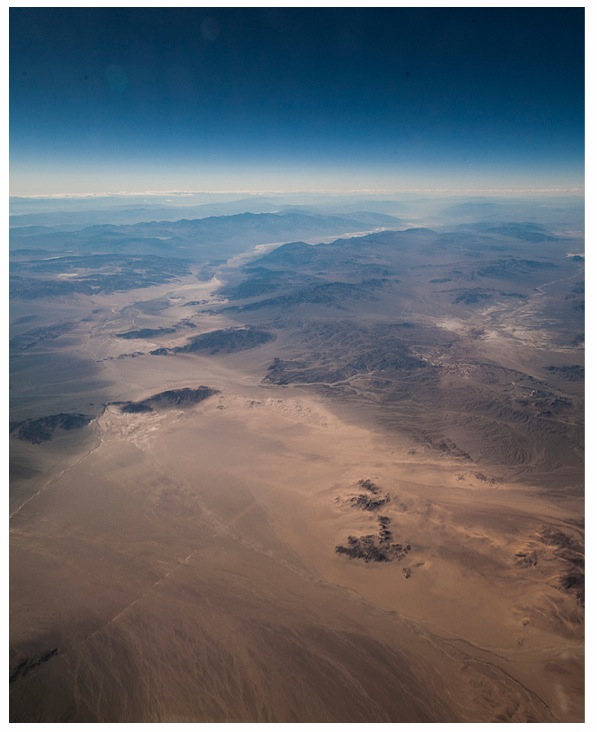
    Driving from New York to Boston today, I heard “Summer ‘Heat Tourists’ Sweat With Smiles In Death Valley” — a four-minute feature on NPR, aired on the 100th anniversary of the hottest temperature ever recorded outdoors on Earth, which happened in Death Valley: 134° Fahrenheit, which is around 57° Celsius. The report says Death Valley routinely draws a hearty Summer crowd of tourists from colder and damper parts of the world: Belgium and New Zealand, for example.

    As it happens I was just in New Zealand and Australia, where it’s Winter now. And, on the way back, on a leg between Los Angeles and Newark, I got a nice look up Death Valley from about 40,000 feet up. So I shot it, of course. And I’ve put those shots up on Flickr. If you click on the one above, you’ll see it comes with notes identifying some of the sites in the shot. Two of the most remarkable are Dumont Dunes and the Tonopah and Tidewater Railroad, aka T&T. The Dunes link goes to the Wikipedia article on the dunes, which is accompanied by a shot I took a few years back from overhead, using a camera I wish I still had (a Nikon Coolpix p7000), which was much better than my Canon 5D SLR at shooting stuff below the window. (Got much better sunsets and sunrises too.) The railroad was built in 1905 and abandoned in 1940. Here are some additional links:

    • Photos of the southern terminus of the railroad, at Ludlow, CA
    • Abandoned Rails’ page on the T&T
    • Mojave Desert’s page on the T&T
    • TripAdvisor on the T&T
    • TTRR.org, dedicated to the T&T
    • Dumont Dunes Off-Highway Recreational Area
    • Dumont Dune Riders
    • Dumont Dunes Crash (fun to watch the ride, though)
    • YouTube search for Dumont Dunes
    Art, Aviation, Fun, News, Photography, Places, Travel
«Previous Page Next Page»

Author, journalist, and a leading blogger since 1999. More on the About page.

Recent Posts

  • Everwhen
  • Watching the Strait
  • The Kids Take Over
  • Operation Desert Furry
  • What Companies Deserve a Free Customer award?
  • Unday
  • TGI Day
  • Fendsday

Archives

Recent Comments

  1. Lyn Brooks on Unday
  2. Shooting for the World – ProjectVRM on On taking personalized ads personally
  3. Shooting for the World – ProjectVRM on Privacy is a Contract
  4. BestPhotos on Clearing things up
  5. Doc Searls on The News Business

GET NEW POSTS BY EMAIL


Recent Posts

  • Everwhen
  • Watching the Strait
  • The Kids Take Over

©

Doc Searls Weblog

All Rights Reserved.

Designed with WordPress. Hosted by Pressable.