data
-
Questions of Law, not Just Politics
Go to HUD.gov, and you’ll get this: Go to USDA.gov, and you’ll get this: Seems to me these violate the Hatch Act, aka “An Act to Prevent Pernicious Political Activities.” It was passed in 1939 and amended a couple of times since then. I am not a lawyer, but I know some, and I can Continue reading
-
The End of What’s On
But not of who, how, and why. Start by looking here: That’s a page of TV Guide, a required resource in every home with a TV, through most of the last half of the 20th century. Every program was on only at its scheduled times. Sources were called stations, which broadcast over the air on Continue reading
-
From sea to rhyming sea
While discussing ChatGPT with my teenage grandkids, I put it to a number of tests. In one I asked it to write a poem that includes all the capital cities in the U.S. Here is its reply: From sea to shining sea, Across this land so grand, The capitals of every state, Await us to Continue reading
-
A workflow challenge
I shoot a lot of pictures. Most are from altitude (such as the above). But lots are of people and places; for example, here are a few I shot at DWebCamp last summer with my new Sony A7 IV camera (to which I migrated last year after many years shooting Canon): Importing and curating photos Continue reading
-
Does Sirius XM sound far worse than listening to music on YouTube?
That’s a question asked on Quora and deleted (for reasons unknown) before I posted my answer. So I’m posting my answer here. This is like asking if a car radio sounds better than a TV. Because it’s a matter of where, how, when, and what, more than a matter of sound. There is some overlap Continue reading
-
How the species killing the planet can save it
We live in the Anthropocene, a geological epoch defined by the influence of one species over everything else, including the planet itself. That species is ours, and we are a pestilential one, altering, consuming, and wasting everything we can. Specifically, our civilizations have advanced on the planet like a cancer, parasitically metabolizing materials we call Continue reading
-
On digital distance
In July 2008, when I posted the photo above on this blog, some readers thought Santa Barbara Mission was on fire. It didn’t matter that I explained in that post how I got the shot, or that news reports made clear that the Gap Fire was miles away. The photo was a good one, but it Continue reading
-
The most important standard in development today
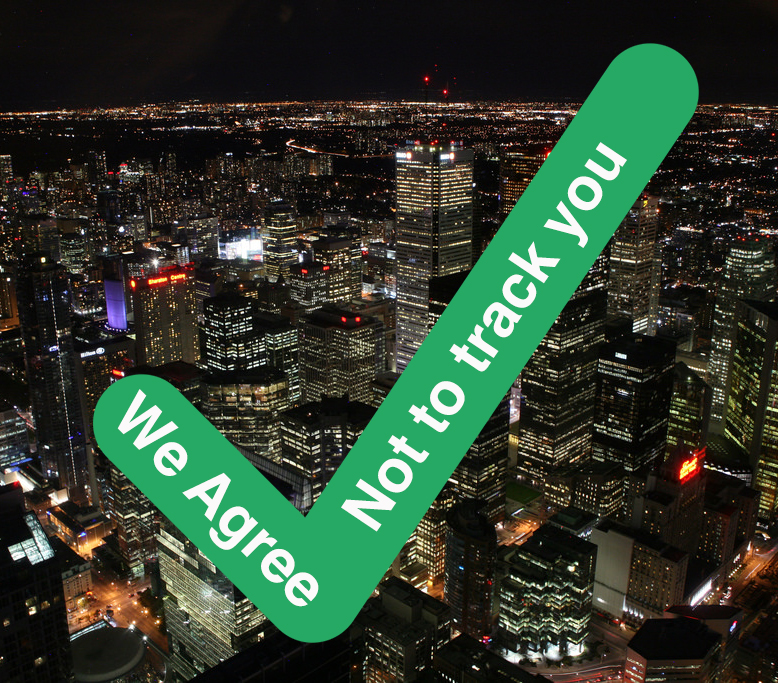
Update on 31 October 2025: P7012 is now nicknamed MyTerms (much as IEEE 802.11 is nicknamed Wi-Fi), and is on track for publication in January 2026. The standard is IEEE P7012: Standard for Machine Readable Personal Privacy Terms, which “identifies/addresses the manner in which personal privacy terms are proffered and how they can be read Continue reading
-
From Hollywood Park Racetrack to SoFi Stadium
Hollywood Park Racetrack is gone. In its place is SoFi Stadium, the 77,000-seat home of Los Angeles’ two pro football teams and much else, including the 6,000-seat YouTube Theater. There’s also more to come in the surrounding vastness of Hollywood Park, named after the racetrack. Wikipedia says the park— consists of over 8.5 million square feet (790,000 m2) Continue reading
-
Attention is not a commodity
In one of his typically trenchant posts, titled Attentive, Scott Galloway (@profgalloway) compares human attention to oil, meaning an extractive commodity: We used to refer to an information economy. But economies are defined by scarcity, not abundance (scarcity = value), and in an age of information abundance, what’s scarce? A: Attention. The scale of the Continue reading
-
Because We Still Have Net 1.0
That’s the flyer for the first salon in our Beyond the Web Series at the Ostrom Workshop, here at Indiana University. You can attend in person or on Zoom. Register here for that. It’s at 2 PM Eastern on Monday, September 19. And yes, all those links are on the Web. What’s not on the Web—yet—are all Continue reading
-
Of Waste and Value
One morning a couple months ago, while I was staying at a friend’s house near Los Angeles, I was surprised to find the Los Angeles Times still being delivered there. The paper was smaller and thinner than it used to be, with minimized news, remarkably little sports, and only two ads in the whole paper. Continue reading
-
The Empire Strikes On
Twelve years ago, I posted The Data Bubble. It began, The tide turned today. Mark it: 31 July 2010. That’s when The Wall Street Journal published The Web’s Gold Mine: Your Secrets, subtitled A Journal investigation finds that one of the fastest-growing businesses on the Internet is the business of spying on consumers. First in a series. It has ten Continue reading
-
Subscriptification
via Nick Youngson CC BY-SA 3.0 Pix4free.org Let’s start with what happened to TV. For decades, all TV signals were “over the air,” and free to be watched by anyone with a TV and an antenna. Then these things happened: Community Antenna TeleVision, aka CATV, gave us most or all of our free over-the-air channels, plus many Continue reading
-
Laws of Identity
When digital identity ceases to be a pain in the ass, we can thank Kim Cameron and his Seven Laws of Identity, which he wrote in 2004, formally published in early 2005, and gently explained and put to use until he died late last year. Today, seven of us will take turns explaining each of Continue reading
-
The Age of Optionality—and its costs
Throughout the entire history of what we call media, we have consumed its contents on producers’ schedules. When we wanted to know what was in newspapers and magazines, we waited until the latest issues showed up on newsstands, at our doors, and in our mailboxes. When we wanted to hear what was on the radio Continue reading
-
The frog of war
“Compared to war, all other forms of human endeavor shrink to insignificance. God help me, I do love it so.” — George S. Patton (in the above shot played by George C. Scott in his greatest role.) Is the world going to croak? Put in geological terms, will the Phanerozoic eon, which began with the Continue reading
-
TheirCharts
If you’re getting health care in the U.S., chances are your providers are now trying to give you a better patient experience through a website called MyChart. This is supposed to be yours, as the first person singular pronoun My implies. Problem is, it’s TheirChart. And there are a lot of them. I have four (correction: five*) MyChart accounts Continue reading