
It’ll get better before it gets worse before it gets better
I trust Meta’s Muse.ai about as far as I can throw a data center. But at least one person whose wisdom I value says Muse will be the winner in the personal AI wars that I want none of the giants to win. It will beat Google’s Gemini, Apple’s Siri (starting in iOS 27), Microsoft Copilot, Anthropic’s Claude, and Amazon’s Alexa+. Alexandr Wang, Chief AI Officer at Meta, explains, Why I’m Building Muse:
Every unrealized want is a quiet tragedy of human potential.
Now imagine every person on earth with a second mind beyond their own. A general manager whose whole job is to find out what you want and make sure it happens. Someone that hears the half-sentence, “I feel like there’s something more I could be doing,” and helps fill in the blanks. This might not be a genie in a bottle, but it can be someone that says, “This is the thing you’ve been dreaming of your whole life. Let’s go get it. Here’s how.” And then builds a plan. Sends the email. Makes the phone call. Finds the funding. Keeps you on schedule. Clears the way and solves all the problems it can until the human part, the wanting and the dreaming, is all that’s left.
Here’s the best part: we have no idea what people will want. The world until now has been shaped by the small number of fanatics who have somehow found a way to make their wants real. But we’ve never seen humanity with every single person’s agency fully switched on. Eight billion people who just need to write their dream down in order to get started making it happen.
So we built Muse to help people build the world they want.
Gag me with a data center.
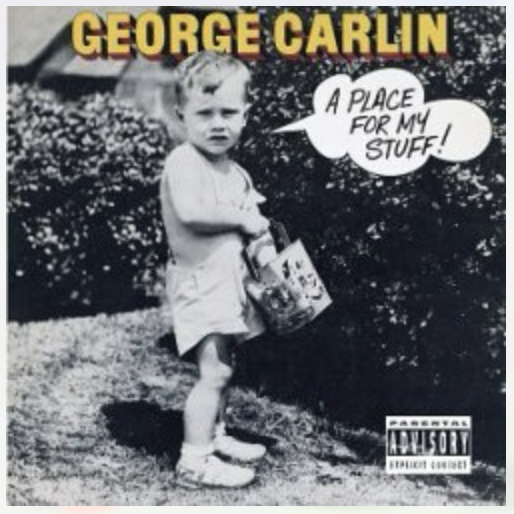
My pharyngeal reflex aside, personal AI in the near future will be what these bigs give us. What I want, and am working toward us eventually getting, is on the George Carlin model of AI:
Lives and death
When an adult in prime health dies “unexpectedly,” and no cause is given (sometimes ever), you know what the assumption is. I don’t want to use the word, but you know. It’s what I thought when I heard that Chris Spatola, ESPN analyst, former Duke basketball assistant, husband of Coach Mike Krzyzewski’s daughter Jamie, and father of three, had died unexpectedly at age 47. By coincidence, he, Daniel Barkhuff, and Steve Kornacki, grew up together, were on the same high school basketball team (Steve was the manager), and remained close. In The Imposter Syndrome, Barkhuff writes,
Now I know he was struggling in ways I did not see. I keep revisiting conversations, wondering whether what I heard as indifference might have been exhaustion, or whether the confidence I envied was something he needed to hold himself together. I don’t know. His death doesn’t give me the right to diagnose him after the fact, or to turn every ordinary exchange into a clue I should have caught. It does make me wish I had been less concerned with how I came across and more curious about how he was doing.
I used to think the chief cost of feeling like an imposter was that it kept you from taking your place. You hesitate, you hold back, you spend your energy proving to yourself that you belong. But there is another cost. When you are preoccupied with your standing in someone else’s eyes, you can lose sight of the person standing in front of you. Chris was my friend. We both loved basketball. He was better at it, which just meant I spent too much time worrying about whether I belonged beside him to ask what it felt like to be him.
I remember the passes. I remember the fear of missing them. What I ought to remember now is that he kept passing me the ball. We had known each other since we were boys, and after years apart, we had found our way back into conversation. I wish I had asked him more questions while I could. I wish I had listened without waiting to learn something about myself. Maybe he had tried to tell me something.
Which tells me something too. I hope we learn Chris died instead of a heart attack.
And this all started in the Pleistocene
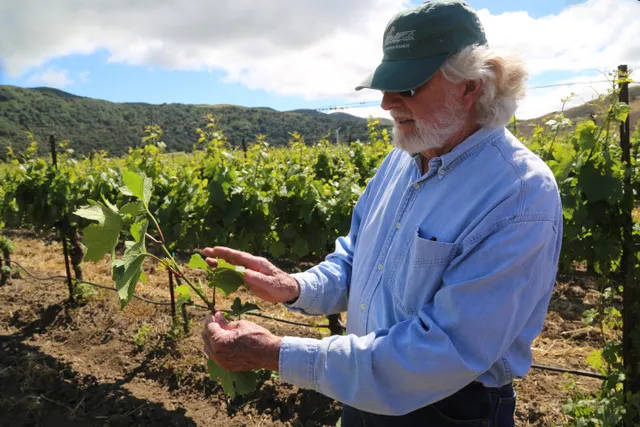
This post about Blackhawk Slide is getting some action lately, my stats page says. It features a photo I shot, but this one tells the story better and has more geology. In revisiting that piece, I learned that two of my own sources, geologists Robert M. Norris and Arthur G. Sylvester, are both now gone. I have a bunch of their books, and sought their tutelage when I was hanging out at UCSB. I knew Bob Norris had died in 2012, but I thought Art was still around, since we last talked a couple of years ago. But that conversation happened earlier, because I just discovered (by his Wikipedia page above) that Art died in May of 2023, not long before we also lost our good friend Michael Benedict, who worked with both those guys in the course of his own work as a botanist at UCSB and a founding vintner in Santa Barbara’s Santa Ynez Valley. Here’s Michael in his natural habitat:
I mean for you and me. Not just enterprises.
What does it mean that Keenable.ai is building The Web for AI agents?
Did I hear that right? I’m building sites with agents too.
Just heard from Keith Teare on The Gillmor Gang that this Leica site was entirely made by a team of AI agents.
Effects will persist
Just learned from danah boyd that the Social Media Collective at Microsoft Research has come to a close.

Leave a Reply