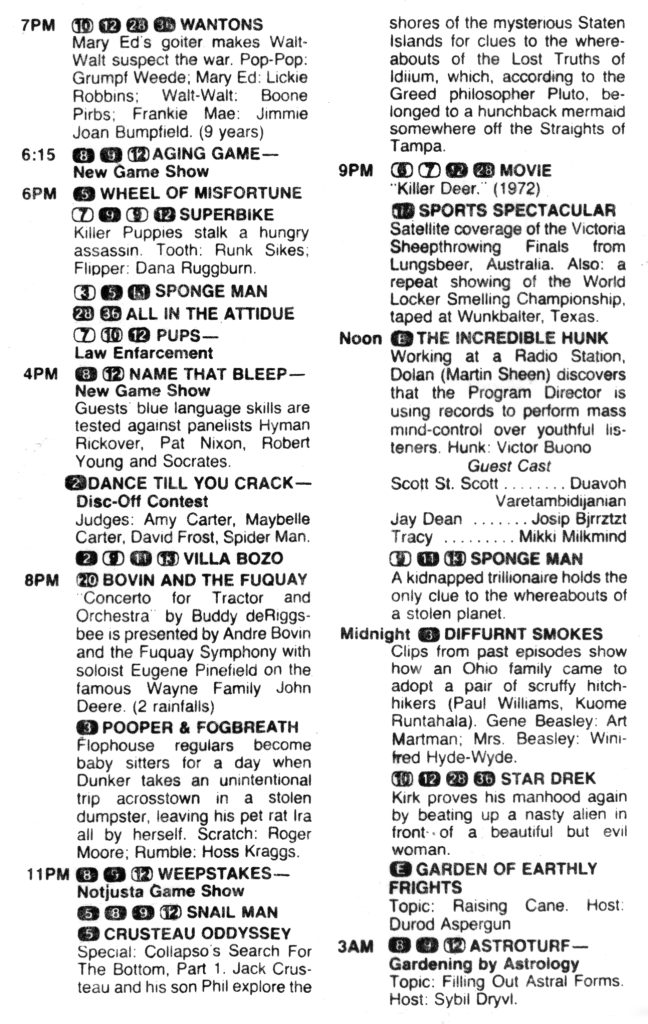
For the final seven decades of the last millennium, most people in the developed world scheduled their evenings by answering a simple question: What’s on? For the first two of those decades, the question was “What’s on the radio?” For the next five, it was “What’s on TV?”
Guidance toward answers were provided on newspaper pages covering entertainment, and in weekly magazines. The biggest of those was TV Giude, at its peak the most popular magazine in the U.S.*, with 20 million customers, plus some multiple of that in pass-along readers.
In the guide were stations (such as those above), which belonged to networks. The biggest networks—CBS, NBC, and ABC—migrated from radio. PBS and Fox came later.
To get TV stations, you needed an antenna. “Rabbit ears” (a pair of telescoping rods built into the TV or attached by a flat wire to a pair of screws on the back) worked if you had strong signals, but the picture looked best only if you had a roof antenna. The best of those looked like the skeleton of a 10-foot tuna on a spike:

In rural areas, you needed a big antenna, ideally high above the ground, on a tower of its own or strapped to a chimney, with a rotator so you could spin it around. This is what my rotator looked like when I lived in Chapel Hill, NC:
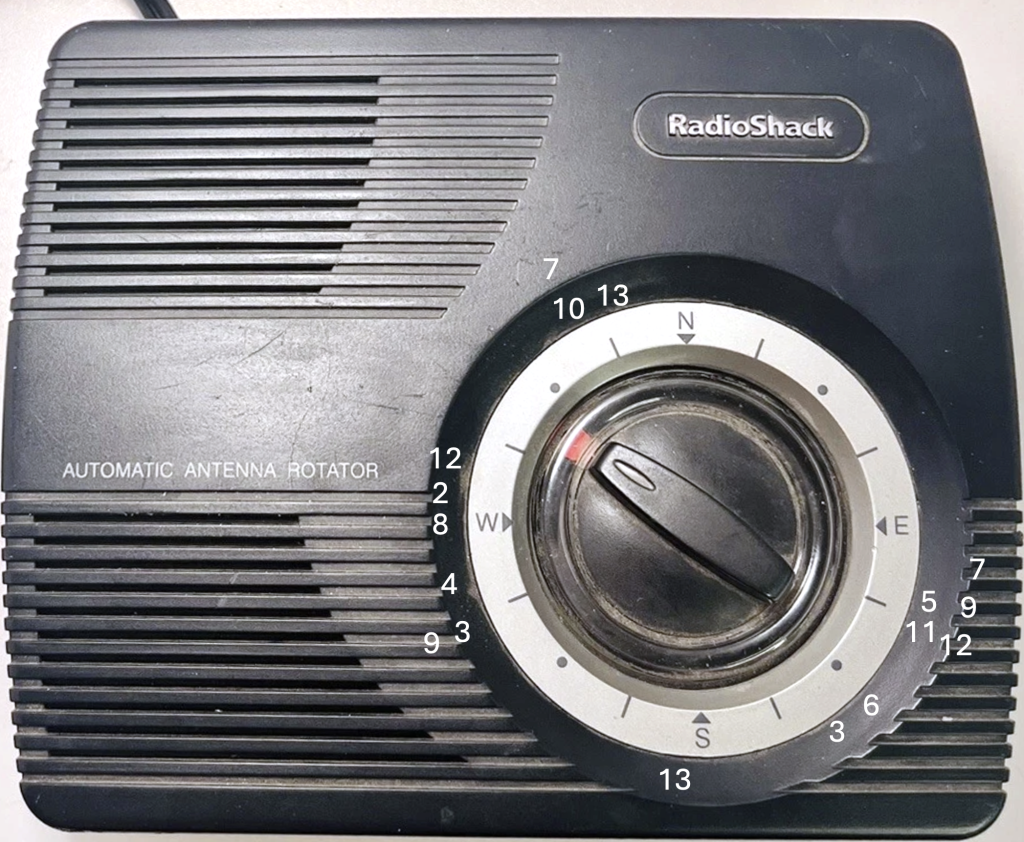
Cable began as CATV—Community Antenna Television. When I lived in far northern New Jersey in the early ’70s, we were shadowed by terrain from New York City and Philadelphia signals, but our CATV provider gave us the 12 VHF channels of both cities. Gradually, cable companies added lots of channels that were cable-only. That gave folks a lot more answers to “What’s On?” and kept that era going.
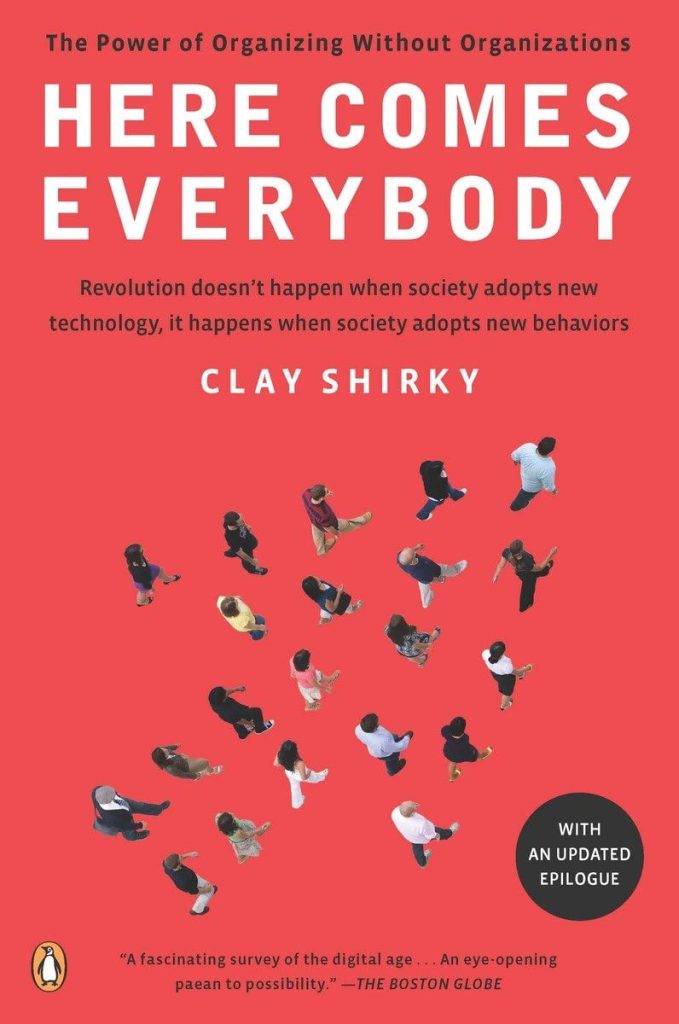
But that era is mostly over, because optionality verges on absolute. This happened because, as Clay Shirky put it,
 *
*Interesting fact: What makes a TV a TV is its antenna connection:
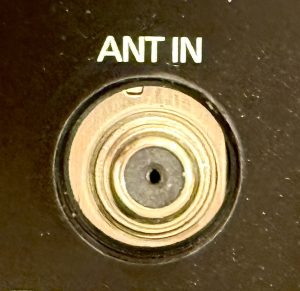
Without that and the tuner inside, it’s just a monitor.
So let’s compare:

And that bottom line is where we’re at. “What’s on?” has become an archaic expression, like “prithee” and “forsooth.”
And we’re changed by that. As Marshall McLuhan is said to have said (yes, he meant it, but didn’t say it—see that last link), we shape our tools, and then our tools shape us.
So, what’s our shape now? Are we becoming phono sapiens?
I think it’s more like… where are we now?
Clearly, we are in a state of massive optionality, but our agency is still largely bottled up in each app we use, each platform we occupy, and the separate technical worlds of Apple, Google, and Microsoft.
What will free us from those?
I say two things. First is MyTerms. That’s how the sites and services of the world agree to our requirements, rather than us to theirs. Second is personal AI. We don’t have either one yet, but we will.
What’s On will always be an option. But as a defaulted first choice, it is mostly going away.
*James Joyce too, in Book 1, Chapter 5, of Finnegan’s Wake.
†For more about where that parody came from, see here.


Leave a Reply to Doc Searls Cancel reply