
That’s what it says at MoonPhase.today
Specifically, 26%.
I’ll consider them unreal if they’re not at IIW.
The UOR Foundation has plans to… Well, I can’t copy and paste the text, so here’s a screengrab:

I’ll say not. Quite.
AM I? | A Documentary About AI Consciousness.
Ever notice the groovy ditches in tidal swampland?
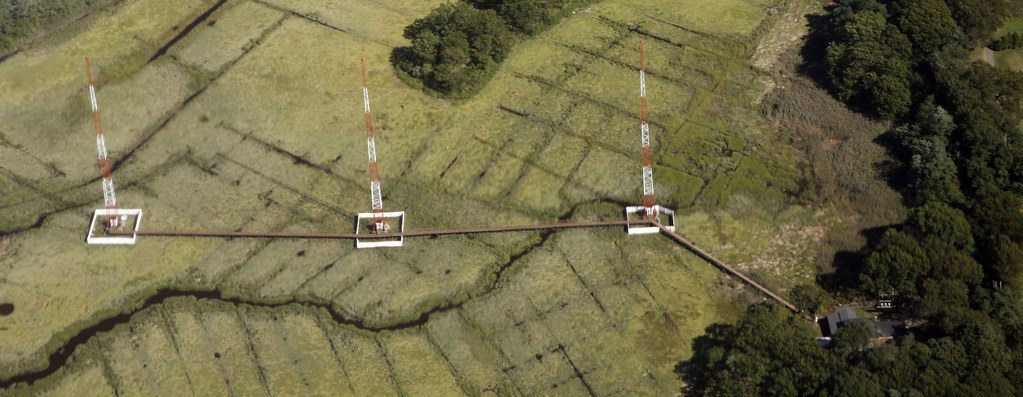
It’s called “grid ditching,” and is explained here:
Grid Ditching
The grid ditch system still evident on our salt marshes today, were dug by hand between 1928 and 1934. The primary purpose of this era of ditching was to put as many people to work as possible, as this was the time of the great depression. No entomological studies were conducted in conjunction with this ditching effort; mosquito control was a secondary consideration at best.
However mosquito control was achieved by default as practically every square inch of marsh was drained by the extensive project. Some engineering studies were done to determine where and at what intervals ditches were dug. Ditches were dug in straight rows by hand with sod saws and two man shovels. In 1934, at the peak of this ditching effort, over 11,000 men were employed digging ditches and when completed nearly 3,000 linear miles of salt marsh ditch were dug in Massachusetts alone.
Virtually all salt marsh in New England was ditched with the exception of one marsh in Rhode Island. Later in the late 1940s and early 1950s soldiers returned home from World War II. Housing shortages were a big problem in the more populated areas particularly in and around Boston. A generation of young families, eager to get their lives back on track migrated to the north shore of Massachusetts to start new lives.
This migration coincided with the degradation of the grid ditch system created in the 1930s. These ditches had not been maintained and now produced far more mosquitoes then they had initially eliminated. By many accounts it was so bad some considered the area to be almost uninhabitable. A few local programs were established to try to reopen the ditches but it was impossible to duplicate the labor force that had originally created the ditches.
In 1958, a grass roots effort, fueled by public demand for relief resulted in legislation establishing the Essex County Mosquito Control Project. For reasons unknown the project was not formally funded until 1965. Equipment was purchased and a major effort was launched to reclaim salt marsh ditches.
Salt Marsh Ditch Maintenance in Northeast Massachusetts
In the late 1970s, Walter Montgomery was an equipment operator for what was then, the Essex County Mosquito Control Project, ECMCP. Montgomery’s primary duty was to maintain the extensive salt marsh grid ditch system, excavated for the most part, between 1928 and 1934.
Montgomery recalls using an implement known as a scavel plow; this was a large wedge shaped device mounted under a wing plow and could be attached to the front of a tractor or sometimes towed behind. A scavel plow wedge was basically constructed to the original ditch dimension. The wedge would be dropped into the ditch and the tractor either pushed or pulled it along. As the wedge peeled spoil out of the ditch the wing plow would roll the spoil into furrows approximately six feet wide on both sides of the ditch. These furrows of spoil were then either run over to flatten them or plowed off the marsh.
On a productive day Montgomery recalls completing two or more miles of ditch maintenance but even at that rate maintenance of hundreds of linear miles of ditch was an endless endeavor. It was Montgomery’s experience that freshly maintained ditches were really only effective for about two years before requiring additional maintenance.
Typically ditches would become blocked on the high marsh and previously drained salt pannes would often reestablish. Montgomery observed that the open water areas of these pannes or ponds didn’t have mosquito larvae but the grassy sheltered areas around the edges or isolated depressions adjacent to the ponds, supported mosquito larvae.
Montgomery’s observations further supported his belief that continued maintenance of the grid ditch system was not productive and furthermore there had to be a better way to manage salt marsh mosquito populations.
That is from a .pdf titled MASSACHUSETTS MOSQUITO CONTROL OPEN MARSH WATER MANAGEMENT STANDARDS MAY 2010. It is worth continuing to read, if mosquito control is your jam.
Alas, as you may gather by now, everything is my jam.

Leave a Reply