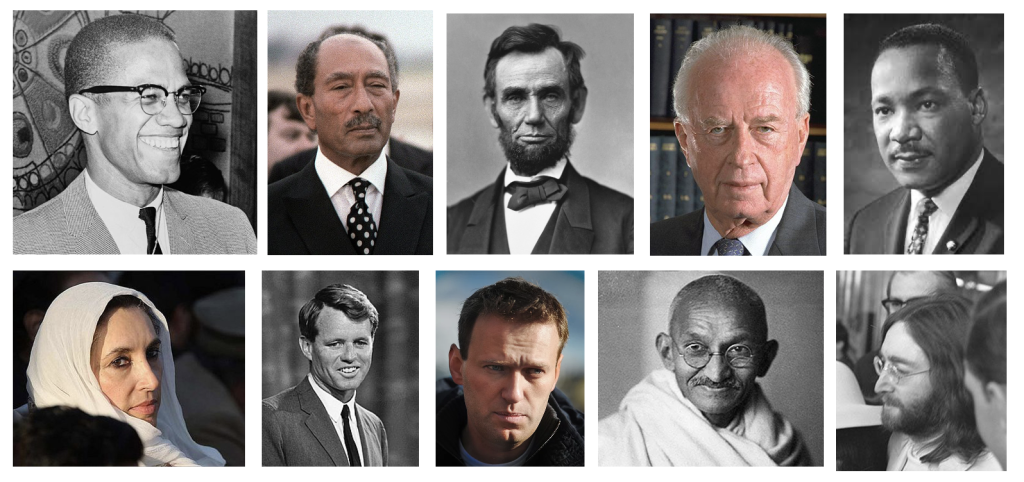
On April 4, 1968, when I learned with the rest of the world that Martin Luther King Jr. had been assassinated, I immediately thought that the civil rights movement, which King had led, had just been set back by fifty years. I was wrong about that. It ended right then (check that last link). Almost fifty-six years have passed since that assassination, and the cause still has a long way to go: far longer than what MLK and the rest of us had imagined before he was killed.
Also, since MLK was the world’s leading activist for peace and nonviolence, those movements were set back as well. (Have they moved? How much? I don’t have answers. Maybe some of you do.)
I was twenty years old when MLK and RFK were killed, and a junior at Guilford College, a Quaker institution in Greensboro, North Carolina. Greensboro was a hotbed of civil rights activism and strife at the time (and occasionally since). I was an activist of sorts back then as well, both for civil rights and against the Vietnam War. But being an activist, and having moral sympathies of one kind or another, are far less effective in the absence of leadership than they are when leadership is there, and strong.
Alexei Navalny was one of those leaders. He moved into the past tense today: (1976-2024). His parentheses closed in an Arctic Russian prison. He was only 47 years old. At age 44 he was poisoned—an obvious assassination attempt—and survived, thanks to medical treatment in Germany. He was imprisoned in 2021 after he returned to Russia, and… well, you can read the rest here. Since Navalny was the leading advocate of reform in Russia and opposed Vladimir Putin’s one-man rule of the country, Putin wanted him dead. So now Navalny is gone, and with it much hope of reform.
Not every assassination is motivated by those opposed to a cause. Some assassins are just nuts. John Hinkley Jr. and Mark David Chapman, for example. Hinkley failed to kill Ronald Reagan, and history moved right along. But Chapman succeeded in killing John Lennon, and silence from that grave has persisted ever since.
My point is that assassination works. For causes a leader personifies, the setbacks can be enormous, and in some cases total, or close enough, for a long time.
I hope Alexei Navalny’s causes will still have effects in his absence. Martyrdom in some ways works too. But I expect those effects to take much longer to come about than they would if Navalny were still alive. And I would love to be wrong about that.


Leave a Reply to Niaz Hussain Cancel reply