None of which you asked for, and few of which you can thrwart
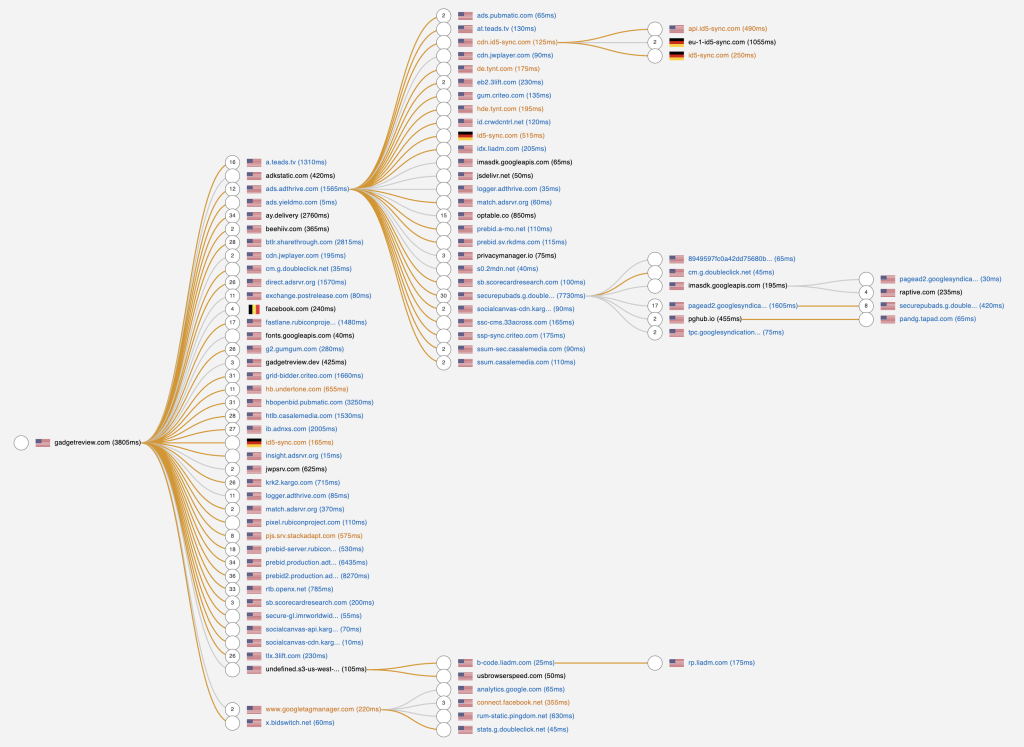
GadgetReview: 13 Evil Tech Scandals & Failures That Took Advantage of Millions of People. Now dig a PageXray of that story. The high points:
Adserver Requests: 543
Tracking Requests: 447
Other Requests: 132
Including all those other places in the PageXray above.
Among other crimes
Says UnJustified,
Microsoft Corporation’s LinkedIn is running a massive, global, and illegal spying operation on every computer that visits their website…
As part of the campaign in removing everyone from the market who might actually make use of the Digital Markets Act, LinkedIn started injecting malicious code into the browsers of their users, without their knowledge or their consent.
At the time of writing, this code downloads a list of 6,222 software products and brute-forces the detection of each one. The scan covers extensions with a combined user base of approximately 405 million people.
4. The Bigger Picture
Because LinkedIn knows each visitor’s name, employer, and job title, every detected extension is matched to an identified individual. And because LinkedIn knows where each user works, these individual scans aggregate into detailed profiles of companies, institutions, and government agencies, revealing which software tools their employees use without the organization’s knowledge or consent…
The malicious JavaScript that Microsoft secretly injects into the LinkedIn website searches each user’s browser for installed software applications.
The search reveals:
• Political opinions of users, through extensions like “Anti-woke,” “Anti-Zionist Tag,” and “No more Musk”
• Religious beliefs, through extensions like “PordaAI” (blur haram content) and “Deen Shield” (blocks haram sites)
• Disability and neurodivergence, through extensions like “simplify” (for neurodivergent users)
• Employment status, through 509 job search extensions that reveal who is looking for work on the very platform where their current employer can see their profile
• Trade secrets of millions of companies, by mapping which organizations use which competitor products, from Apollo to ZoomInfo.

Leave a Reply